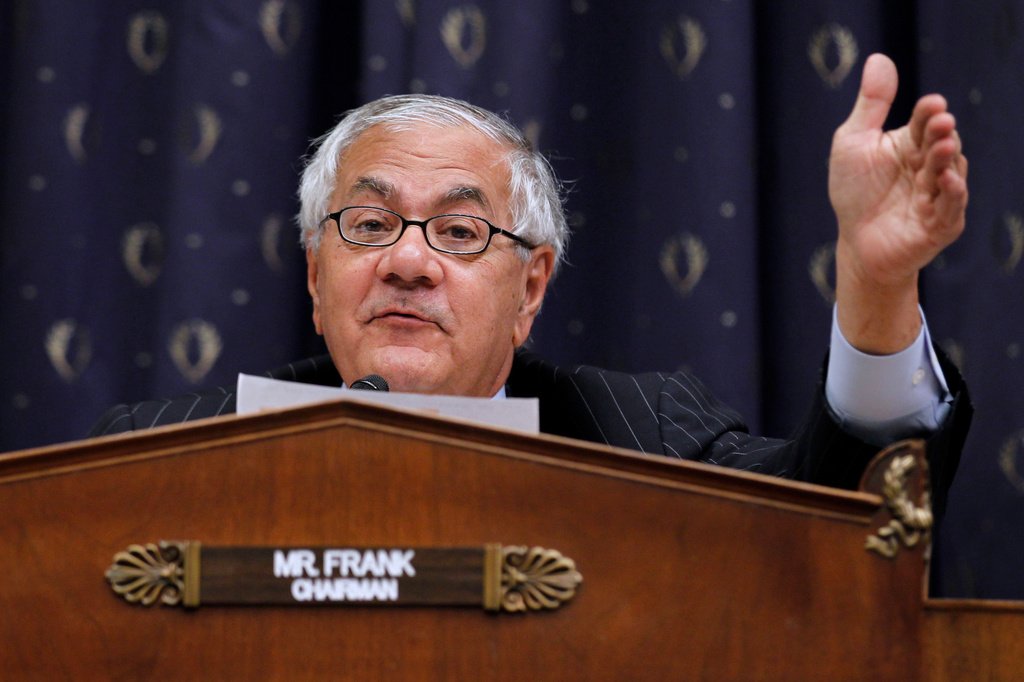
With the passing of former Rep. Barney Frank (D-Mass.), a key architect of post-2008 financial reforms, the Trump administration has reignited a contentious debate over mortgage lending rules. President Trump signed an executive order titled “Promoting Access to Mortgage Credit,” directing federal agencies to reassess the safeguards established by the Dodd-Frank Wall Street Reform and Consumer Protection Act. The move has alarmed consumer advocates who warn it could pave the way for a return to the predatory practices that triggered the 2008 financial crisis.
Dodd-Frank, co-authored by Frank and former Sen. Christopher Dodd (D-Conn.), was enacted after the worst economic downturn since the Great Depression. The law created the Consumer Financial Protection Bureau and imposed strict rules requiring lenders to verify a borrower’s ability to repay before issuing a mortgage. These provisions were designed to eliminate the kind of reckless lending that led to millions of foreclosures.

Before the crisis, lenders routinely issued mortgages with little or no verification of income or assets. They offered teaser rates that later reset to unaffordable levels, imposed prepayment penalties, and incentivized loan officers to push high-interest products. At the height of the boom, so-called NINJA loans — no income, no job, no assets — were common. The assumption that lenders would self-regulate proved disastrous, as most loans were quickly sold to Wall Street and packaged into securities.
Mike Calhoun, president of the Center for Responsible Lending, testified before Congress in 2004 that these practices were “ticking time bombs.” By 2006, his organization projected that over 2 million borrowers would lose their homes. Those warnings were ignored, and the eventual wave of defaults triggered a global financial meltdown. As many as 10 million Americans lost their homes, and four out of five households saw their home equity decline due to nearby foreclosures.
Dodd-Frank’s core requirement is that lenders make a “reasonable and good faith determination, based on verified and documented information,” that a borrower can afford a loan. The law also created a category of “qualified mortgages” with safe features and standardized underwriting, making compliance easier for lenders. These rules have stabilized the market and dramatically reduced defaults and foreclosures.
Supporters of the executive order argue that current rules are too restrictive and limit credit access for creditworthy borrowers, particularly in light of housing supply shortages. But critics counter that rolling back safeguards would repeat past mistakes. “We need access to affordable and sustainable credit, not a return to the Wild West,” Calhoun said. He and other advocates are urging regulators to preserve the core protections while considering targeted improvements, such as easing refinancing for borrowers who have demonstrated repayment ability.
The review comes amid broader debates over financial regulation and consumer protection. As the political landscape shifts, the legacy of Barney Frank’s work to curb predatory lending remains a flashpoint. The question now is whether the Trump administration will prioritize access to credit over the hard-won safeguards that prevented another catastrophic collapse.