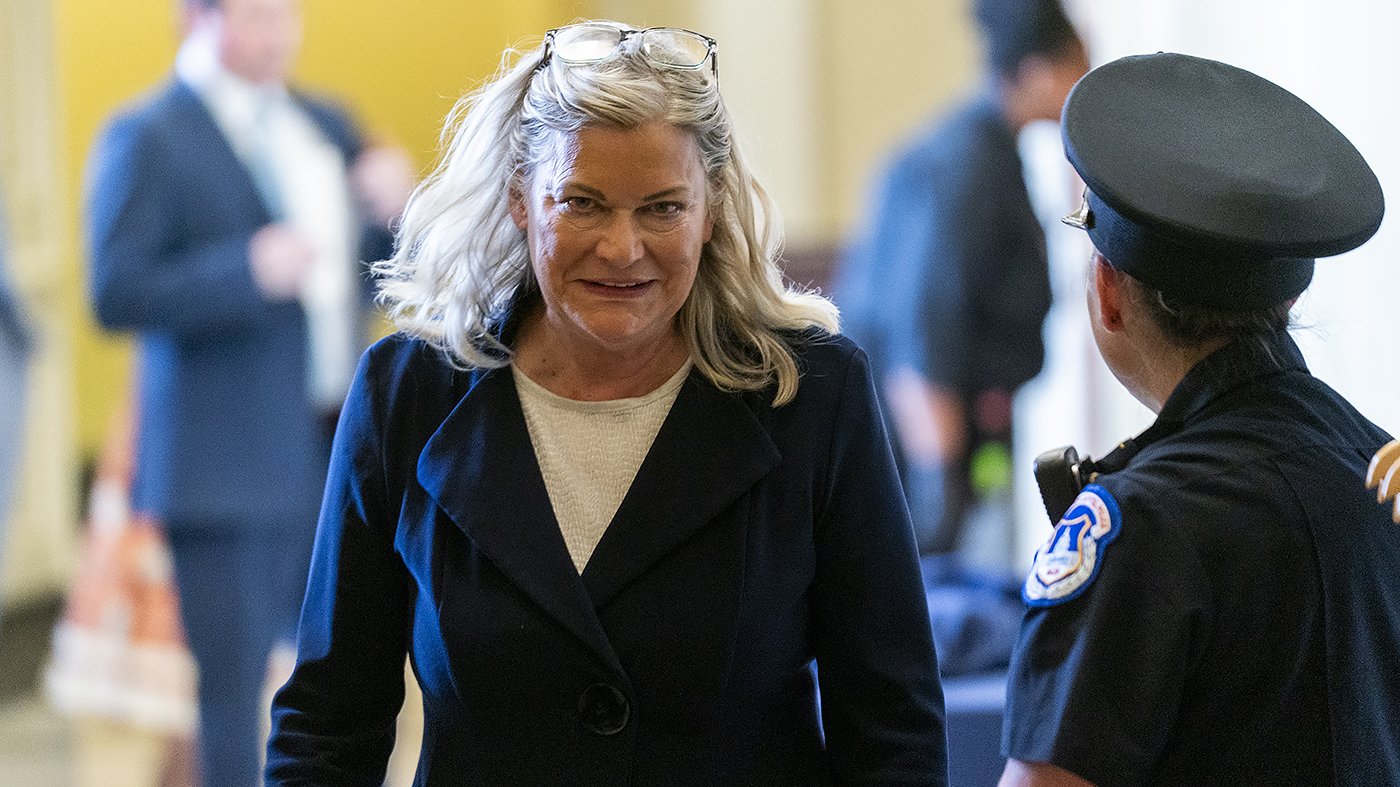
Sen. Cynthia Lummis (R-Wyo.) has introduced the Farmers and Ranchers Relief Act, a bill designed to restore congressional intent by exempting routine agricultural activities from federal permitting requirements under the Clean Water Act. The legislation targets a long-running conflict between landowners and federal regulators, highlighted by cases like that of Wyoming farmer David Hamilton, who faced a potential $62 million fine for restoring an irrigation ditch on his property near Worland.
Hamilton's case underscores a broader tension. After buying a neglected farm, he cleared abandoned vehicles and debris from a ditch used for nearly a century, rebuilt its banks, and invested heavily in improving the land. The Environmental Protection Agency and Army Corps of Engineers argued he needed a permit under Section 404 of the Clean Water Act before undertaking the work. Obtaining such a permit can take over two years and cost hundreds of thousands of dollars, a burden Congress never intended for ordinary farming practices.

Congress included a specific exemption in the 1972 Clean Water Act for “normal farming, silviculture, and ranching activities,” recognizing that routine agricultural work should not require federal approval. Yet decades of court rulings, notably U.S. v. Akers, have steadily narrowed that exemption. In Akers, a California farmer's drainage and land-improvement efforts were deemed subject to permitting through the law's recapture provision, which was meant only for genuine conversions of waters to new uses. Similar decisions in Wisconsin, Louisiana, and elsewhere have expanded federal oversight over everyday land management, effectively overriding Congress's original protection.
Lummis's bill is straightforward. It reaffirms that normal farming, ranching, and forestry activities do not require permits under Section 404(f) and directs courts to interpret the exemption liberally “in favor of not prohibiting, and not requiring a permit.” The legislation would shift the burden of proof: when there is doubt about whether a routine activity needs federal permission, the landowner gets the benefit of the doubt, not the bureaucracy.
This approach aims to reverse what supporters call judicial erosion of the exemption. Damien Schiff, a senior attorney at Pacific Legal Foundation, argues that courts have transformed a statutory protection into something far less meaningful. The bill offers a model for broader permitting reform, as Congress considers cutting unnecessary barriers that impose high costs with little public benefit. It also aligns with other efforts to curb federal overreach, such as a recent federal judge rejecting a lawsuit over Trump's religious liberty commission makeup, highlighting ongoing tensions between agency authority and legislative intent.
For farmers and ranchers, the stakes are high. The Hamilton case illustrates the risks: a landowner who improved his property now faces ruinous penalties for activities Congress explicitly intended to protect. Lummis's legislation would restore that promise, ensuring that the exemption has real meaning rather than being read out of existence by courts.
The bill also echoes concerns in other policy areas, such as a GAO report showing Amazon workers on federal aid tripled since 2020, which underscores the need for policies that support economic independence. By removing unnecessary permitting hurdles, the Farmers and Ranchers Relief Act aims to let landowners focus on productivity without fear of federal penalties.
Congress created the Section 404(f) exemption nearly five decades ago to keep ordinary farming out of the federal permitting system. Lummis's bill offers a chance to restore that original intent. For lawmakers eyeing broader permitting modernization, this legislation provides a clear step forward: protect the farmers and ranchers Congress always meant to shield.