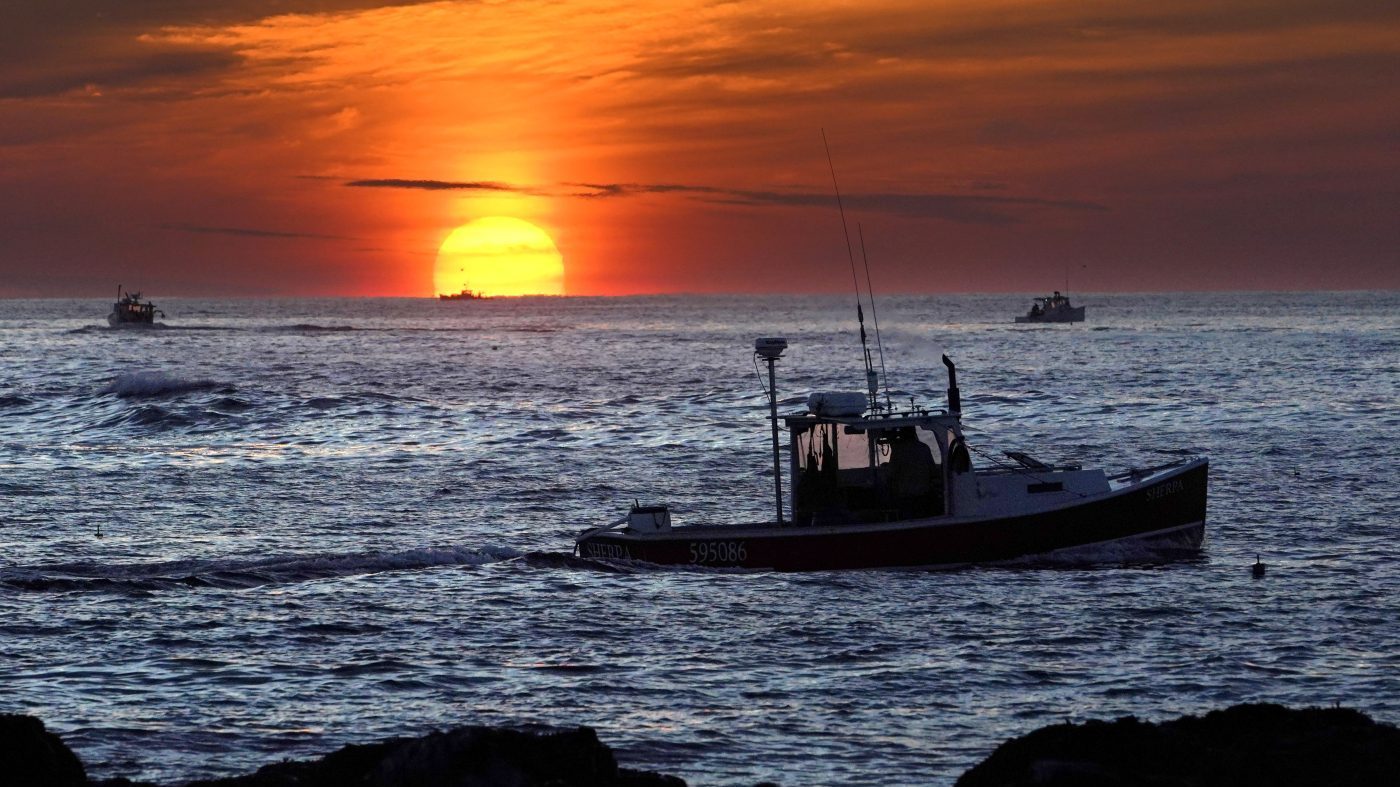
STONINGTON, Maine — Maine's lobster industry, a cornerstone of the state's coastal economy, is navigating a perfect storm of rising expenses, trade tensions, and political infighting that has left many fishermen struggling to stay afloat.
The recent conflict with Iran has driven diesel prices to record highs, forcing lobstermen to travel farther offshore as warming waters push lobster populations to deeper, colder areas. These added costs come at a time when profit margins have already been shrinking for years, according to new research.
“The cost to just untie the boat is much, much more expensive than it has traditionally been,” said Patrice McCarron, executive director of the Maine Lobstermen's Association. “It's affected all of the gear, traps, rope, fuel, labor — everything they touch. Bait has gone up, everything's gone up.”
Nathaniel Lane, a lobsterman fishing off Deer Isle, home to the state's most productive lobster port, joked with colleagues that many trips now feel like “a beautiful day for a boat ride” rather than a profitable venture. “If you're not profitable, all we're doing is sports fishing,” he said at a recent forum hosted by the Maine Center for Coastal Fisheries.
The inflation-adjusted price of lobster is at a 50-year low, and while it remains a luxury item for consumers, the slim margins under which independent fishermen operate are often overlooked. Alexa Dayton, executive director of the center, conducted a comprehensive survey on lobster economics, comparing data with her 2010 study. The results, she said, were a “gut punch,” showing a significant decline in profitability across all boat sizes.
Boats under 25 feet now operate on just a 4 percent profit margin, while even larger vessels in the 34- to 39-foot range have seen their margins shrink drastically. “The captain is fishing for free on many of these trips,” Dayton said. “The boat gets fuel, crew is fed, bait's been provided for, but the captain's operating on a really low margin.”
The industry has also been caught in the crossfire of US-Canada trade tensions. Canada, already embroiled in a trade war with Washington, threatened to impose a 25 percent retaliatory tariff on U.S. lobster in response to President Trump's 50 percent tariffs on Canadian goods. Such a move would be devastating for Maine's lobster industry, which relies heavily on Canadian processing facilities. Though Canada has a shorter lobstering season, it has significantly more processing capacity, and Maine lobster is often peeled and packaged across the border before returning to U.S. markets.
Canada quickly backed away from the tariff threat, but the episode rattled an industry that depends on cross-border partnerships daily. “We've dodged another one, but it's scary to be in the crosshairs of something like that that would really, really, really hurt individual businesses,” McCarron said.
The industry was also thrust into a congressional fight when retiring Rep. Jared Golden (D-Maine) crossed party lines to support a procedural vote on several GOP bills, including his own legislation to extend the deadline for new right whale protection rules from 2028 to 2035. The whales have been killed by ship strikes and fishing gear entanglements, though deaths have dipped in recent years. The lobster industry argues that many entanglements occur outside lobster gear and far from Maine's coast, as whales migrate along the Atlantic.
The bill passed with support from 10 Democrats, but party leaders were furious that Golden and another Democrat gave up leverage by backing the GOP's procedural move. Rep. Chellie Pingree (D-Maine), who supported the bill once it reached the floor, defended the decision. “It's a challenging topic in Maine, but obviously the lobster fishermen are a huge part of our constituency and have been worried a little bit about insufficient progress on this data before the deadline came down,” she said. “I think most of us are trying to make sure we have a way to save the right whale and the lobster fisherman.”
The industry hopes the extended timeline will allow for better data collection, showing improvements in the right whale population, which is now under 400, and shifting migration patterns that may lie largely outside lobster fishing areas. However, it's unclear if the Senate will take up the bill before the end of the year, given the crowded session.
Dayton called the proposal a “double-edged sword,” noting that improved tracking technology could inform spatial management. “We can track the whales now. We have a much better understanding of their patterns and where they are, and that's informing the spatial question of where is the risk the highest,” she said.