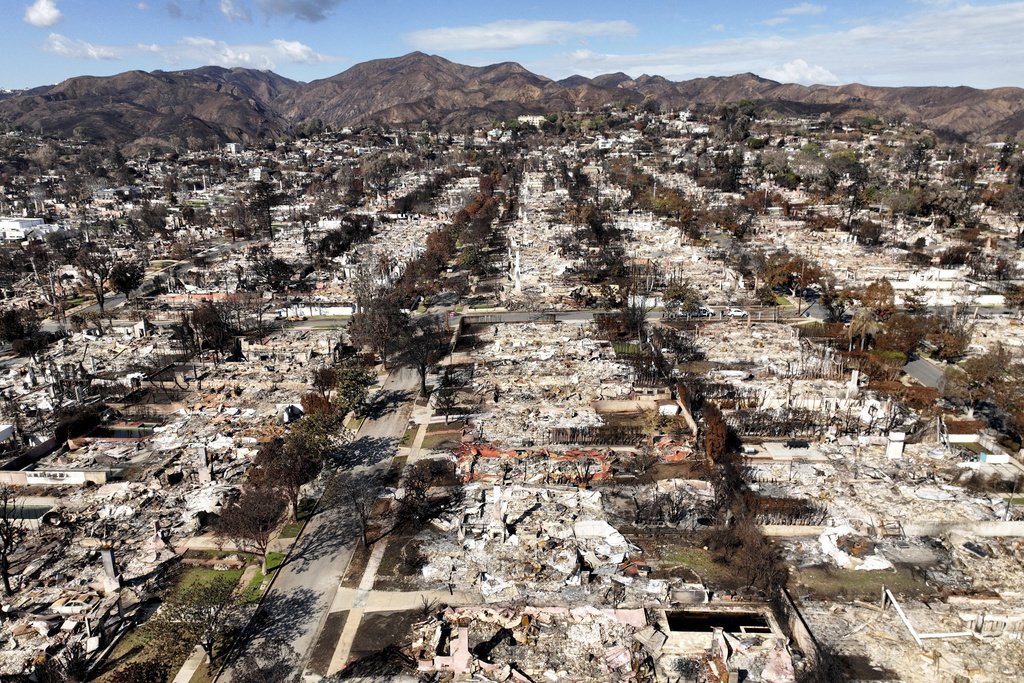
For 24 days in early 2025, the Eaton wildfire carved through Los Angeles neighborhoods, leaving a toxic wasteland. Sam Strgacich had eight minutes to flee his home and has been displaced ever since. His family's long-term financial security now hangs in the balance. It didn't have to be this way.
Two thousand miles east, Illinois saw 12 separate billion-dollar weather disasters in 2024, claiming 129 lives. Flooding, extreme heat, and storms that once struck once a generation now hit every season. These aren't isolated incidents—they're the same story playing out across the country.
Climate change ignores state lines and elevation. It is destroying communities now, yet the federal government is in denial. The Trump administration is rolling back EPA authority to curb climate pollution, dismantling financial oversight tools that reveal banks' exposure, and allowing real estate platforms to remove climate risk data from listings. Hiding that information doesn't erase the risk—it just blindsides more families like Sam's.
After the fire, Sam and his wife Rosanna thought they were lucky—their house still stood. Their insurer refused to test for toxins, so they paid out of pocket. The results showed lead, arsenic, and nickel at hazardous levels, making the property uninhabitable. Eighteen months later, they're crushed by the cost of two mortgages, forced to buy another home just to have shelter. Their insurer still won't pay what it owes.
That has to change, argues Rep. Sean Casten (D-IL) and Strgacich. They're calling for a Climate Bill of Rights for Homebuyers: every American who buys or rents a home should get clear, standardized, plain-language information about flood, wildfire, extreme heat, and storm surge risks. No fine print. No optional disclosures. No removal by industry pressure. A federal disclosure standard would cost nothing to implement but could save countless families from financial devastation when the next wildfire hits.
But disclosure alone isn't enough. Congress must also require the Federal Reserve to stress-test large banks and insurers against climate risk, so we know how exposed the financial system is before the next disaster, not after. And the EPA must keep its legal authority to address the climate pollution driving these disasters. These aren't fringe ideas—they're the bare minimum we owe families in harm's way.
Strgacich has spent months thinking about rebuilding. A few artifacts from his home were displayed at the Museum of Unnatural Disasters in Washington, D.C., a temporary exhibit highlighting climate destruction. His home is nearly restored, but the ordeal has changed everything. He's still battling his insurer and has joined the fight for action so other families don't suffer the same nightmare. As he and Casten write, the climate crisis is not a future threat—it's here, accelerating, and demands federal action now.
Casten represents Illinois's 6th District. Strgacich is a climate advocate and Los Angeles resident. Together, they're pressing Washington to treat climate risk as the urgent national economic security issue it is.