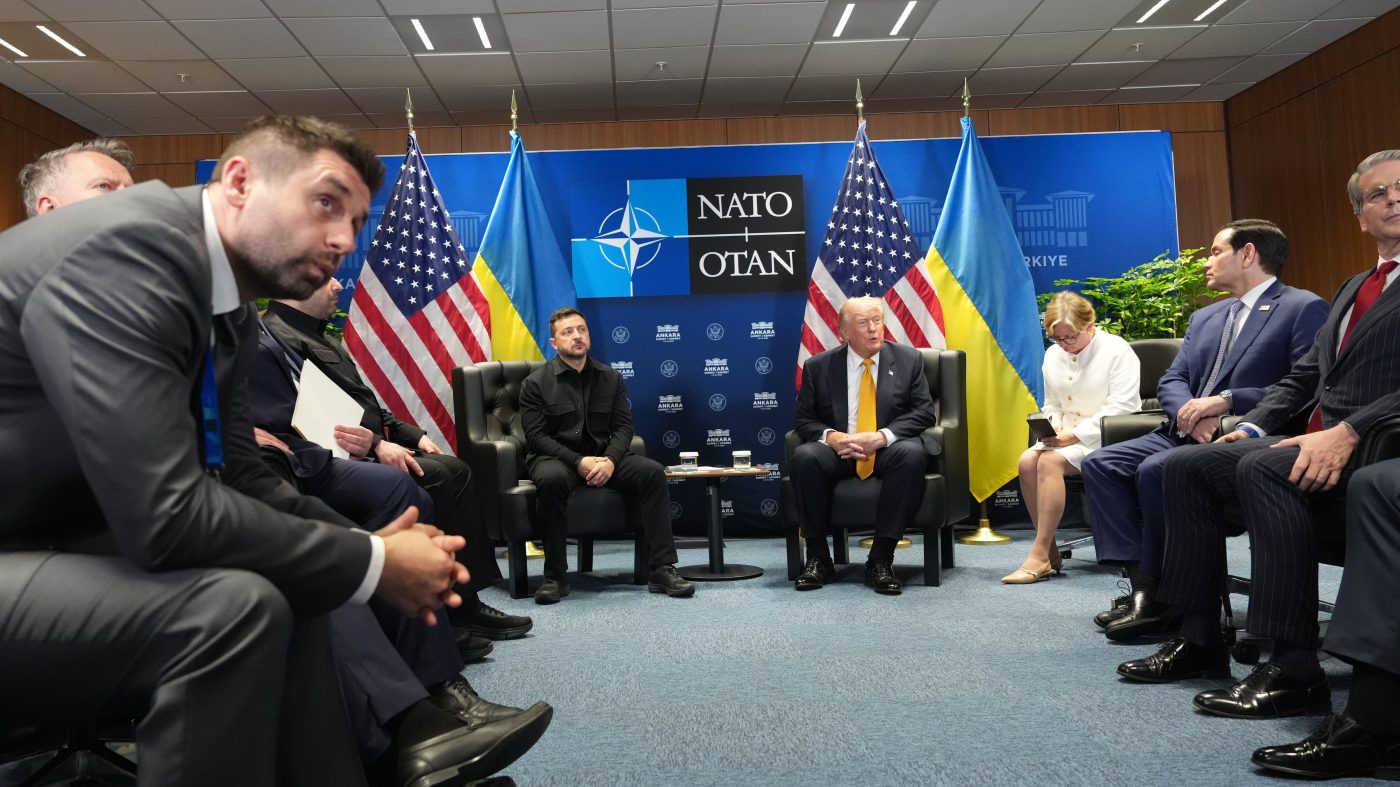
President Trump announced Wednesday that the United States will grant Ukraine the ability to co-produce Patriot missile interceptors, a vital air-defense system that Kyiv has urgently needed to counter relentless Russian ballistic missile and drone attacks. The declaration came during a NATO summit in Turkey, where Trump spoke alongside Ukrainian President Volodymyr Zelensky.
“Just a little birdie told me this, about the fact that we’ll give them the right to make Patriots, we’ll show them how to do it,” Trump said, describing the technology as “very complex” but expressing confidence Ukraine would quickly master it. The move follows an intensive lobbying campaign by Ukrainian officials for permission to manufacture the interceptors domestically.
The announcement marks a notable thaw in Trump’s relationship with Zelensky, which had been strained since a heated Oval Office confrontation in February 2025. Trump remarked that the two leaders have since built a more cooperative rapport. The meeting on the margins of the summit was part of broader efforts to solidify international backing for Ukraine more than four years after Russia’s full-scale invasion.
Trump acknowledged that the U.S. has limited Patriot missile stockpiles and cannot immediately provide large numbers to Ukraine. “We have Patriots, but we don’t have that many. We need them for ourselves too,” he said. The co-production deal aims to bolster Ukraine’s long-term air defense capabilities, which are essential to protecting cities from waves of Russian drones and ballistic missiles that often overwhelm existing systems.
Ukraine has recently shifted to a more offensive posture in the war, successfully striking deep inside Russian territory with long-range missiles supplied by allies and domestically produced weapons. Trump praised Kyiv’s ability to hit distant targets, arguing it increases pressure on Russian President Vladimir Putin to negotiate an end to the conflict. He also rejected Putin’s proposal for talks in Moscow, handing Zelensky a diplomatic win.
Zelensky, buoyed by the positive meeting, joked about the dangers of traveling to the Russian capital, noting, “There’s too many Ukrainian drones there … It’s not safe.” Trump said he would consider visiting Ukraine but preferred the war to conclude before making the trip. The summit also saw discussions on other pressing issues, including tensions with Iran and defense spending disputes among allies, as detailed in reports on Trump's address to NATO and ongoing Russian strikes on Kyiv.
The co-production agreement represents a significant step in U.S.-Ukraine defense cooperation, potentially easing the strain on American stockpiles while enhancing Ukraine’s self-sufficiency. However, analysts caution that the timeline for actual manufacturing remains uncertain, and the interceptors are unlikely to be fielded in time to counter the immediate threat from Russia’s intensified air campaign.