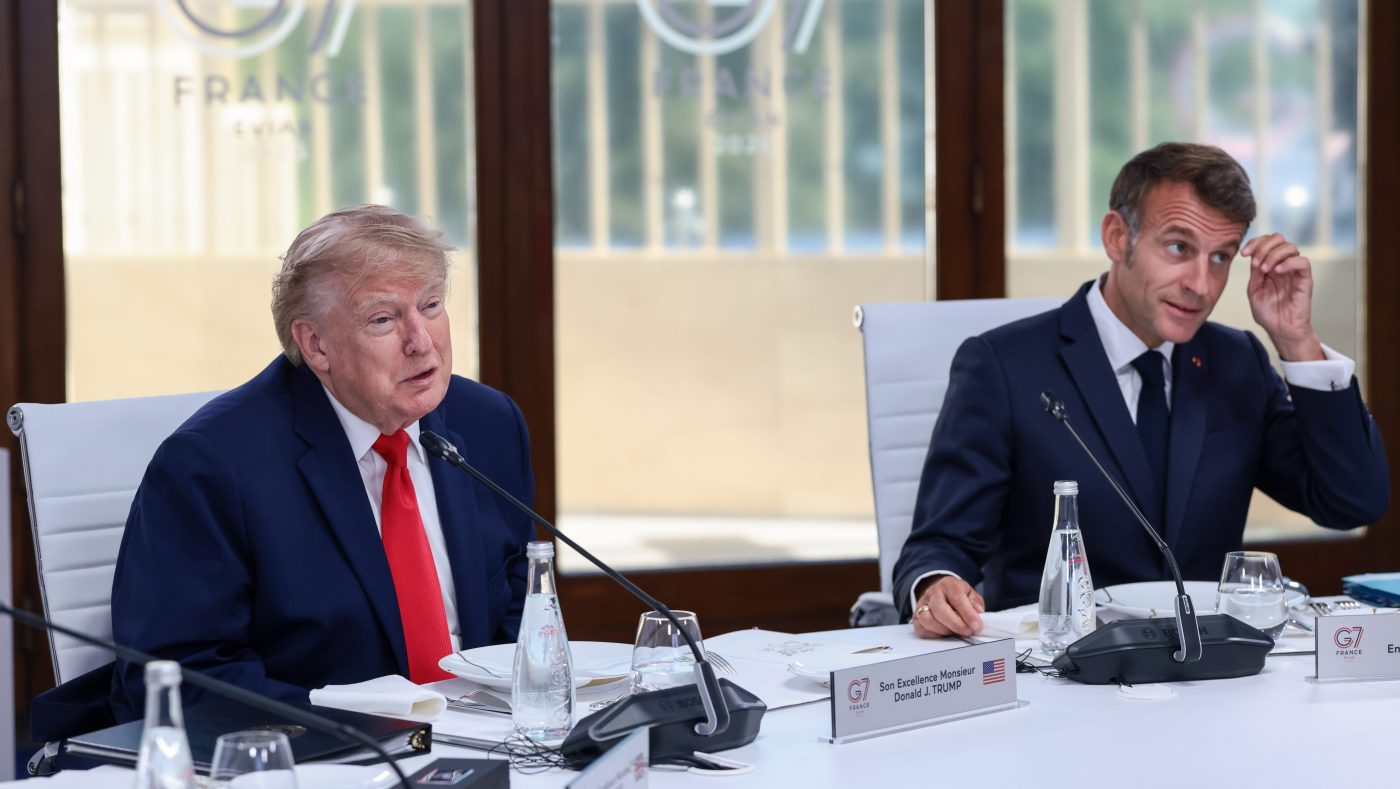
President Trump held a press conference Wednesday before departing France after the G7 summit, facing intense questioning over the memorandum of understanding (MOU) aimed at ending the war with Iran. The 14-point plan has drawn sharp pushback from his own allies, who view it as too lenient or poorly structured.
Appearing alongside Egyptian President Abdel Fattah El-Sisi earlier in the day, Trump made clear the MOU is not a done deal, saying it is not “final” and threatening to resume bombing of Iran if the country does not “behave.” The remarks underscore the fragility of the agreement and the administration's willingness to return to military action.
Trump also warned that the alternative to the deal is “worldwide depression,” a sharp contrast to his earlier dismissal of economic concerns during the conflict. The comment appeared aimed at pressuring both domestic critics and international partners to support the framework.
The president announced the press conference would begin at 10:30 a.m. EDT, with live coverage available. The event comes as the administration faces growing scrutiny over Trump's warning that the Iran deal is not final and his threat to resume strikes.
Behind the scenes, Trump's team has been working to shore up support among G7 leaders, but the MOU has exposed deep divisions. European allies have expressed concern that the plan lacks enforcement mechanisms, while some GOP lawmakers worry it could embolden Tehran.
Trump's threat to resume bombing if Iran “misbehaves” echoes his earlier rhetoric and raises the stakes for any perceived violations. The president has also denied reports that the U.S. is funding the deal, claiming private investment could cover the costs.
The press conference is expected to be combative, with reporters pressing Trump on the MOU's specifics, his relationship with allies, and the broader strategy for de-escalation. The administration has not released the full text of the 14-point plan, fueling speculation about its terms.
Analysts note that the pushback from Trump's own allies could complicate ratification or implementation, especially if Congress demands a vote. The president's shifting stance on economic impacts also raises questions about the administration's internal coherence.
As Trump departs France, the Iran MOU remains a flashpoint in U.S. foreign policy, with the president's threats of resumed airstrikes hanging over any diplomatic progress. The coming days will test whether the framework can survive the political crosswinds.