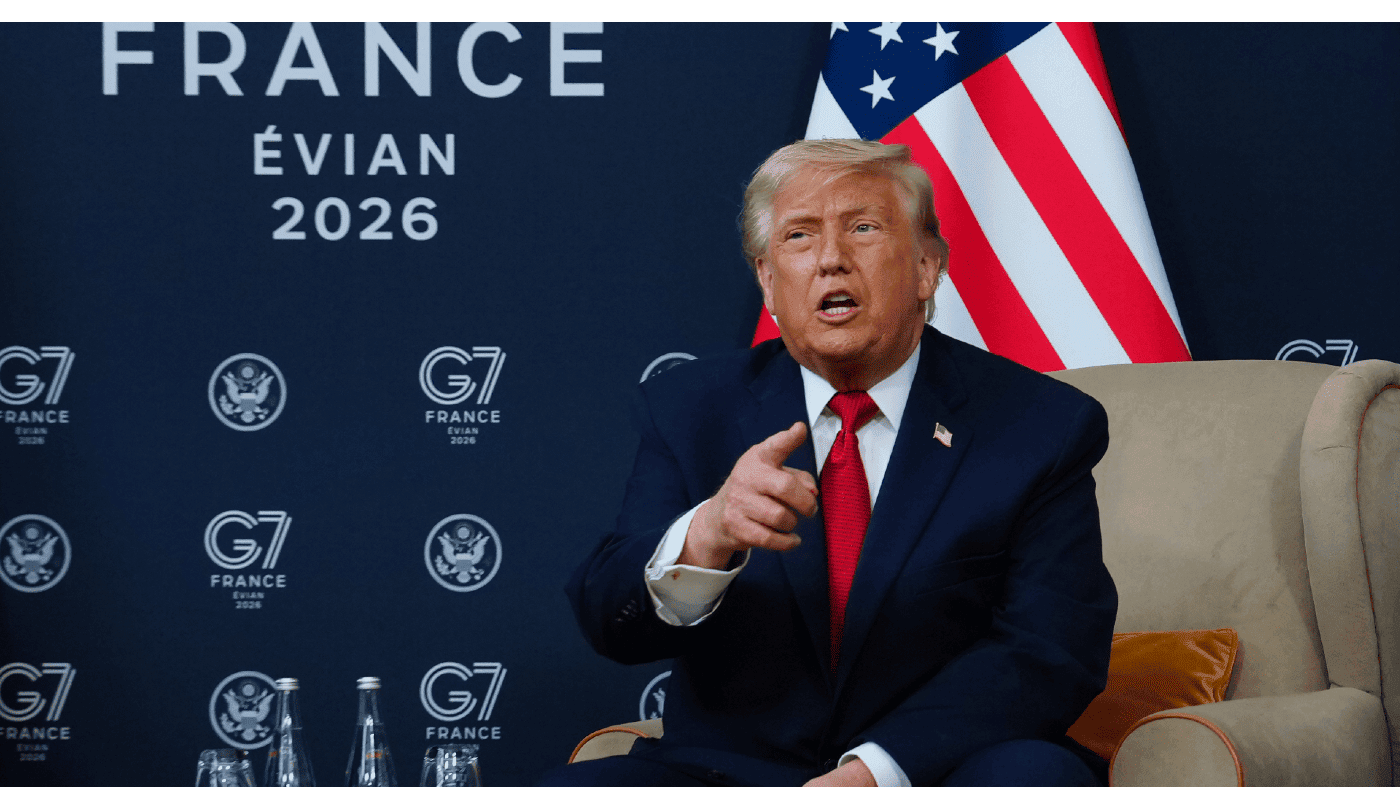
President Trump on Wednesday flatly rejected reports that the preliminary nuclear agreement with Iran includes a $300 billion fund for Tehran, calling the story “false” and insisting the United States will not contribute a dime.
“We’re not investing. We’re not putting up 10 cents,” Trump told reporters at the G7 Summit in Évian-les-Bains, France, seated next to Egyptian President Abdel Fattah El-Sisi. His remarks came amid mounting confusion over the contours of the interim deal, which aims to curb Iran’s nuclear program in exchange for sanctions relief.
When pressed on whether private entities or allied nations might step in to finance Iran’s rebuilding, Trump said, “People can decide to do that, but that’s up to them.” He added, “Do you want me to say nobody’s ever allowed to invest in a country?”
The president explicitly denied any U.S. role in a recovery fund. “We are not investing in it and we do not have a fund.” He also said he is not asking Gulf states to contribute, though he noted, “If they do it, fine. But I would say they won’t be doing it for a while until they find out the behavior.”
Trump’s comments contradict earlier accounts from U.S. officials. On Monday, a senior administration official told reporters, “We discussed the possibility of releasing frozen funds, sanctions relief, you know, a big $300 billion fund to rebuild their country, and all of these things are going to be tied to performance.” Copies of the 14-point agreement obtained by CNN and Bloomberg indicate Iran could gain access to a $300 billion development fund if it meets nuclear rollback commitments.
The president dismissed the discrepancy, calling the fund story “a false story that got picked up incorrectly from a statement that was pretty well made, I think. Maybe it could have been a little more accurate.” U.S. officials say the full details of the agreement will be released publicly this week.
The episode underscores the fragile nature of the emerging deal, which has already drawn sharp criticism from Republican lawmakers. Senate GOP leaders have been moving to restrict Trump’s authority to withdraw troops from Europe, reflecting broader unease about his foreign policy approach. Meanwhile, Trump’s handling of the Iran talks is being watched closely by both allies and adversaries, as the administration seeks to balance diplomatic engagement with a tough posture.
Trump’s dismissal of the fund also aligns with his broader skepticism of large-scale foreign aid and multilateral commitments. He has previously warned that the Iran deal is not final and threatened resumed strikes, signaling that the administration remains prepared to walk away if Tehran fails to comply.
As the White House prepares to release the full agreement, the question of who will pay for Iran’s reconstruction—and under what conditions—remains a central point of contention. For now, Trump is making clear that the U.S. Treasury will not be the source.