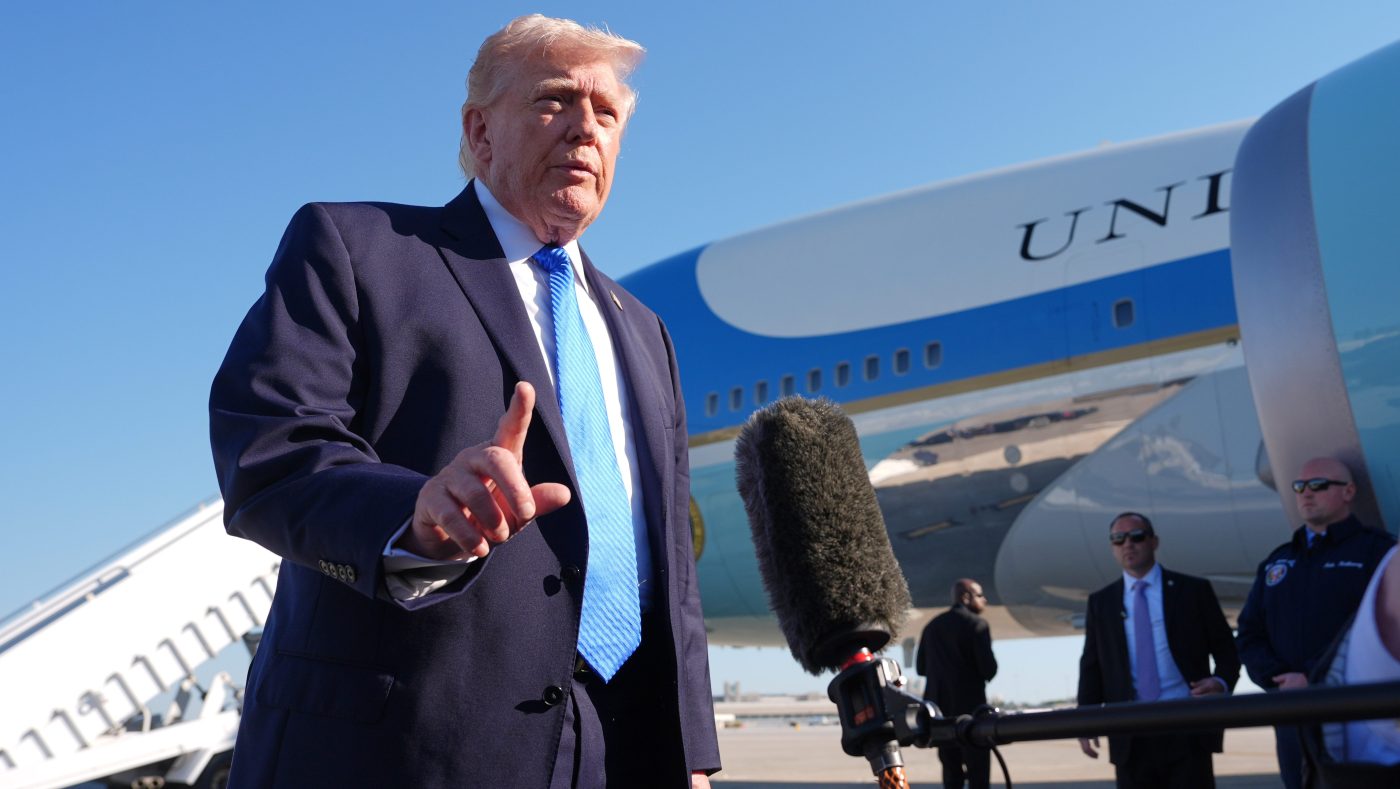
President Donald Trump stated on Monday that his administration has not established direct communication with Iran's Supreme Leader, Mojtaba Khamenei, despite what he described as active negotiations between the two nations. The comments, made to reporters in Palm Beach, Florida, highlight the opaque and contentious nature of current U.S.-Iran diplomacy.
Trump's Remarks on Iranian Leadership
"We're dealing with the individual I consider to be the most respected and the actual leader," Trump said, without explicitly naming the figure. He added, "We have not heard from the son," an apparent reference to Khamenei. The President made a cryptic remark about the Supreme Leader's status, saying, "Occasionally, you'll see a statement attributed to him, but we don't have confirmation if he's living." He suggested that other figures appear to be running the country based on their ability to enact stated policies.

The President confirmed that his senior envoy, Steve Witkoff, and advisor Jared Kushner held discussions with Iranian counterparts on Sunday. However, Trump refused to identify the Iranian officials involved, citing concerns for their safety. "I don't want them to be killed," he stated. He further commented on the perilous nature of Iranian leadership, noting, "Nobody is eager to take that top position right now, but perhaps we can help resolve that situation."
Iran's Firm Denial and Market Implications
Contradicting Trump's account, Iran's Parliament Speaker, Mohammad Bagher Qalibaf, publicly denied any negotiations were taking place. In a post on the social media platform X, Qalibaf asserted, "No discussions have been held with the United States. Fabricated news is being used to manipulate financial and oil markets and to extricate the U.S. and Israel from the quagmire they are in." This denial underscores the deep-seated mistrust between the two governments and the political risks for Iranian officials seen engaging with Washington.
Trump's statements followed his earlier announcement of a five-day suspension of U.S. strikes on Iranian energy infrastructure, which he called a result of "very good" and "productive" discussions. This development, reported as Trump Extends Iran Ultimatum, Pauses Strikes for Five Days as Markets Rally, contributed to a drop in oil prices as traders anticipated de-escalation. Iranian state media framed the pause not as diplomacy but as an American "backing down."
The conflicting narratives emerge within a broader context of regional tension. The administration recently signaled potential de-escalation amid the ongoing Strait of Hormuz crisis, a critical chokepoint for global energy supplies. Furthermore, Israeli Prime Minister Benjamin Netanyahu has publicly commented on the U.S. diplomatic push, as noted in our report on Netanyahu's claims that Trump seeks an Iran deal.
A Pattern of Contradictory Statements
When questioned about the Iranian foreign minister's accusation that he was being untruthful about the talks, Trump dismissed the criticism. "They need to hire better public relations representatives," he retorted. This exchange typifies the war of words that has characterized the relationship, where public posturing often conflicts with behind-the-scenes maneuvering.
The situation remains fluid and fraught with risk. The President's acknowledgment of talks, paired with Iran's swift denial, creates significant uncertainty for global markets and allied governments. The five-day pause in military action provides a narrow window for diplomatic channels to prove their existence and effectiveness. Whether this represents a genuine step toward negotiation or merely a tactical halt remains to be seen, but the starkly opposing official statements from Washington and Tehran suggest a long and difficult path ahead for any substantive agreement.