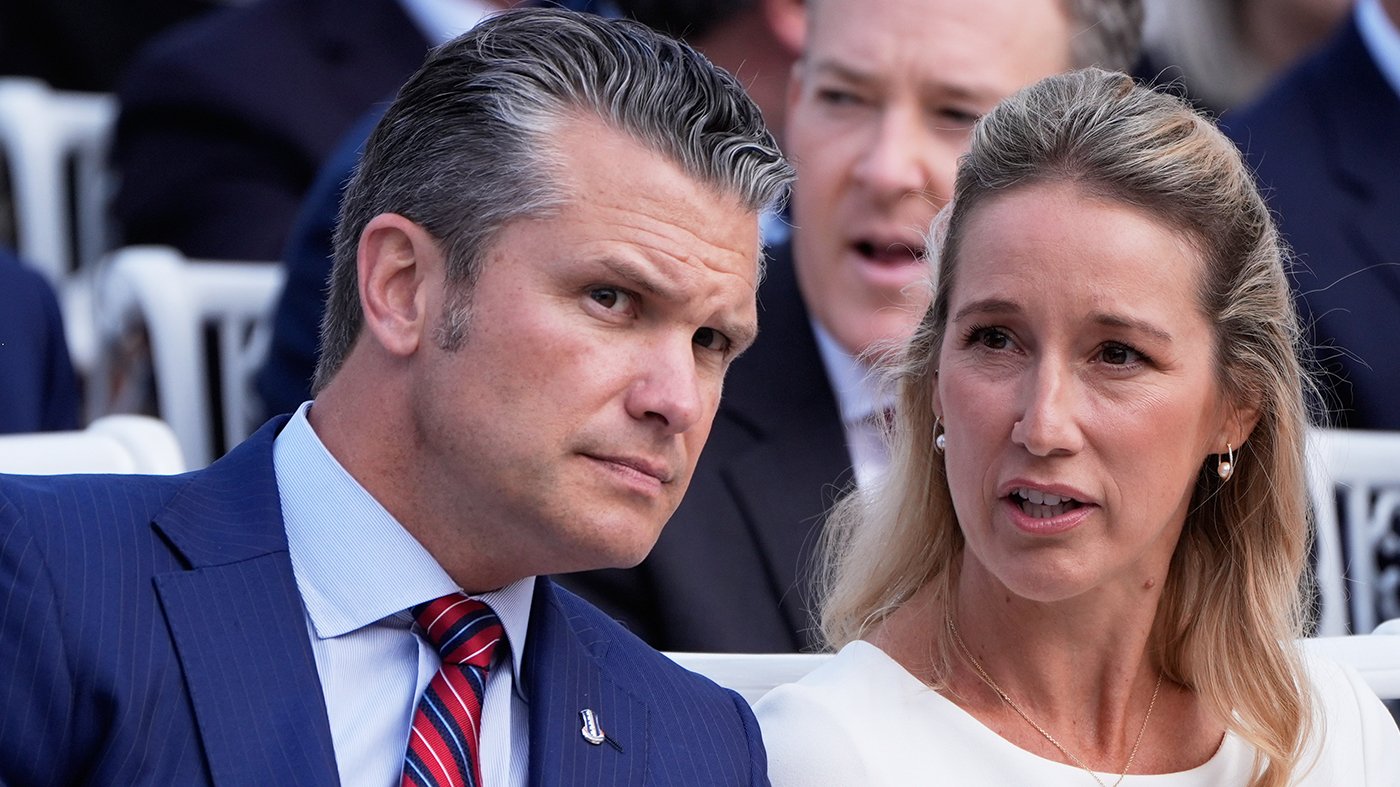
President Trump on Monday signed an executive order establishing a new commission aimed at addressing the unique challenges faced by military spouses and families, a move that places the wife of Defense Secretary Pete Hegseth at the helm.
The President's Military Spouse Commission will be chaired by Jennifer Hegseth, who will lead a panel of 22 members, including Christie Mullin, wife of Homeland Security Secretary Markwayne Mullin, and representatives from the Joint Chiefs of Staff, senior enlisted leaders, and each branch's service secretary. The commission is tasked with advising the president on issues such as healthcare, employment, childcare, and education that affect military families.
"America cannot have the strongest military in the world without the love and devotion of our remarkable military spouses, who make the extraordinary sacrifices for our country," Trump said during a signing ceremony in the Oval Office, with Hegseth and Gen. Dan Caine, Chairman of the Joint Chiefs of Staff, in attendance.
Jennifer Hegseth emphasized the depth of experience among the commission members, noting, "These are generational issues that are long overdue to address. And we have the most amazing women here who have decades of experience as military spouses themselves to take a look at it." She added, "There's really nothing we're going to find that they haven't experienced, and so between what they've experienced and what they know, we're going to really tackle these things."
The creation of the commission comes as data highlights the persistent struggles of military spouses. A 2025 Blue Star Families survey found that 23 percent of active-duty spouses were unemployed, a figure that underscores the employment barriers many face due to frequent relocations and licensing hurdles.
Trump's action builds on his first-term record, when he signed the Veterans Benefits and Transition Act, which allowed military spouses to claim the same state of residence as their service member for voting and tax purposes, regardless of where they actually live. That measure was seen as a step toward easing the administrative burdens on military families.
Defense Secretary Pete Hegseth framed the commission as a matter of military readiness. "Strong families equal strong formations," he said. "When you look at it from a military perspective, as a secretary, our job is to make sure our troops are prepared and ready on behalf of the nation. And if your family's not taken care of, then it causes hesitations and complications for the war fighters up front."
The executive order is part of a broader push by the administration to address military family quality-of-life issues, which have been a recurring concern for lawmakers and advocacy groups. The commission's recommendations could influence future policy proposals, including those related to tax relief for military families and other benefits.
The move also comes as the administration faces scrutiny over its defense budget priorities, with some GOP senators expressing unease about Hegseth's funding requests for potential Iran operations. The commission, however, appears to have bipartisan appeal, as military family support has historically been a nonpartisan issue.
Observers note that the commission's success will depend on translating its findings into concrete policy changes. With the 2026 midterm elections on the horizon, some Republicans worry that the administration's agenda could hurt their chances, making tangible wins on issues like military family support all the more important.