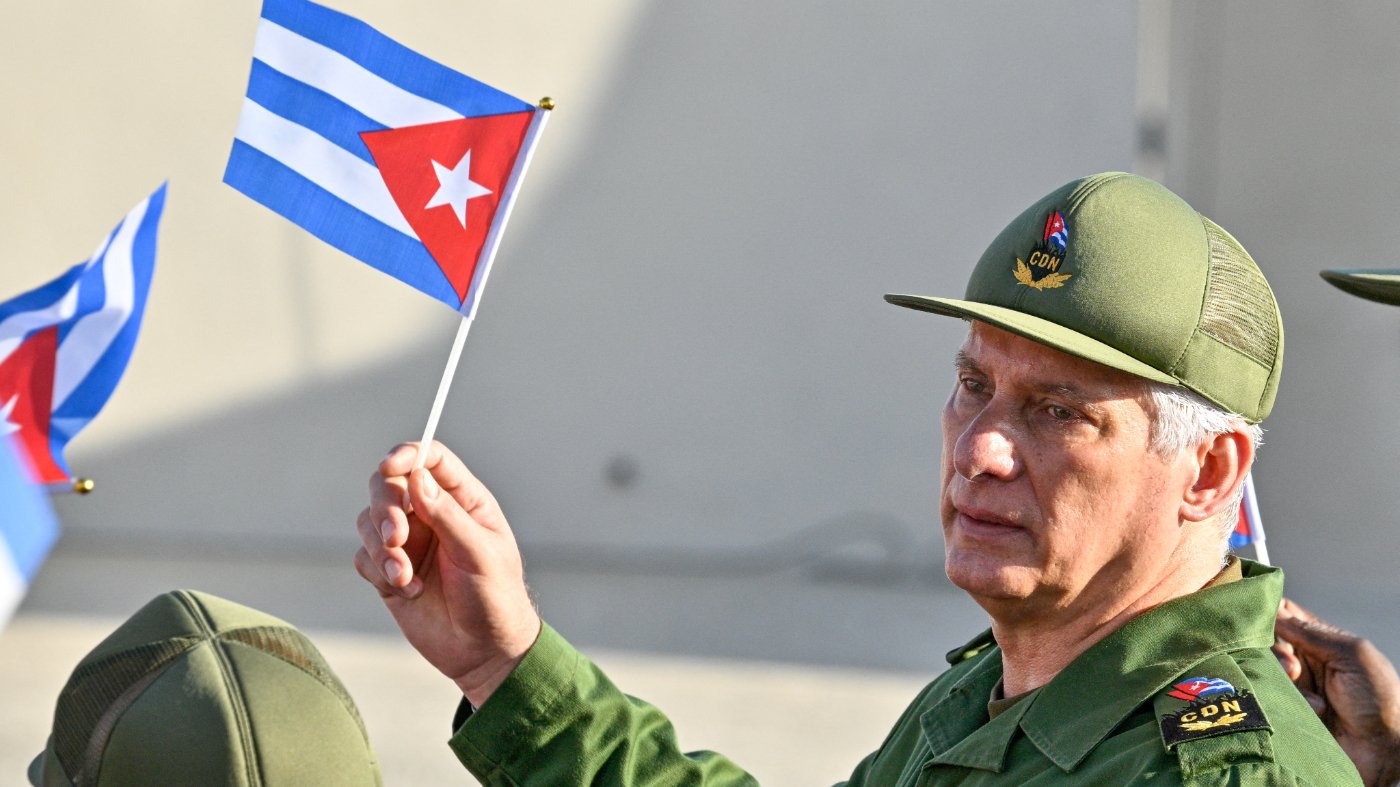
The oldest dictatorship in the Americas is teetering on the edge of collapse. President Donald Trump has made it clear that he is committed to ending communist rule in Cuba, and this time, there is no Soviet Union or other superpower ready to cross the ocean to rescue the regime.
Cuba's rolling blackouts have exposed the failures of its communist system. For 67 years, the Castro family and a military elite have enriched themselves at the expense of the Cuban people. The Soviet Union couldn't fix the system, nor could $63 billion in free Venezuelan oil. Now, with Venezuela no longer providing that lifeline and Russia bogged down in its war in Ukraine, Havana is more isolated than ever.
China, the world's leading producer of solar panels, could end Cuba's power outages in weeks but has chosen not to. Beijing sees Cuba as a failed state and an unprofitable venture, instead sending only modest aid for propaganda purposes. This weekend, China shipped 15,000 tons of rice to the island—enough for a few months, depending on how much is lost to corruption and bureaucratic inertia.
Cuba, once the world's top sugar producer, now imports sugar from Brazil and Colombia. The regime blames the U.S. embargo, but that's a tacit admission that communism can't meet its people's needs without foreign capitalists. The embargo is not the root cause; the system itself is.
The Trump administration sees this as the moment for change. The USS Nimitz, a nuclear-powered aircraft carrier, deployed to the Caribbean last week. Over 150 hours of aerial surveillance flights have gathered intelligence on the island. Raul Castro has been indicted for the alleged murder of members of the humanitarian group Brothers to the Rescue. These are unmistakable signs that the hour of change is drawing near.
But the task of stabilizing post-liberation Cuba will be immense. Unlike Venezuela, there is no Delcy Rodriguez to facilitate a smooth transition, nor a Maria Corina Machado to lead a democratic government. There are no oil reserves to jump-start the economy. However, Cuba's proximity to the U.S. and its prosperous diaspora are assets. Guantanamo Bay, held by the U.S. since 1898, provides a strategic foothold for security.
Secretary of State Marco Rubio has outlined a vision for "a new Cuba" where ordinary Cubans—not the military-controlled conglomerate—can own businesses. "All of this exists in the Bahamas, the Dominican Republic, Jamaica, and just 90 miles away in Florida," Rubio said. "If owning your own business and having the right to vote is possible around Cuba, why is it not possible for you in Cuba?"
Havana's dictatorship is on the verge of collapse. China isn't in the business of bailing out failed states. Russia is focused on its war in Ukraine. The signs are clear: The oldest dictatorship in the Americas is about to fall.