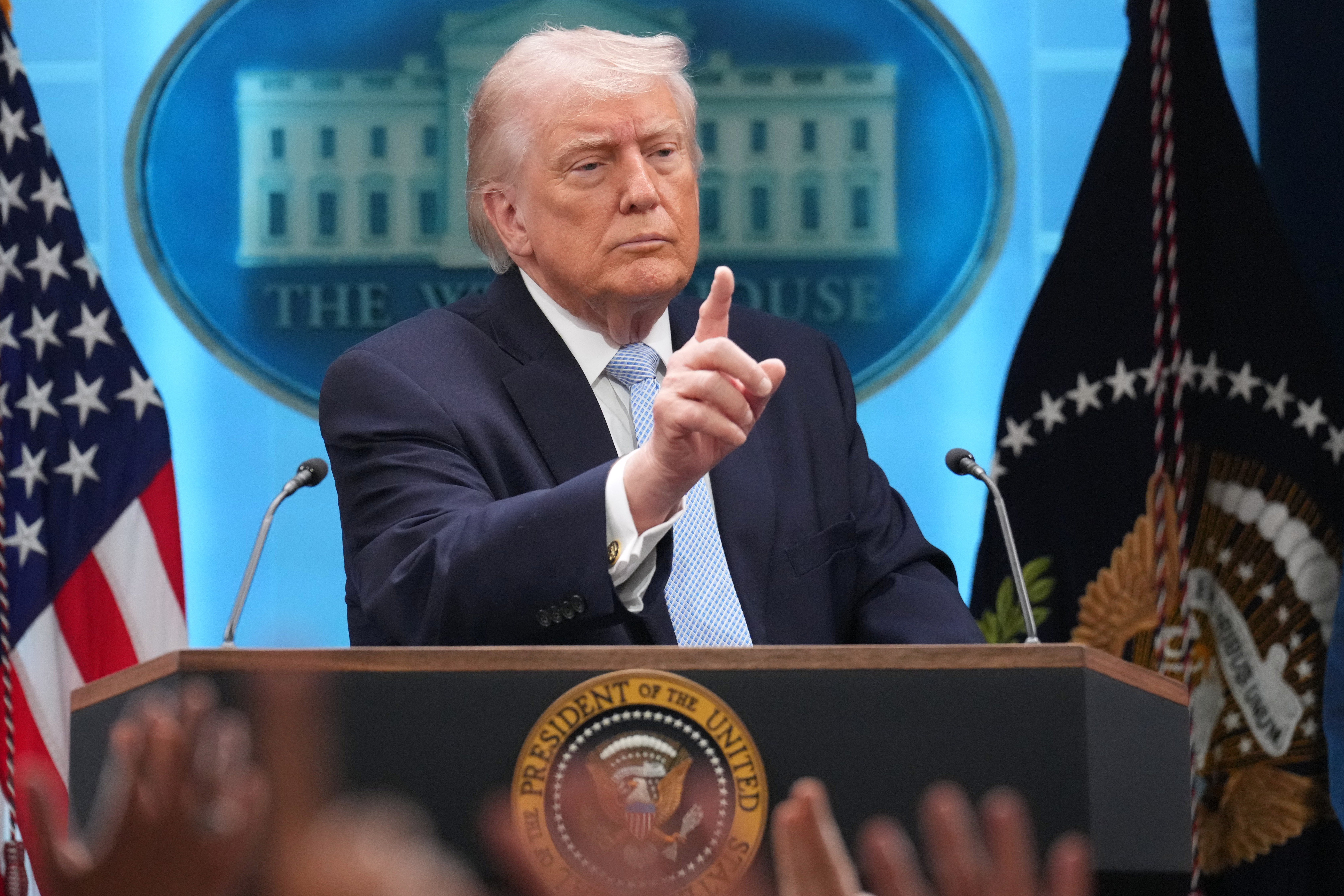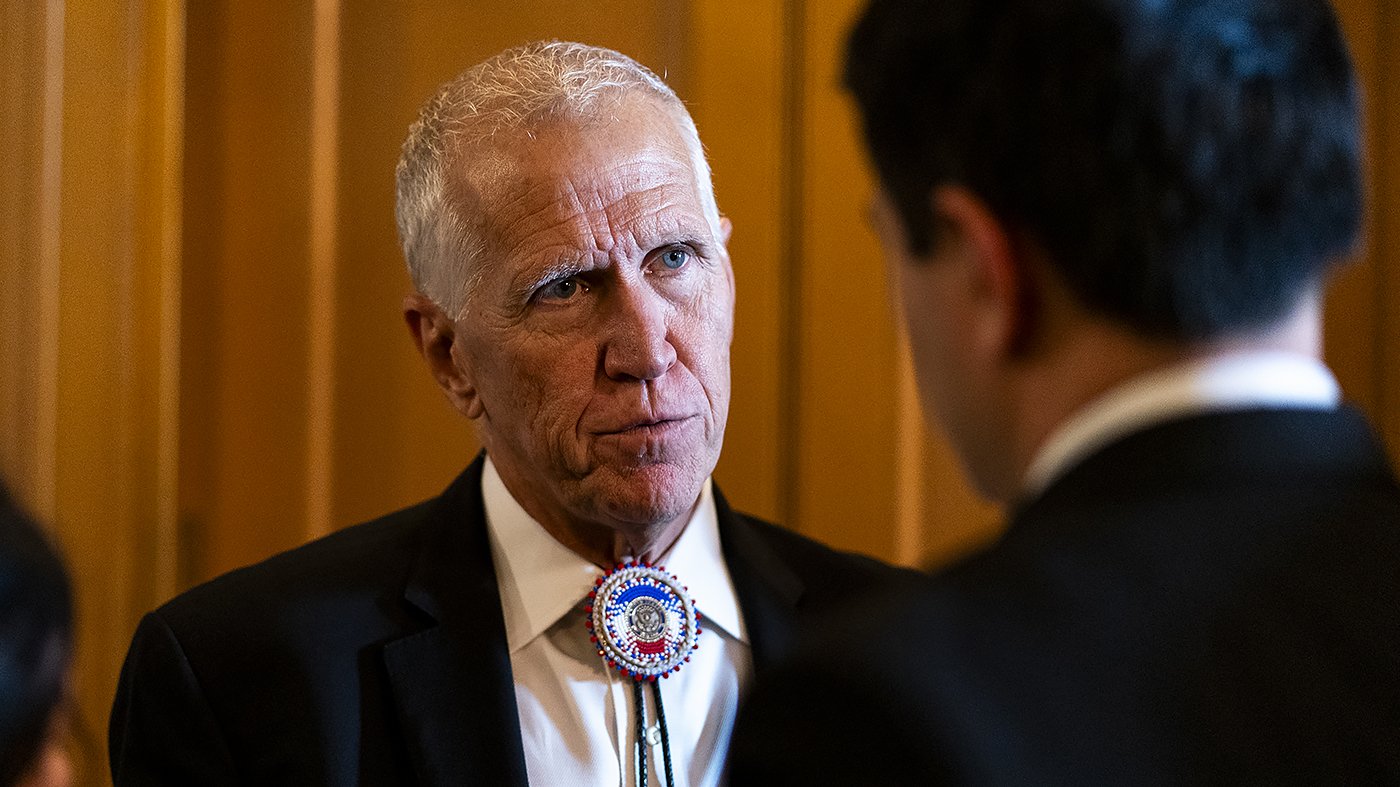
Sen. Thom Tillis (R-N.C.) announced Wednesday that he will oppose the war powers resolution aimed at withdrawing U.S. forces from hostilities against Iran, dismissing the effort as a purely symbolic political maneuver.
The North Carolina Republican made clear he will not join four GOP senators who have pledged to back a discharge motion to force a floor vote on the measure. Tillis described such votes as “messaging exercises” that lack legislative teeth.
“They’re messaging votes,” Tillis told Spectrum News. He recounted a recent encounter with an activist who asked whether he would support the War Powers Act. “I said no because it’s a messaging exercise. She said, ‘What do you mean?’”
Tillis explained that even if the resolution cleared the Senate, it would still need House approval and would almost certainly face a presidential veto from Donald Trump. “We know this is a messaging exercise,” he said. “If we go about this at an adversarial position, we’re going to make a point, we’re not going to make a difference.”
The senator also voiced concern over Trump’s recent comment that he does not worry about Americans’ financial struggles during Iran negotiations. “As president of the United States, you should be thinking about the people struggling the most 24/7,” Tillis said. “It’s a matter of good policy, but it’s also good politics. When you’re having an affordability problem right now, and you have somebody that is a billionaire saying he doesn’t worry about what people are dealing with, they grew up in trailer parks like I did, it’s not very wise.”
The 1973 War Powers Act restricts presidential authority to deploy forces without congressional approval, requiring notification within 48 hours and limiting deployments to 60 days, with a possible 30-day extension for safe withdrawal. Tillis had previously warned in April that the Trump administration had not clearly defined its objectives in Iran, and that after the 60-day deadline, “it’s going to be difficult to get my support.”
Rather than backing the resolution, Tillis called for a formal authorization for the use of military force (AUMF) crafted with input from the president and national security experts. “They have to be transparent, and they have to be accountable to Congress,” he added. “They’ve been neither over the course of this engagement.”
The four Republican senators who have broken ranks to support the discharge petition are Susan Collins (Maine), Rand Paul (Kentucky), Lisa Murkowski (Alaska), and Bill Cassidy (Louisiana). Collins had signaled in April that she would likely vote against further hostilities. This growing GOP defection highlights the deepening unease on Capitol Hill over the administration’s Iran policy. Meanwhile, Democrats are closing in on a potential war powers win as the coalition of support expands.