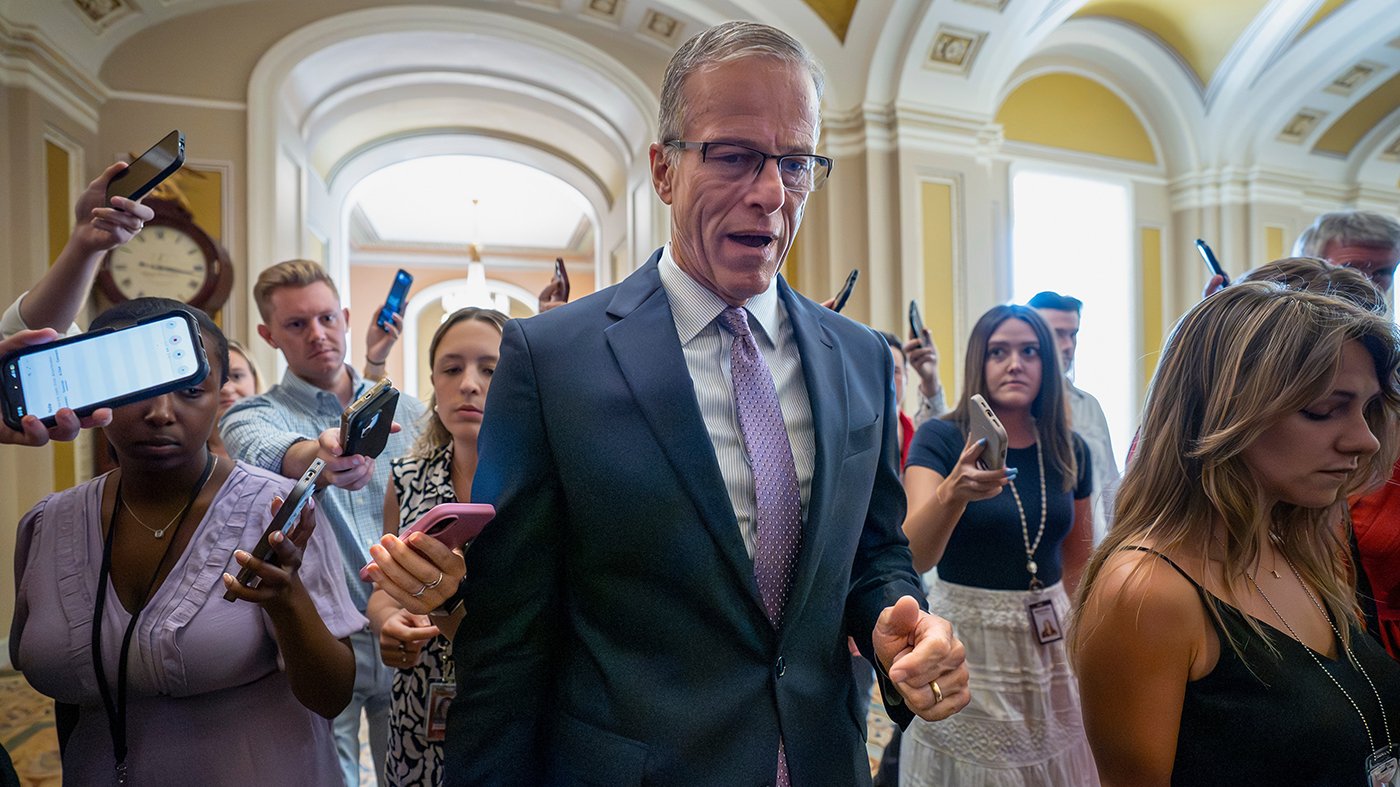
Senate Majority Leader John Thune (R-S.D.) raised alarms Wednesday over President Trump's escalating attacks on Senate Parliamentarian Elizabeth MacDonough, describing the rhetoric as “concerning” if it turns the nonpartisan rules keeper into a political target or security liability.
Thune dismissed Trump's call for Senate Republicans to fire MacDonough—appointed in 2012 by then-Majority Leader Harry Reid (D-Nev.)—but acknowledged the risk of her becoming a target. “Obviously, it's concerning when anybody gets targeted like that,” Thune told reporters. “We'll make sure everybody's got security around here.”
The controversy stems from MacDonough's ruling that funding for a new White House ballroom does not meet strict budget reconciliation rules, jeopardizing its inclusion in the GOP's fast-track package. Trump, on his Truth Social platform, accused MacDonough of being “brutal to Republicans, but not so to the Dumocrats” and urged GOP leaders to replace her.
Thune, however, warned that firing the parliamentarian would only deepen vote-counting challenges. “That would create even more vote issues here if we were to try to do something like that,” he said, noting that some GOP senators would balk at manipulating Senate rules to push through the earmark.
The majority leader emphasized that the real hurdle isn't MacDonough but the internal GOP split over the ballroom funding. “There may be some issues related to the parliamentarian, but most of the issues we have here are votes,” Thune said. “The things we're dealing with here is vote count.” When pressed on whether sufficient Republican support exists, he replied, “We'll get back to you on that.”
Trump's attacks are not new—he has long criticized MacDonough for rulings that blocked conservative priorities during his first term. But this latest salvo comes as the White House ballroom funding, a pet project of Trump's, faces an uncertain path. The parliamentarian's role is to ensure reconciliation bills comply with the Byrd Rule, which bars extraneous provisions.
Thune noted he has had “no conversations” about replacing MacDonough and has not seen Trump's latest post. “It's not the first time,” he said of the president's demands. The standoff underscores the tension between Trump's desire to bypass procedural hurdles and Senate Republicans' need to maintain institutional norms to secure votes.
Meanwhile, the broader political landscape remains volatile. Trump's approval rating has slipped to 35% amid foreign policy crises, and House Democrats are demanding answers on a $1.78 billion fund for Trump allies, as reported in a recent DOJ inquiry. The parliamentarian fight adds another layer to the GOP's internal divisions as they scramble to pass reconciliation before the week's end.
Thune's comments reflect a careful balancing act: avoiding a direct confrontation with Trump while protecting the Senate's procedural integrity. “I guess it's his opinion,” he said of Trump's attacks, steering clear of a full-throated defense of MacDonough. The outcome of the ballroom funding—and the parliamentarian's fate—remains in the hands of a deeply fractured Republican conference.