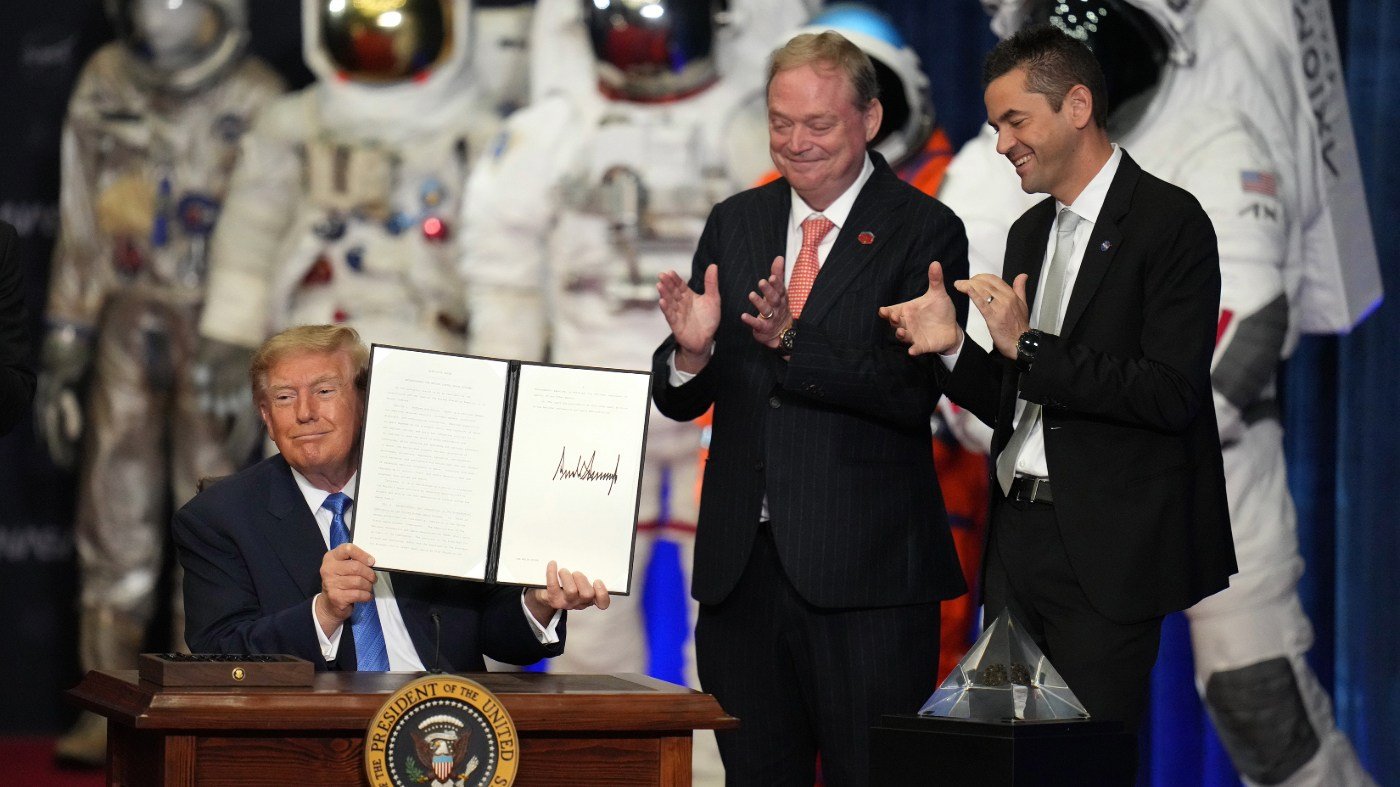
The White House's recent announcement of a U.S. Space Academy has set off a fierce competition among states eager to host the new institution. Unlike traditional service academies like West Point or Annapolis, the Space Academy will prepare graduates for careers in the Space Force, NASA, or the private sector, making it a unique addition to America's educational and defense infrastructure.
The academy's structure is still being defined, with a committee chaired by NASA Administrator Jared Isaacman tasked to deliver a proposal within 120 days. Curriculum, faculty, partnerships, and even the name of the sports teams remain undecided. In the meantime, states are preparing bids to secure the economic windfall and prestige that comes with hosting the academy.

According to Payload Space, potential sites must offer at least 300 acres near a NASA facility or a university, with capacity to house 1,200 students initially, growing to 4,000. Proposals are due by October 26. The states leading the pack are Texas, Florida, and Alabama, each boasting significant NASA centers and robust aerospace ecosystems.
Texas is pulling out all the stops, with Governor Greg Abbott forming a leadership team and state Representative Greg Bonnen spearheading the effort alongside the Texas Space Commission. Senators Ted Cruz and Brian Babin issued a joint statement touting Texas's credentials: "If America is going to build the world's premier academy for space, Texas has all the right stuff — the talent, institutions, infrastructure, and experience to launch the next generation of American space leaders." Notably, Cruz chairs the Senate Commerce Committee, and Babin chairs the House Science, Space, and Technology Committee, which will be pivotal in advancing the academy's legislation.
Other contenders include Ohio, New Mexico, Mississippi, Louisiana, Maryland, and California, all of which have NASA or military space assets. Ohio's Governor Mike DeWine has established a working group to pitch the state. Florida's senators are actively lobbying, filing legislation and working with Space Florida, while Alabama's congressional delegation has sent a bipartisan letter to the White House.
The competition is expected to involve intense political maneuvering, but the proposal has garnered near-universal support, a rarity for a Trump administration initiative. One dissenting voice is Lori Garver, former NASA deputy administrator under Obama, who objects to the academy's potential to blur the line between civilian and military space programs—a distinction maintained since the Eisenhower era to contrast with adversaries like the Soviet Union and China.
Garver's concerns may be overlooked, as the growing importance of space for national security makes the separation increasingly obsolete. The future of space exploration will likely require close collaboration between NASA, commercial partners, and the Space Force, especially for projects like the planned lunar base. The Space Academy could be a catalyst for that cooperation, though the debate over its location and purpose will continue as the selection process unfolds.