Federal prosecutors unsealed an indictment Tuesday charging three men in connection with an Iran-linked terror network that allegedly plotted to attack a British air base used by U.S. forces, among nearly two dozen other targets. The case also reveals how a militant already held in a Brooklyn jail allegedly used family phone calls to coordinate the plots from behind bars.
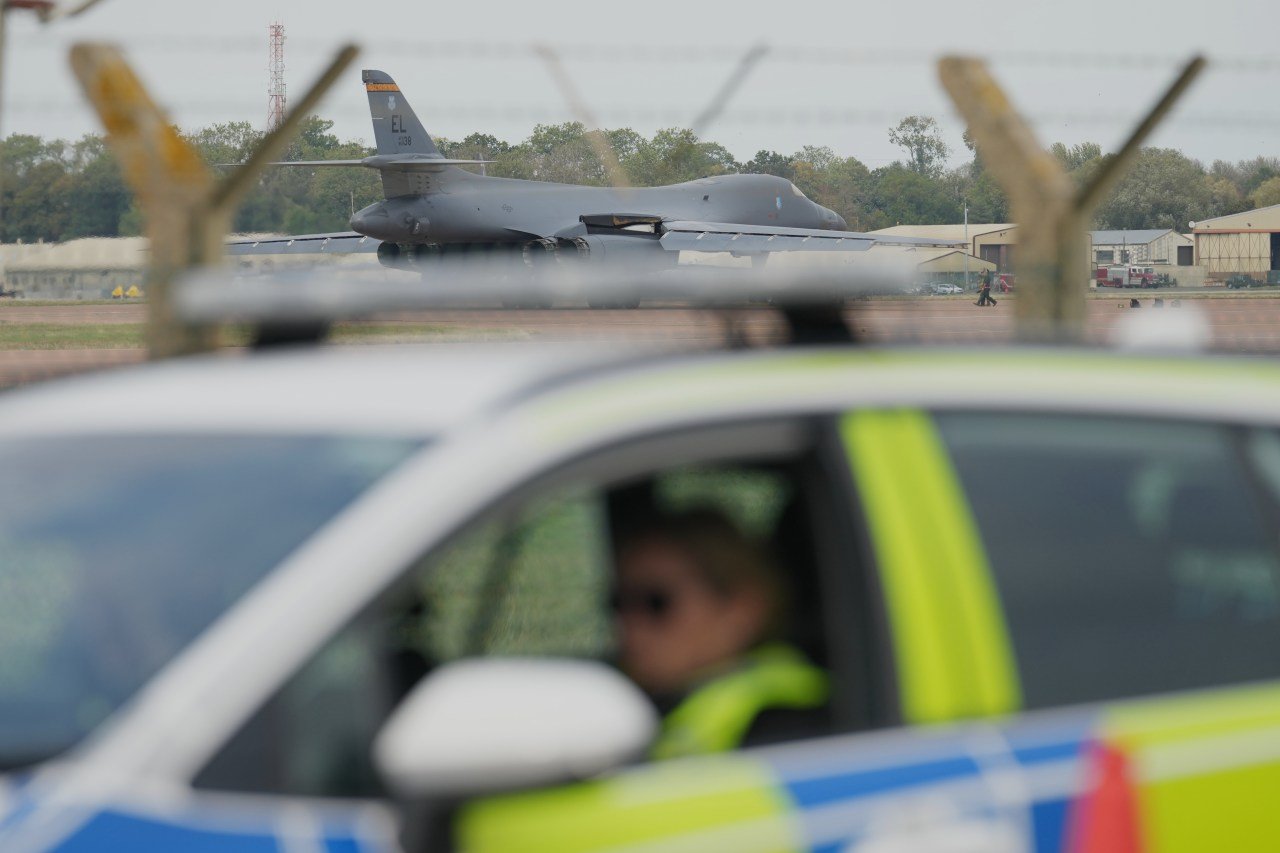
Mohammad Baqer Saad Dawood al-Saadi, a dual Iranian-Iraqi national, is accused of using coded language during monitored calls to his mother and sister in Iraq to pass instructions to associates involved in the plot against RAF Fairford in western England. The base, located about 100 miles west of London, has long served as a staging ground for American bombers during Middle East conflicts.
The indictment, unsealed in Manhattan federal court, charges al-Saadi along with Mohsen Mohajeri, an Iranian national, and Mohammad Ali al-Hassani, an Iraqi national, with conspiring to commit terrorism. Neither Mohajeri nor al-Hassani is in U.S. custody.
Manhattan U.S. Attorney Jamie McDonald said the defendants worked to “orchestrate a campaign of terror on behalf of terrorist organizations affiliated with Iran that targeted Jewish communities in Europe and the United States, and the British military base, RAF Fairford, housing American service members.” He added that the threat from Iran and its proxies is “not hypothetical — it is very real.”
Attorney General Todd Blanche issued a stark warning: “Anyone who plans a terrorist plot on a military base housing American service members will be prosecuted by the United States government.”
Charges Detail Coded Messages and Real-Time Coordination
According to the indictment, al-Saadi used the word “work” to refer to terrorist operations. In a July 30 call from the Metropolitan Detention Center in Brooklyn, he asked his sister about “all our old work” and whether it had been canceled. She replied that “it isn’t canceled.” In a September call, he instructed his family to give money to al-Hassani so “we can do it.”
The indictment alleges that on at least one occasion, the three men directed an arson attack on a Jewish charity in London while watching a video feed of the operation on a laptop screen. The following day, they allegedly directed an attack on a synagogue, with al-Hassani telling the operative to “light it up like a Christmas tree.”
The plots were allegedly carried out on behalf of the Islamic Revolutionary Guard Corps and Kata’ib Hizballah, both designated foreign terrorist organizations by the U.S. government. Prosecutors describe al-Saadi as a commander in Kata’ib Hizballah.
Background: RAF Fairford Incident and UK Arrests
The new charges shed light on the events of September 27, when British authorities detained seven men after three suspicious vans were seen heading toward RAF Fairford, where U.S. bombers were stationed. All seven were released on bail, but two were later re-arrested and charged under the UK’s National Security Act for allegedly assisting Iran’s intelligence service. British officials linked the incident to Tehran, which denied involvement. The U.S. subsequently withdrew its bombers from the base and redeployed them to the United States.
Al-Saadi has been held in solitary confinement since his arrest in May. The Justice Department has argued he is dangerous due to his stated desire to attack U.S. and Israeli interests. He pleaded not guilty in June to charges that he plotted at least 18 attacks in Europe in retaliation for U.S. and Israeli military action against Iran. He has referred to himself as a “prisoner of war.”
The case has also sparked a legal fight over al-Saadi’s phone access. His lawyer complained in September that calls were being cut off, and the government later restricted him to a single hour-long call per month, citing concerns about coded language. Court filings show the FBI monitored and recorded all calls, and in at least one instance, al-Saadi’s mother warned him to stop talking about a subject because “they may end the call,” after which the FBI terminated the call.
The indictment alleges that from June through September, al-Saadi participated in nine phone or video calls from jail, using them to advance the conspiracy. His lawyers did not immediately respond to requests for comment.
This case comes amid broader concerns about Iranian covert operations targeting U.S. and allied interests. In a related development, UK authorities have charged two Britons in connection with the same alleged plot. The U.S. Justice Department has also faced judicial criticism in other national security cases, underscoring the legal complexities of such prosecutions.
The investigation continues, and prosecutors say more arrests are possible as they work with international partners to dismantle the network.