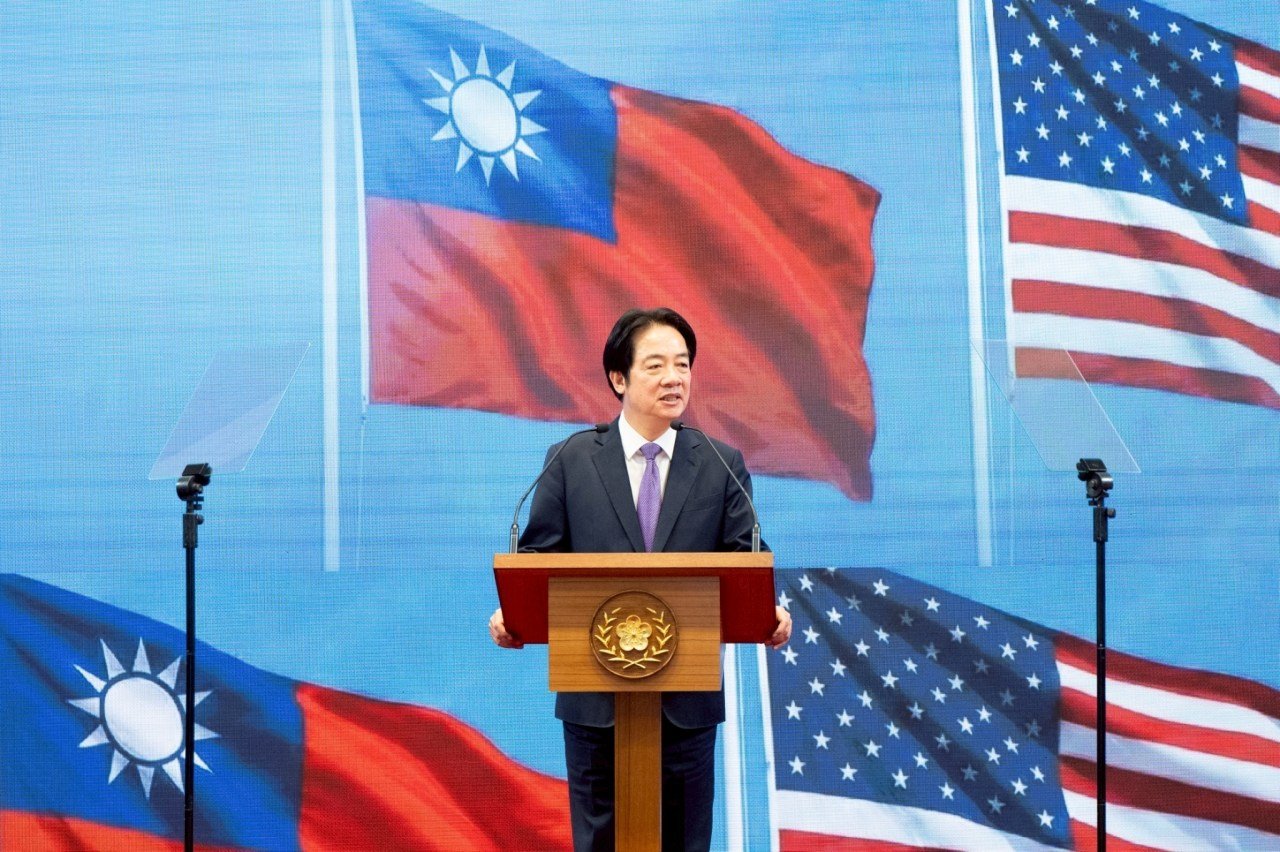
TAIPEI — Taiwan President Lai Ching-te on Sunday pushed back against President Donald Trump's characterization of arms sales to the island as a negotiating tool, insisting that American weaponry remains the most effective shield against regional instability.
“Arms purchases from the United States are the most important deterrent of regional conflict and instability,” Lai said in a statement, directly rebutting Trump’s suggestion that a pending $14 billion arms package was a “very good negotiating chip” with Beijing.
The exchange comes days after Trump, in a Fox News interview, raised fresh doubts about his commitment to arming Taiwan, a self-governing democracy China claims as its own. Lai thanked Trump for his past support, but the president’s comments have rattled Taipei and reignited debate over the reliability of American backing.
“We thank President Trump for his continued support for peace and stability across the Taiwan Strait since his first term, including the continuous increase in the scale and amount of arms sales to Taiwan,” Lai said, attempting to steady nerves.
Trump approved a record $11 billion arms package in December, including missiles, drones, and artillery. But in the same interview, he suggested the new $14 billion tranche—already stalled—depended on Chinese cooperation. “It depends on China,” Trump said, sparking alarm among Taiwan’s leadership.
Lai struck a defiant tone, declaring Taiwan would not “provoke or escalate conflict” but also would not “relinquish its national sovereignty and dignity, or its democratic and free way of life.” He pointed to China as the source of regional tension, a message echoed by U.S. House Speaker Mike Johnson, who told Fox News, “China cannot just go take over land.”
U.S. Trade Representative Jamieson Greer, appearing on ABC, said Trump was still weighing the arms sale, noting past presidents had paused such deals. “When the president makes a decision on national security, it’s really based on American security needs first,” Greer said.
Chinese President Xi Jinping, during his recent talks with Trump, framed Taiwan as “the most important issue in China-U.S. relations” and warned of “clashes and even conflicts” if mishandled—one of his strongest statements to date.
The island has been governed separately from China since 1949, when the Communist Party took power in Beijing. The U.S., bound by law to help Taiwan defend itself, has long been its primary arms supplier, even as Washington maintains formal diplomatic ties with China.
For political observers, Trump’s transactional approach—and Lai’s insistence on deterrence—underscores the fragility of Taiwan’s security. The ongoing GOP fractures over Trump’s demands and the Senate scramble to salvage his priorities suggest that even allies question the consistency of American commitments.