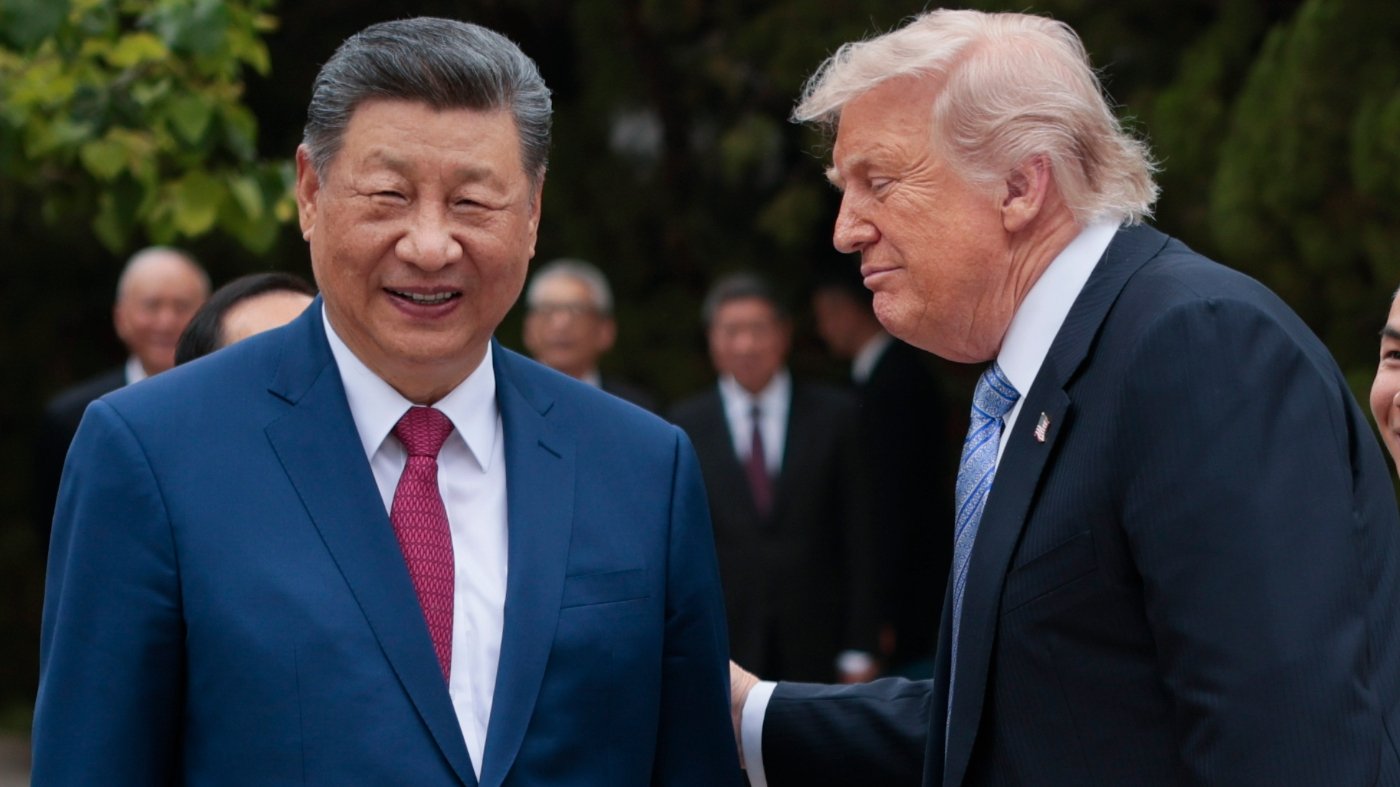
The recent summit between President Donald Trump and Chinese President Xi Jinping drew sharply partisan reactions in Washington. While the atmosphere appeared cordial, tangible progress on core disputes—Taiwan, Iran, trade—remained elusive. To understand what really transpired, it helps to consult an ancient strategist: Sun Tzu.
Sun Tzu, the Chinese military philosopher who lived around 400–600 BCE, famously argued that the supreme art of war is to subdue the enemy without fighting. His dictum that “all warfare is based on deception” is as relevant today as it was millennia ago. Applying his lens to the Trump-Xi meeting reveals layers of strategic maneuvering that partisan commentary misses.
Taiwan: The Unspoken Flashpoint
For decades, Taiwan has been the first item on any U.S.-China agenda. But as the author notes, three U.S. administrations have warned that China could invade the island as soon as 2027. China’s military buildup is now substantial, and Taiwan Semiconductor Manufacturing Company produces nearly all advanced chips globally—a war that destroys TSMC would take billions to rebuild.
Sun Tzu would advise Beijing to win without fighting. A strategy of blockade, intimidation, and political pressure on the Kuomintang could achieve unification without the devastation of war. If force were used, deception would be central. The Chinese military has likely studied the Normandy invasion’s deception plan, where General Eisenhower convinced Hitler that the attack would come at Pas de Calais, not Normandy.
A Hypothetical Invasion Scenario
If Sun Tzu commanded an invasion of Taiwan, he might feint toward the heavily defended west coast while launching a real assault on the relatively undefended southeast port of Tai Lung. From there, forces could advance on Kaohsiung, presenting a fait accompli. The U.S. and Taiwan, having prepared for a west-coast invasion, would have few options short of all-out war.
This “strike at what is weak” approach echoes Sun Tzu’s emphasis on attacking vulnerabilities. Whether Beijing would adopt such a subtle strategy remains an open question, but the logic is compelling.
Deception in the Summit Hall
Sun Tzu’s fingerprints were everywhere at the summit. Hundreds of children waving U.S. and Chinese flags created a welcoming spectacle. Trump entered the Great Hall of the People, where ceilings soar 108 feet—a deliberate display of scale. The author recalls a visit years ago: the hall was empty except for two chairs. When a Chinese general asked why he laughed, the reply was, “I’ve read Sun Tzu too.”
The officer escorting both presidents to review the troops stood three inches taller than Trump—no accident, as Lenin might say. More critically, the official reports of the summit differed between Mandarin and English versions. Mistranslations made the Chinese domestic narrative diverge from the international one, a classic disinformation tactic.
Shifting Power Dynamics
What did the summit achieve? Trump’s earlier meetings with North Korea’s Kim Jong Un softened tensions there, but with China, the balance of power may be shifting. As the author suggests, we may be witnessing a change of guard over who is first among equals.
Meanwhile, domestic political battles continue. GOP fractures over Trump’s $1B ballroom demand and Graham defends Trump’s Iran stance as a ‘Churchill moment’ show the president’s influence on foreign policy. But as Sun Tzu knew, the most important battles are often won without a shot.