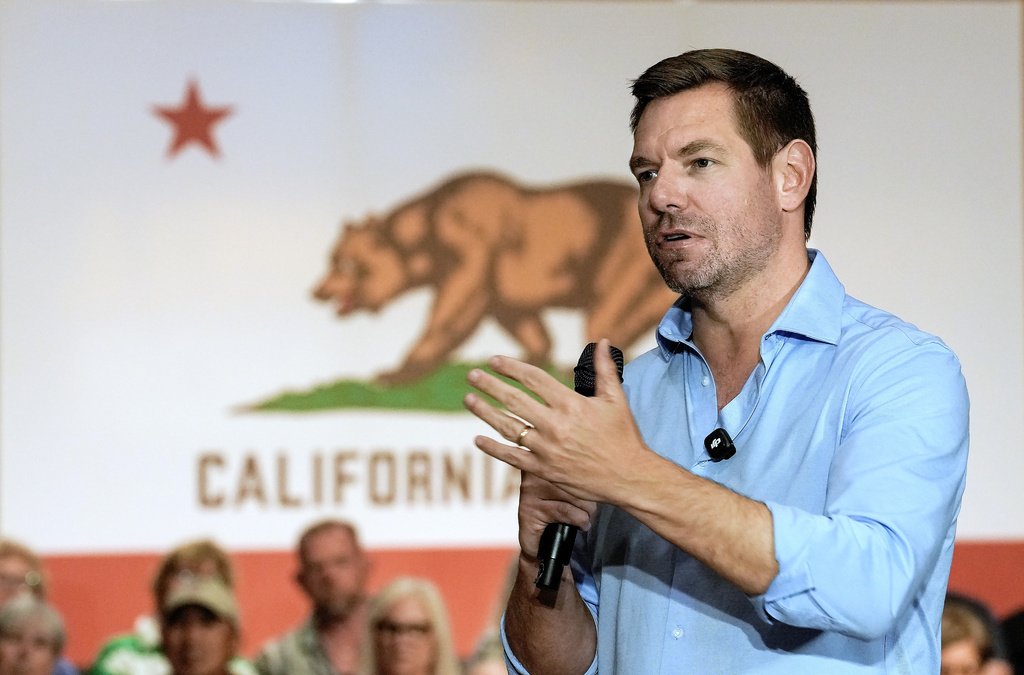
The resignation of Congressman Eric Swalwell following multiple sexual assault allegations has exposed a troubling pattern of willful ignorance within Democratic Party leadership, revealing how political expediency repeatedly trumped ethical accountability.
Swalwell's political collapse came swiftly last week when four women came forward with coordinated allegations of sexual assault. Within days, the California Democrat suspended his gubernatorial campaign and resigned from Congress. His attorney called the allegations a "political hit job," while Swalwell himself denied wrongdoing in a resignation letter that curiously referred to the "allegation" in the singular.

A Pattern Long Ignored
What makes this scandal particularly damaging for Democrats is the mounting evidence that warnings about Swalwell's behavior circulated for years among Capitol Hill staff, California political circles, and journalists—some dating back to his first election in 2013. Yet despite these persistent rumors, Democratic leadership continued to elevate him, most notably when then-Speaker Nancy Pelosi entrusted him with helping lead Donald Trump's second impeachment in 2021.
Former House Speaker Kevin McCarthy recently claimed that "every member in Congress knew not to let any young staffer get around Swalwell or Matt Gaetz," suggesting the knowledge of potential misconduct was widespread. Swalwell had cultivated a public image as a moralist of the #MeToo era while privately, according to multiple accounts, engaging in behavior that contradicted those principles.
Party Leadership's Contradictory Responses
The aftermath has seen prominent Democrats offering contradictory explanations about their prior knowledge. Senator Ruben Gallego, whom Swalwell once called his "best friend," initially claimed no knowledge before conceding he had heard "rumors in Washington for many years" that Swalwell was a "flirty, social guy." Gallego now describes his former ally as a "predator" who "lived a double life." Notably, other Democratic figures have similarly denied prior knowledge as the ethical fallout spreads.
Pelosi, who spent years promoting Swalwell and defended him during the controversy over his ties to a suspected Chinese intelligence operative, now insists she had "no idea whatsoever" about the allegations. She has dismissed suggestions that Democrats "turned a blind eye" as "absolutely not true," despite considerable evidence to the contrary.
The Calculus of Political Expediency
The timing of the allegations' emergence suggests careful political calculation. With California's jungle primary system, party operatives had strong incentive to address the scandal before Swalwell potentially limped through to become the nominee. The cost of removing him early was relatively low—his House seat was almost certain to remain in Democratic hands—while the risk of a nominee embroiled in scandal was substantial. This strategic timing has led some observers to characterize the episode as an intra-party political assassination.
The situation echoes broader patterns in both parties where allegations are managed based on political convenience rather than ethical imperative. As commentator Bill Maher recently noted in condemning Swalwell, there's growing public frustration with political hypocrisy on matters of personal conduct.
Broader Implications for Democratic Politics
Swalwell's fall represents more than just one politician's disgrace—it exposes the gap between Democratic rhetoric on women's rights and the party's internal practices. The same establishment that demanded the public "Believe All Women" during the height of #MeToo appears to have ignored credible warnings about one of their own until it became politically necessary to act.
This episode occurs as Democrats prepare for future electoral challenges, including the emerging 2028 presidential field and critical Senate contests where fundraising advantages may prove crucial. The Swalwell scandal threatens to undermine Democratic claims to moral authority, particularly on issues of gender and power.
As the party grapples with this self-inflicted wound, the fundamental question remains unanswered: How many other allegations have been quietly managed rather than properly addressed? The Swalwell affair suggests that until political calculations change, party establishments will continue prioritizing internal impunity over consistent ethical standards.