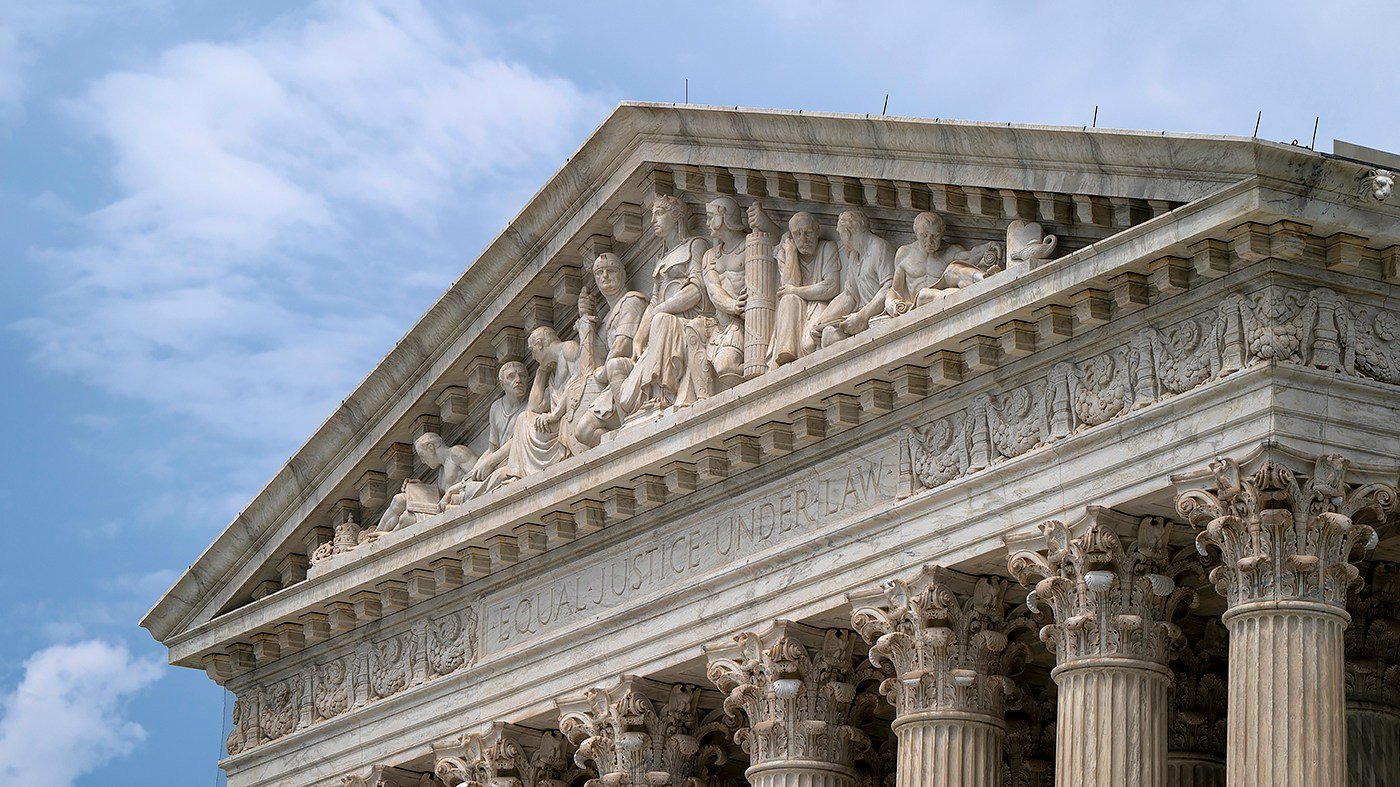
The Supreme Court on Monday declined to take up a First Amendment challenge to California's mandate that doctors receive implicit bias training as part of their continuing education, a decision that leaves the requirement in place.
The court's order means that the state's 2019 law, which requires all continuing medical education (CME) courses to include instruction on implicit bias, will remain in effect. The challenge was brought by ophthalmologist Azadeh Khatibi and Do No Harm, a group that opposes diversity initiatives in medicine.

Three conservative justices — Clarence Thomas, Samuel Alito, and Neil Gorsuch — voted to hear the case, but the court requires four votes to grant review. Thomas and Alito wrote a dissent from the denial, arguing that the lower courts' reasoning was flawed.
"That logic fundamentally misunderstands this Court's precedents and the Constitution. First Amendment protections do not give way simply because a State heavily regulates speech," Thomas wrote, joined by Alito. Gorsuch dissented separately without explanation.
The case centered on whether California's requirement forces instructors to convey a "contested ideological message" in violation of the First Amendment. The lower courts had ruled that the requirement constitutes government speech, not compelled private speech, and therefore does not raise constitutional concerns.
Khatibi, who teaches CME courses, said she complies with all other state requirements but objects to the implicit bias mandate. Her lawyers argued that the lower court's ruling "erases the constitutional boundary between government and private speech" and conflicts with Supreme Court precedent.
California countered that the lower court decisions were consistent with existing law and that granting review would "imperil" medical regulations designed to protect patient health. State officials also warned that accepting the challengers' theory could disrupt the broader regulation of the medical profession.
The decision comes amid ongoing debates over diversity and bias training in professional settings. For more on related legal battles, see California's new sentencing rules and the Supreme Court's upcoming review of border asylum policy.
While the court's refusal to hear the case is a setback for opponents of the mandate, the issue may resurface in other contexts. Legal experts note that the justices' interest in the case, particularly the three conservative votes, could signal future challenges to similar state requirements.