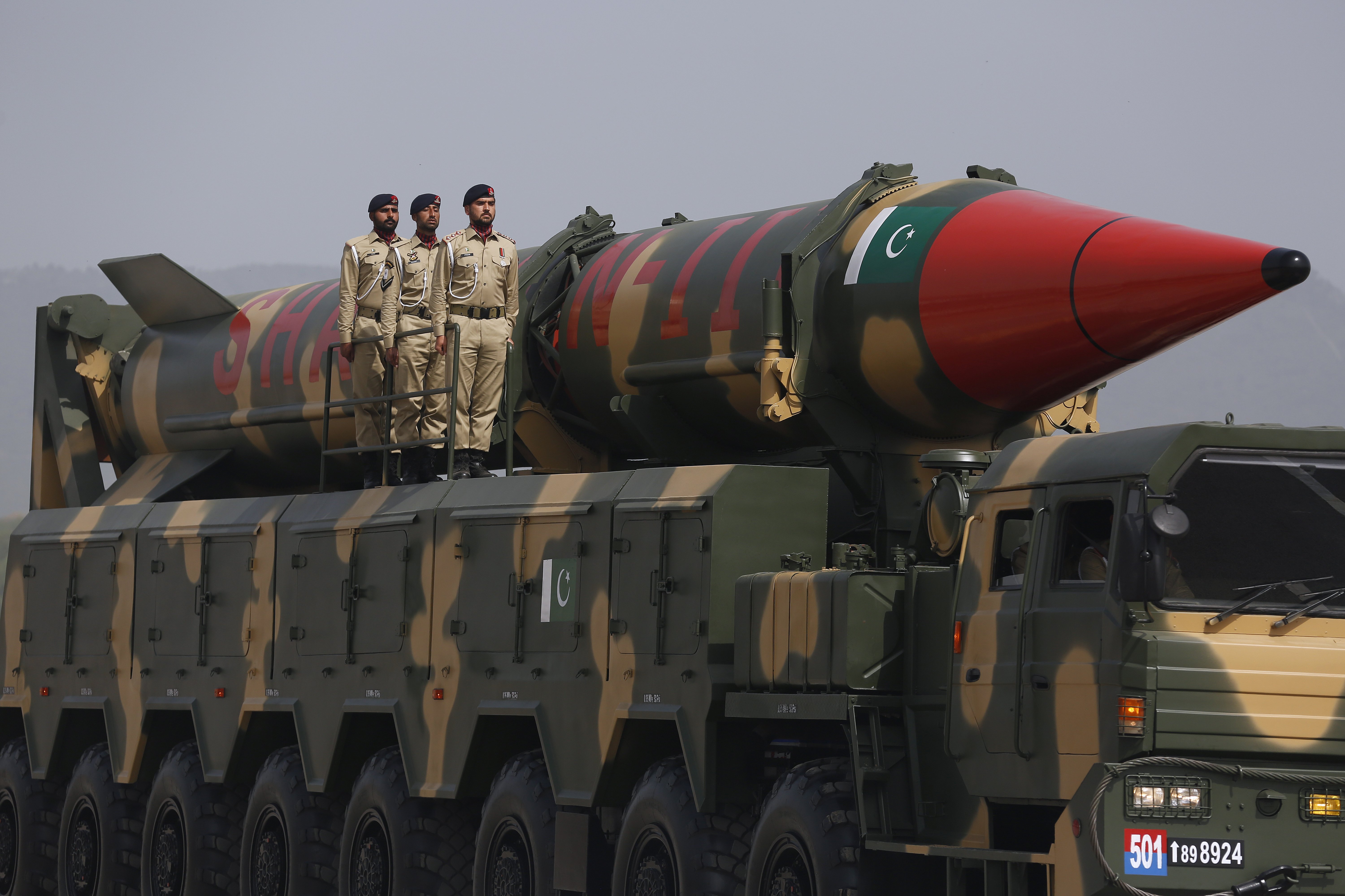
A fundamental contradiction lies at the heart of American nuclear nonproliferation strategy. Washington maintains radically different policies toward two nations that share striking similarities: the Islamic Republic of Iran and the Islamic Republic of Pakistan. Both operate as authoritarian states with documented connections to transnational terrorist networks and historically tense relations with the United States. Yet, their treatment by American policymakers could not be more divergent.
Divergent Paths, Divergent Policies
For decades, Iran has faced relentless sanctions and diplomatic pressure over its nuclear energy program, despite its compliance with international safeguards. The 2015 nuclear agreement, which Tehran adhered to, was unilaterally abandoned by the Trump administration. Current U.S. demands go beyond international norms, insisting Iran abandon all uranium enrichment—a right explicitly guaranteed to non-nuclear states under the Nuclear Non-Proliferation Treaty for peaceful energy purposes. This standard is not applied to other non-nuclear states like Japan or Germany, which maintain active enrichment programs.
In stark contrast, Pakistan developed nuclear weapons outside the NPT framework while cultivating terrorist proxies as instruments of state policy. Its arsenal continues to grow, with investments in new warheads and tactical nuclear systems designed for battlefield use. Washington has largely overlooked this buildup, even as it warns of the hypothetical dangers of an Iranian bomb. This selective enforcement of nuclear norms undermines the credibility of global nonproliferation efforts and signals that strategic utility can excuse violations.
Official Recognition of the Threat
The inconsistency has reached a new level of official acknowledgment. The U.S. intelligence community's 2026 Annual Threat Assessment for the first time listed Pakistan alongside China, Russia, North Korea, and Iran as a missile and nuclear threat to the American homeland. This formal designation exists alongside Pakistan's status as one of America's 19 "major non-NATO allies," creating a jarring policy contradiction. Washington officially recognizes the risk while continuing the security partnership.
This double standard extends to internal governance. Both nations are structurally undemocratic, but Washington treats their politics differently. When Pakistan's army chief, Asim Munir, consolidated power in what analysts described as a constitutional coup last November, the U.S. response was muted. Former President Trump praised Munir as "my favorite field marshal" and "a great, great guy." Less than four months later, the same administration launched military action against Iran aimed explicitly at regime change in Tehran.
Geopolitical Roots of the Divide
The historical context reveals why this double standard persists. Pakistan's nuclear program was enabled by external assistance and the illicit procurement network of A.Q. Khan, who faced no meaningful accountability from Washington. When his network was exposed, Pakistan staged a controlled confession, pardoned him, and barred international investigators—an outcome the U.S. quietly accepted.
Geopolitical alignment, not ideology, explains the indulgence. During the Cold War and the war in Afghanistan, Pakistan was viewed as strategically indispensable. Its nuclearization and internal conduct were overlooked in exchange for cooperation. Iran, cast as a permanent adversary, faces maximalist demands despite its theocratic system being no more Islamist than U.S. partners in the Gulf region. The real dividing line is partnership: Pakistan has been a security collaborator; Iran has not.
The diplomatic contradictions have reached surreal levels. Washington recently pressed Pakistan to host high-level talks with Iran, effectively asking one nuclear-armed Islamic republic to persuade another not to follow the very path it was permitted to take. In essence, Pakistan was asked to warn Iran against becoming another Pakistan.
Strategic Consequences
This policy inconsistency carries significant strategic consequences. It distorts global incentives, suggesting that nations aligned with Washington can pursue nuclear ambitions with impunity while adversaries face crippling restrictions. It weakens the normative framework of the NPT and creates dangerous precedents in an era of expanding nuclear arsenals.
The fundamental question remains whether selective enforcement serves long-term American interests. As Pakistan's arsenal grows and regional tensions persist, the contradiction between treating one Islamic republic as an existential threat while accommodating another's expanding nuclear weapons program may become increasingly difficult to sustain. The strategic logic appears driven more by historical alignment than consistent principles, a approach that risks undermining nonproliferation goals worldwide.