Senate Republicans are escalating their push for Speaker Mike Johnson (R-La.) to advance a bipartisan bill funding most of the Department of Homeland Security (DHS), cautioning that tens of thousands of federal employees could go unpaid next month if the House continues to stall. The pressure comes as DHS has been operating without full funding for over two months, with essential workers only kept on payroll through a temporary executive order from President Trump.
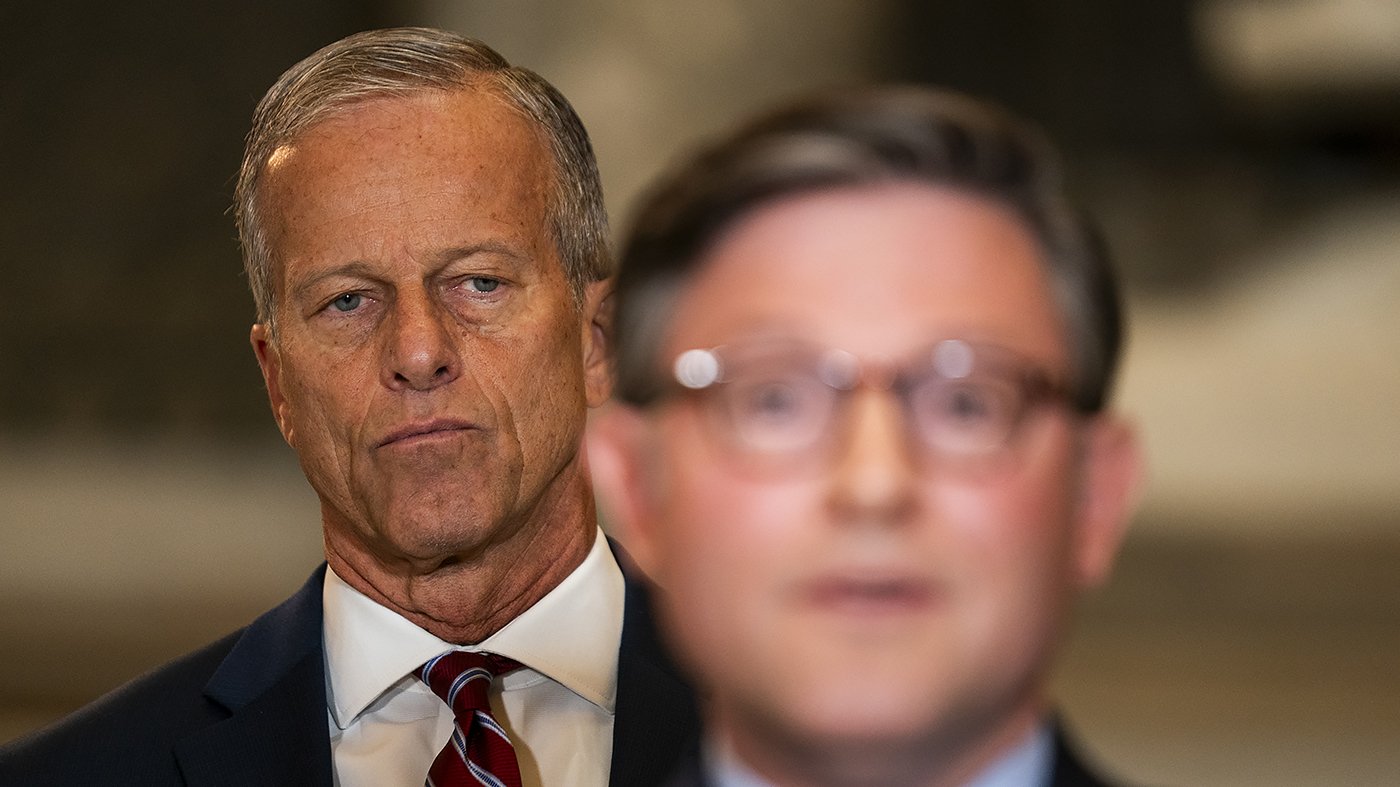
Senate Majority Leader John Thune (R-S.D.) argued Thursday that the Senate's passage of a budget resolution early that morning demonstrates the upper chamber can deliver a budget reconciliation package to fund Immigration and Customs Enforcement (ICE) and Border Patrol. Thune believes this should clear the way for the House to approve the Senate-passed bill funding the Transportation Security Administration (TSA), the Coast Guard, and the Federal Emergency Management Agency (FEMA).
“It seems like that should help answer the question they’ve had,” Thune said, referring to House conservatives who wanted proof the Senate could pass a reconciliation bill before funding other DHS components. “I’m hoping that now having produced a reconciliation bill they can perhaps get over that hurdle and fund the other agencies because they’re running out of money.”
Johnson, under pressure from the hard-line House Freedom Caucus, has insisted he won’t bring the bipartisan DHS bill to the floor until after the reconciliation package is signed into law. But Senate Republicans worry this timeline risks a funding lapse for critical agencies. DHS Secretary Markwayne Mullin warned Tuesday the department has only enough cash for one more pay period. “I’ve got one payroll left and there is no more emergency funds, so the president can’t do another executive order because there’s no more money there,” Mullin said.
Thune acknowledged the timing mismatch: “From a timing standpoint, they run out of money I think before we’re going to be able to get the reconciliation bill across the floor.” He stressed that the budget resolution should serve as a signal to House skeptics that the Senate will follow through on funding ICE and Border Patrol through 2029.
One Republican senator, speaking anonymously, expressed frustration with Johnson’s shifting demands. “There continues to be a delay game. First it was Johnson said we want to see you pass the budget resolution. Now it sounds like, ‘We want to pass the whole reconciliation [package],’” the lawmaker said. “I don’t think Johnson has the votes.” The senator noted the Speaker initially dismissed the Senate’s plan to separate ICE and Border Patrol funding from the rest of DHS as a “joke,” but reversed course after Trump endorsed it, sparking backlash from conservatives during a tense conference call.
Some Senate Republicans had hoped Trump would more forcefully press Johnson to act, but the president has been focused on negotiations with Iran over the Strait of Hormuz, a critical chokepoint for global oil supplies. The lack of direct intervention has left some senators disappointed.
The Senate Thursday voted to instruct the Judiciary and Homeland Security committees to draft a bill spending between $70 billion and $80 billion over three and a half years on ICE and Border Patrol. While the committees could produce combined legislation of up to $140 billion, actual spending is expected to be lower. Meanwhile, House conservatives are grumbling that the Senate’s reconciliation proposal isn’t ambitious enough, seeking broader policy wins. GOP senators are bracing for a potential shutdown showdown this fall as the DHS funding crisis drags on.
The standoff underscores the deepening rift between Senate and House Republicans over strategy, with the clock ticking for thousands of federal workers who may soon miss paychecks. As one GOP senator put it, “I don’t think there’s anything we can do.”