Senate Republicans on Wednesday blocked a sweeping Democratic push to reverse the Trump administration's rollback of the Consumer Financial Protection Bureau (CFPB), defeating over a dozen resolutions targeting key consumer protections.
Democrats forced votes on measures aimed at restoring rules on medical debt collections, overdraft fees, credit report privacy, and mortgage lending, among others. Most failed along party lines, though Senator Susan Collins of Maine broke ranks to support two of the three that went to roll-call votes.

One resolution, sponsored by Senator Raphael Warnock of Georgia, sought to reinstate a Biden-era rule that barred medical debt from appearing on credit reports. A Trump-appointed federal judge struck down that rule last July, ruling the CFPB had overstepped its authority. "This rule protected Americans from paying for medical services they did not receive or repaying debt they already paid off," Warnock said before the vote. "Medical debt leaves Americans in serious financial jams. It wrecks lives." The measure failed 50-50, with only Collins, Senator Bill Cassidy of Louisiana, and Senator Josh Hawley of Missouri crossing party lines to support it.
Since returning to office, President Trump has aggressively curtailed the CFPB, one of the youngest federal agencies. He fired Biden-appointed director Rohit Chopra in February 2025 and installed Russ Vought, his Office of Management and Budget director, as acting head. Vought quickly ordered staff to halt all work, and the Department of Government Efficiency, a short-lived initiative led by Tesla CEO Elon Musk, targeted the bureau for cuts.
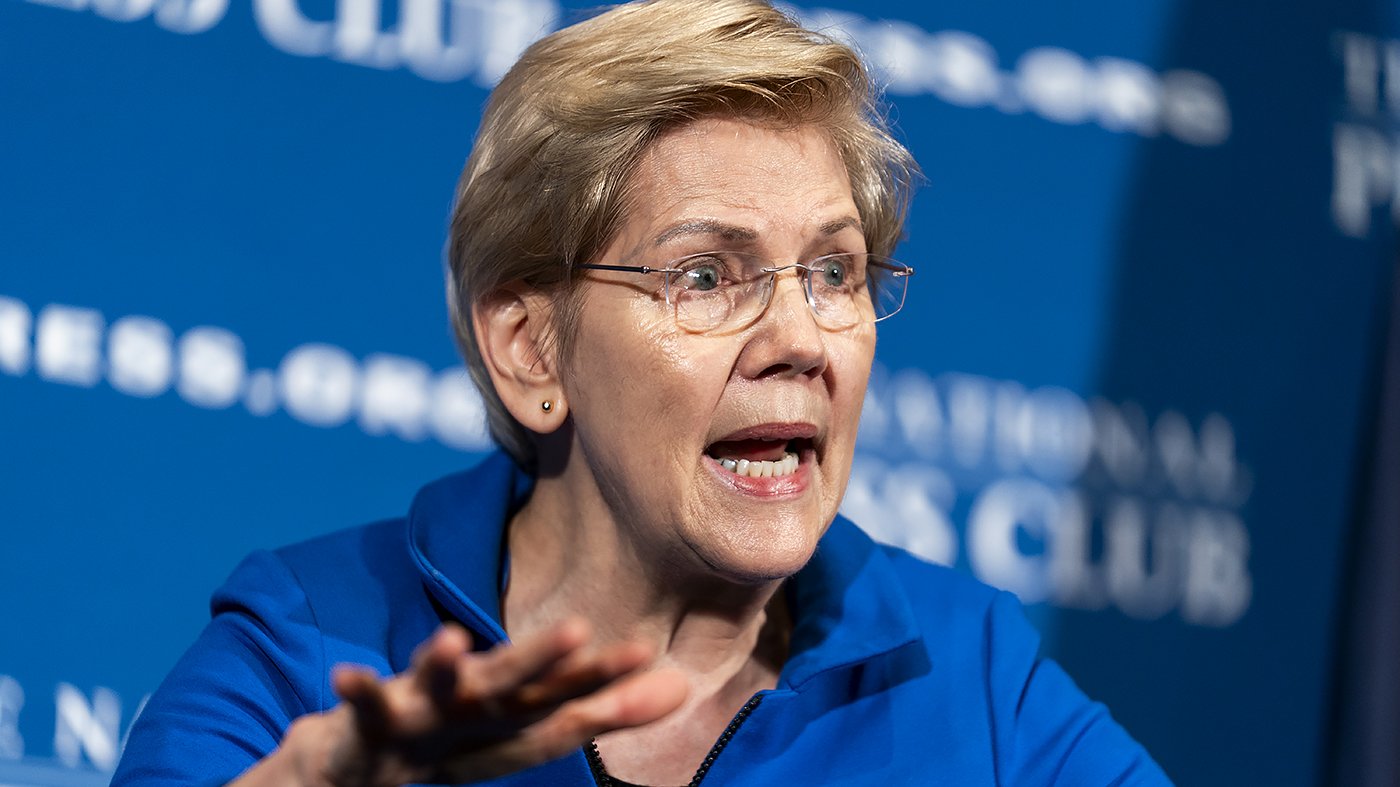
Senator Elizabeth Warren of Massachusetts, a longtime advocate for the consumer watchdog, led the voting spree, accusing the administration of being "hellbent on destroying" the agency. "They pretty much have advertised that there is no financial cop on the beat, inviting scammers to do their worst to families that are already struggling to make ends meet in Trump's economy," she said.
The CFPB was created under the 2010 Dodd-Frank Act, following Warren's advocacy as a Harvard Law professor. By January 2025, the bureau reported it had secured $19.7 billion in consumer relief and $5 billion in civil penalties from lawbreakers. Its most productive year was 2015, with $5.8 billion in combined relief and penalties, followed by $4.4 billion in 2022 under Biden.
However, the White House Council of Economic Advisers estimated in February that the CFPB's rulemaking has cost consumers and lenders between $237 billion and $369 billion since its inception, citing increased borrowing costs. "Since its creation in 2011, the CFPB has progressively expanded its reach across all consumer credit markets," the CEA stated in a report, arguing that its regulations have raised costs for both borrowers and lenders.
Vought has also sought to starve the bureau of funding. He initially requested $0 from Federal Reserve Chair Jerome Powell for the third quarter of 2025, claiming the bureau had "more than sufficient" funds. He later requested $145 million and $75.8 million for the second and third quarters of this year, respectively. In March, a federal judge ruled that the administration unlawfully refused to request adequate funding, ordering Vought to continue seeking necessary funds from the Fed.
Related developments include a federal judge blocking Trump's sanctions on a UN rights investigator over free speech concerns, and the House unanimously passing a resolution urging Trump to act on China detainees. Meanwhile, a bipartisan Senate coalition has warned Trump against unilateral shifts in Taiwan policy.