Senate Democrats on Wednesday blocked a Republican-backed measure to curb stock trading by members of Congress, arguing the proposal was too weak to address corruption concerns. The Stop Insider Trading Act, sponsored by Sen. Pete Ricketts (R-Neb.), failed to advance after a 53-47 vote, falling short of the 60-vote threshold needed to move forward.
No Democrat supported the bill, which would have prohibited lawmakers from buying new stocks in publicly traded companies and required advance notice of planned stock sales. However, it would have allowed members to keep existing holdings and trade in private companies, a loophole Democrats seized on.
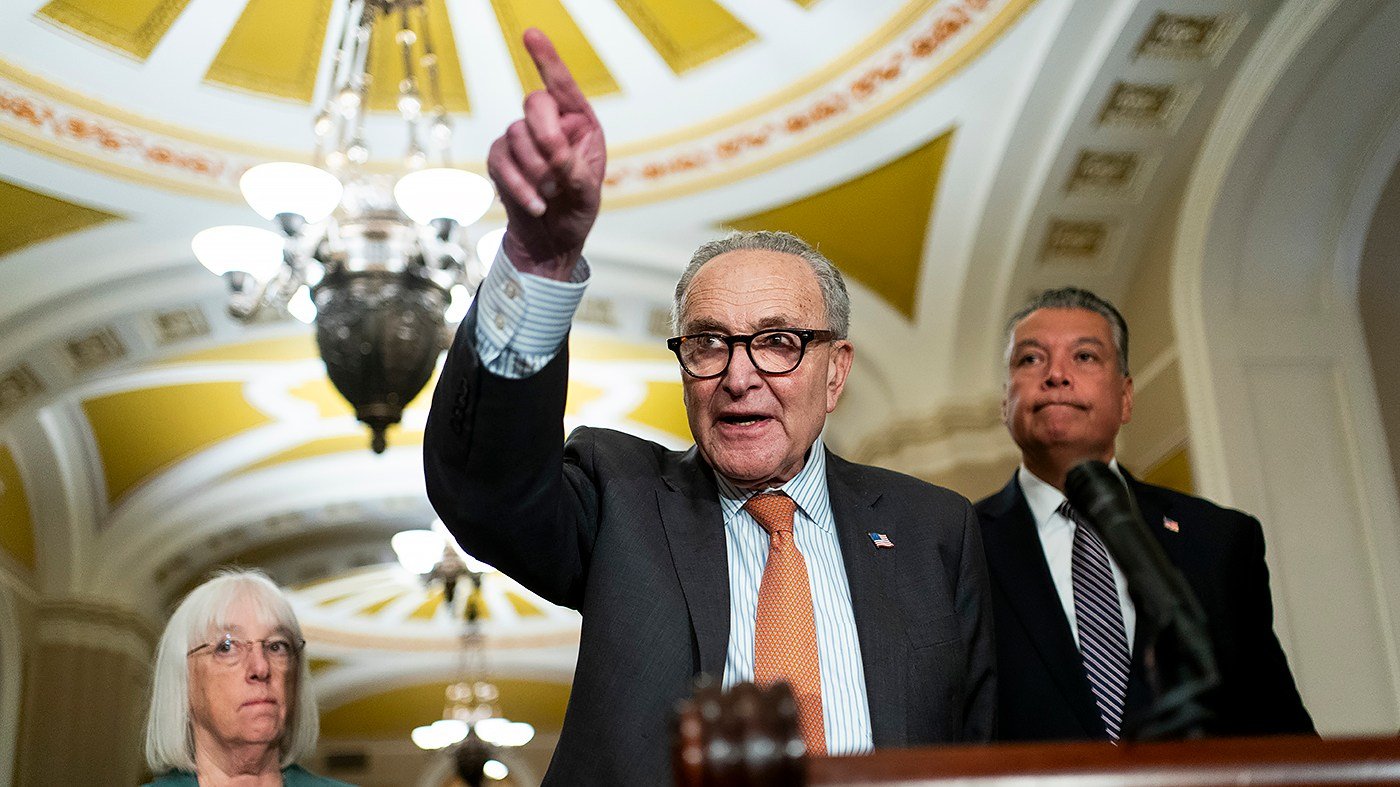
Senate Democratic Leader Chuck Schumer (D-N.Y.) blasted the measure as a “feeble” attempt at reform, saying it would still permit profitable transactions and conflicts of interest. “Only Senate Republicans would dare call a bill that permits members of Congress to continue to own, sell and in some instances buy stocks a stock-trading ban,” Schumer said. “They can’t be serious. The Republican bill is a permission slip for corruption, not a stock-trading ban.”
Ricketts, who faces a competitive reelection race in Nebraska, defended the bill as “common sense” reform and argued it would “ban congressional insider trading.” He pointed to Congress’s low approval rating as evidence of public frustration. “Congress’s approval rating is only 15 percent. Why do Americans have such a lack of faith in our institutions? Well, in part, because of what has happened with trading in the Congress,” he said.
The bill had passed the House in July with support from 13 Democrats, but Senate Democrats said the House version was weakened. Schumer noted that the Senate Homeland Security Committee had previously approved a stronger bipartisan bill, but Republicans added a “poison pill” by attaching a voter ID requirement.
“Republicans want to explicitly allow members to continue trading stocks in privately held companies, including companies the members oversee, a formula for disaster and corruption,” Schumer said.
The vote comes amid growing scrutiny of lawmakers’ stock trades. Ricketts’ independent opponent, Dan Osborn, has accused him of profiting from his portfolio, including an estimated $10 million in market gains in April 2025 after President Trump eased tariffs. Democrats have also targeted Sen. Dan Sullivan (R-Alaska), who faces a tough race, for nearly quadrupling his net worth during his time in office. A super PAC aligned with Senate Democrats has aired ads criticizing Sullivan’s trading and his record on healthcare.
Wednesday’s failure marks the latest instance of stock trading reform stalling in the Senate. In June, Sen. Cynthia Lummis (R-Wyo.) blocked a Democratic request to ban senators from trading stocks and cryptocurrency. In July, Sen. Bernie Moreno (R-Ohio) objected to a bipartisan bill that would have barred the president, vice president, and members of Congress from owning individual stocks, dismissing it as a “publicity show.”
As the debate continues, the Senate has also been weighing other contentious issues, while Democrats see political opportunity in the GOP’s internal divisions. The failure of the stock trading bill could become a campaign issue, with Democrats framing Republicans as unwilling to enact meaningful ethics reforms.