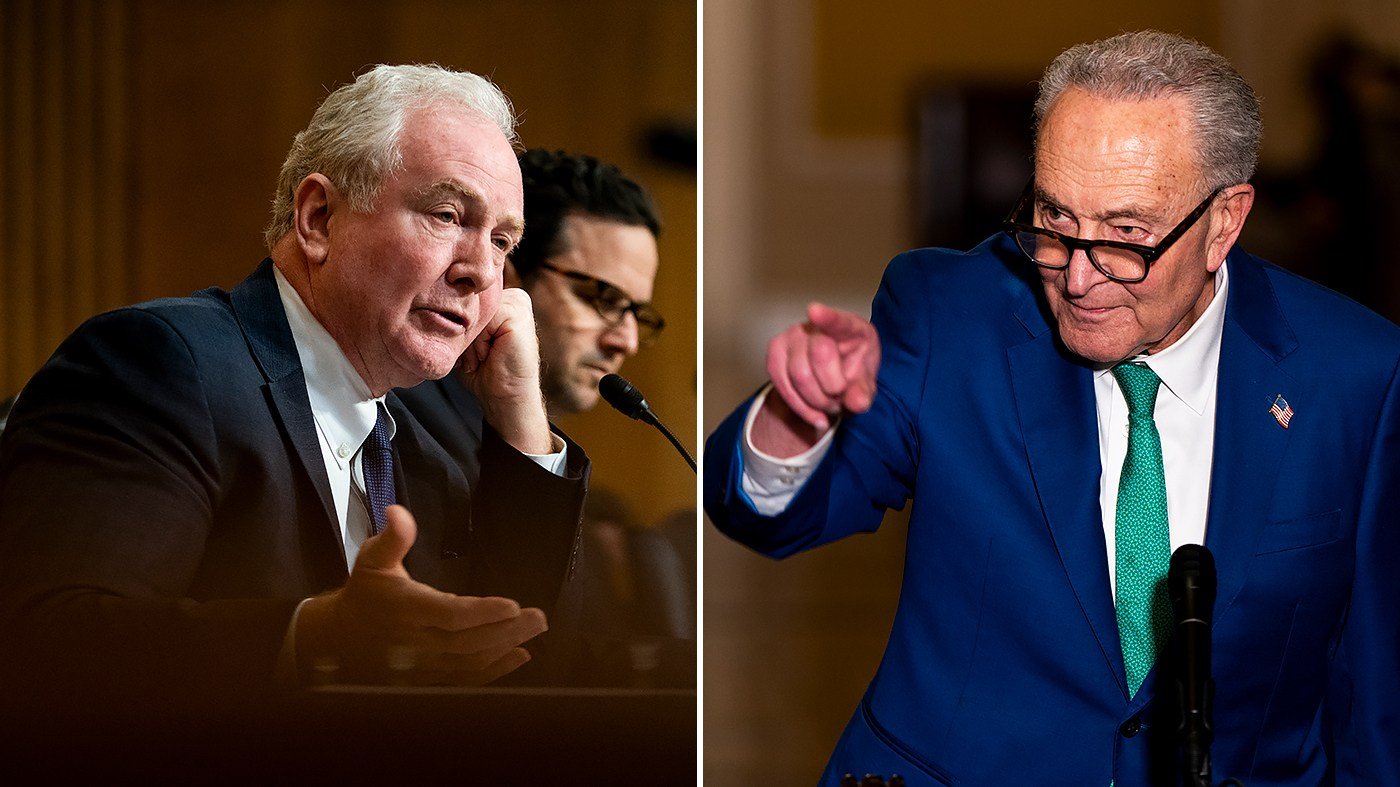
Senate Democratic Leader Chuck Schumer's allies are projecting a commanding victory in the upcoming leadership election, with internal whip counts suggesting he will secure more than 40 votes from the expanded Democratic caucus. That would represent a decisive majority of the 55 or 56 members expected in the new Senate, depending on the outcome of Alaska's Senate race. Supporters are framing the challenge from Senator Chris Van Hollen as a distraction aimed at extracting policy concessions from the leader.
Schumer's camp is also floating the possibility of moving the leadership election from early December to November, a procedural change that would require a caucus vote. The rationale, according to insiders, is to lock in Schumer's lead and prevent internal squabbling from dominating the news cycle as the party prepares to advance its agenda. "It's distracting," said a Senate insider close to Schumer. "They're going to try to get concessions out of the whole thing. Van Hollen doesn't think he's going to win."
The push to accelerate the timeline has drawn criticism from Van Hollen's allies, who interpret it as a sign of nervousness. "This is a classic 'tell versus show' situation," said a former Senate Democratic chief of staff. "What he's telling is that he has the votes and this isn't competitive but what he's showing by trying to change caucus rules is panic." Schumer has privately assured colleagues that he has the votes locked up.
Van Hollen, who announced his bid on Thursday, acknowledged his underdog status during a press conference at the What's Next conference in Denver. "Let me be clear, I'm the underdog in this race," he said. "The majority leader has lots of powers of incumbency to try to make deals or agreements with people. That's part of the problem with the process." He framed his candidacy as a response to the "trust deficit" between Washington and voters, arguing that "you cannot close the trust deficit by simply returning to the status quo."
The Maryland senator has already secured public backing from progressive heavyweights, including Bernie Sanders and Jeff Merkley, as well as Senators-elect Abdul El-Sayed and Peggy Flanagan. Flanagan's endorsement underscores the progressive wing's desire for a more aggressive approach on issues like Medicare for All and filibuster reform. Van Hollen declined to reveal his internal whip count, but his team is hopeful of additional endorsements from Elizabeth Warren and several incoming progressive senators.
Schumer's supporters counter with a robust list of public commitments from both centrists and progressives, including incoming Whip Brian Schatz, Sheldon Whitehouse, Jack Reed, Richard Blumenthal, Tammy Baldwin, Angus King, Mark Kelly, Ruben Gallego, Kirsten Gillibrand, Jacky Rosen, Catherine Cortez Masto, and Senator-elect Sherrod Brown. Additional names expected to back Schumer include Mark Warner, Tim Kaine, Cory Booker, Andy Kim, Ron Wyden, Peter Welch, Mazie Hirono, Angela Alsobrooks, Maggie Hassan, Maria Cantwell, Patty Murray, Ben Ray Luján, Jon Ossoff, Raphael Warnock, Alex Padilla, Adam Schiff, John Hickenlooper, and Michael Bennet.
Some Democratic senators had urged Van Hollen to reconsider, warning that a long-shot bid could fracture the caucus. Van Hollen rejected that notion, arguing that the party's election wins signal a mandate for change. "The Democratic caucus needs to be open to new ideas and a different way of governing," he said.
Meanwhile, some members are frustrated that the leadership fight is overshadowing the party's message on affordability and economic issues. "We just came off a win," said a Senate Democratic insider. "Instead of focusing on Republicans jamming through defense spending, we're talking about infighting."
The leadership election is set for December, but the date could shift if Schumer's allies succeed in moving it up. Van Hollen's team sees the maneuver as a sign of weakness, while Schumer's camp views it as a practical step toward unity. Schumer's efforts to head off the challenge are part of a broader strategy to consolidate support quickly.
As the contest unfolds, the outcome will signal whether the Democratic caucus is ready to embrace a more confrontational approach or stick with the current leadership. Sanders and Slotkin's break with Schumer highlights the growing progressive pressure, but the whip count suggests Schumer retains a firm grip on the caucus.