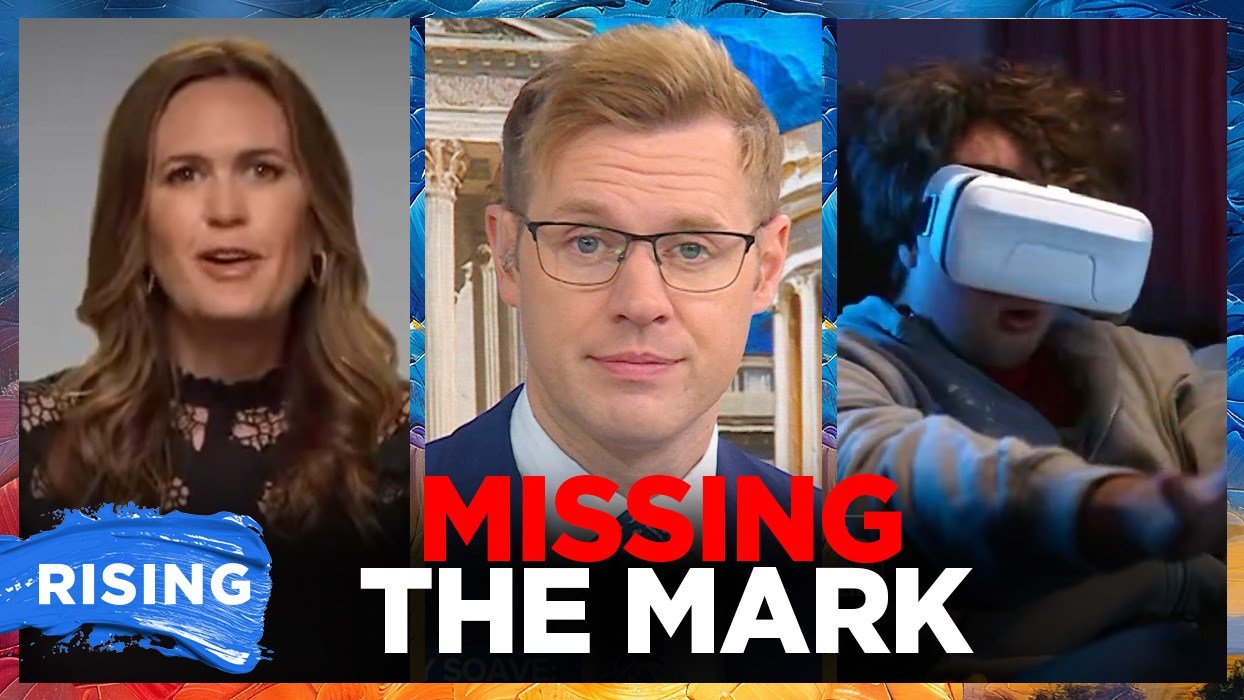
Arkansas Governor Sarah Huckabee Sanders, a Republican seeking a second term, has ignited a firestorm of criticism from her own base over a new campaign ad attacking welfare recipients. The spot, which features a young white man named Brad as the embodiment of welfare abuse, has drawn sharp rebukes from conservatives who argue it alienates a key demographic.
The ad, which Sanders' team likely intended to resonate with fiscal conservatives, instead has been met with widespread disapproval on the right. Critics point out that young white men are not the primary beneficiaries of government assistance programs, making the ad's target both inaccurate and politically tone-deaf.

On social media, conservative voices have been quick to condemn the ad. Kangnin Lee wrote on X, "Young right-wing Christian American gamers are some of the most patriotic people in society. This is tonedeaf and the only reason you did this was because they're the easiest demographic to put down." Jenna Ellis, a former Trump legal adviser, added, "Who advised Sarah this was a good idea?! Some young white men may still live on their parents' welfare, but very few live on government welfare. Those are two completely different issues. Don't make the young white male (a voting demo the GOP needs) the enemy here."
The backlash underscores a broader tension within the Republican Party as it tries to balance appeals to working-class voters with the need to maintain its base. Sanders, a former White House press secretary under Trump, remains popular in her deep-red state, but this misstep suggests even loyal conservatives are wary of messaging that could be seen as attacking their own supporters.
However, the controversy also highlights a larger policy blind spot: the focus on welfare fraud among the young ignores where the real money goes. The largest entitlement programs—Medicare, Medicaid, and Social Security—are dominated by older Americans, who are also the most reliable voters. In fact, Medicare alone costs over $1 trillion annually, while Social Security adds another $1.6 trillion. By contrast, SNAP (food stamps) costs about $100 billion a year.
As Robby Soave, a senior editor at Reason Magazine, noted in his commentary, the ad's premise is flawed. "It's not young white guys who love video games living it up as welfare queens—it's not young people at all," he said. "It's the people who rigged the system so that you make, they take, and live it up, even though they've had decades to make a lot more money."
Soave also pointed out that young Americans face economic headwinds that older generations did not, including skyrocketing housing costs, expensive child care, and education debt. "They're not lazing about at home playing video games—they're working hard to keep ahead of the rent bill, the child care bill, and worst of all, the tax bill," he wrote.
The ad's backlash comes amid broader Republican struggles to connect with younger voters, a problem that could have implications for the party's future. As tensions within the GOP over Trump's attacks on institutions continue, the party's messaging on economic issues will be closely scrutinized.
For Sanders, the ad may be a minor stumble in a race she is heavily favored to win. But it serves as a reminder that even in deep-red states, political messaging must be carefully calibrated to avoid alienating the very voters the GOP needs to turn out. As Republicans face a brutal midterm hangover, such missteps could prove costly.
In the end, the ad may have been intended to rally the base, but it has instead sparked a debate about who really benefits from government programs—and whether the GOP's focus on welfare abuse is misplaced. As trust in media shifts, the party's ability to craft resonant messages will be key. For now, Sanders' ad is a cautionary tale in the perils of political stereotyping.