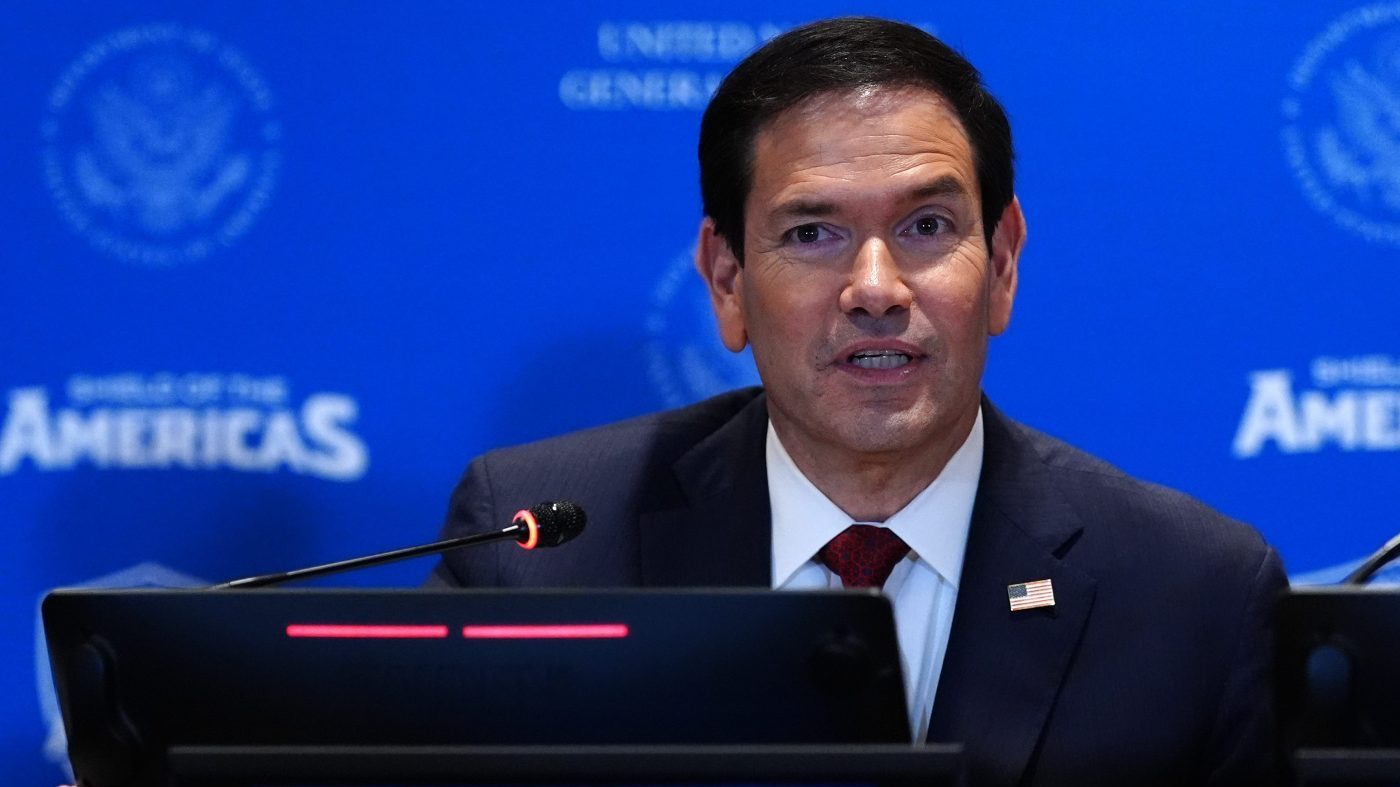
Secretary of State Marco Rubio intensified the Trump administration's rhetoric against Cuba on Monday, declaring that the island nation has already collapsed and is now a failed state. In an interview with Fox News's Sean Hannity, Rubio argued that Cuba's government is a hollow shell that survives only through repression and corruption.
"The truth is Cuba has already fallen," Rubio said. "It does not have a functional economy, and it is governed by people who continue to preach about some revolution that has been dead for 20 years. It's never worked." He added that Cuba is "a failed state in every sense of the word," noting that while the regime can jail and kill its citizens, it does not provide basic governance or economic opportunity.
The secretary also pointed to the mass exodus of Cubans since 2021 as evidence of the country's failure. He expressed hope that some officials in Havana would "open their eyes" and pursue internal reform, leading to "economic freedom" and "political freedom first." However, he warned that those clinging to revolutionary slogans are mistaken if they believe they can wait out the Trump administration. "They are wrong," Rubio said, "and they will learn the lesson the hard way if they don't correct."
Rubio's comments come on the heels of President Trump's address to the U.N. General Assembly, where he vowed that "freedom will be coming to Cuba" and called the island an "absolutely failed state." The Cuban delegation walked out of the chamber in protest. Trump's remarks were part of a broader escalating standoff with Havana, which has rejected the label of a failed state.
Cuban Foreign Minister Bruno Rodríguez Parrilla fired back on social media, accusing Rubio of repeating "a specific list of lies" intended to justify "collective punishment against the Cuban people." He described the U.S. policy as "aggressive" and "repudiated and isolated," sustained only by "force and intimidation, not truth or reasons."
Havana has long blamed U.S. sanctions and the trade embargo for its economic woes, pointing to fuel shortages that have crippled the energy grid. Cuban officials at the U.N. highlighted the "fuel blockade" and increased sanctions as the real drivers of the island's crisis.
Cuban President Miguel Díaz-Canel also weighed in, condemning the U.N. for giving Trump a platform to threaten his country. In a post on X, Díaz-Canel wrote: "The executioners of Gaza, Iran, Cuba cannot continue threatening, bombing, and plundering, and boasting about their crimes before the international community." He added, "When a genocide is normalized, doors are opened to others. This is how fascism reemerges."
Rubio's remarks are likely to further strain relations between Washington and Havana, but they also reflect the administration's broader foreign policy posture. The secretary's call for a transition in Cuba aligns with the administration's approach to authoritarian regimes, though critics argue that such rhetoric rarely translates into effective policy. Meanwhile, the situation in Cuba remains dire, with widespread shortages and continued emigration.