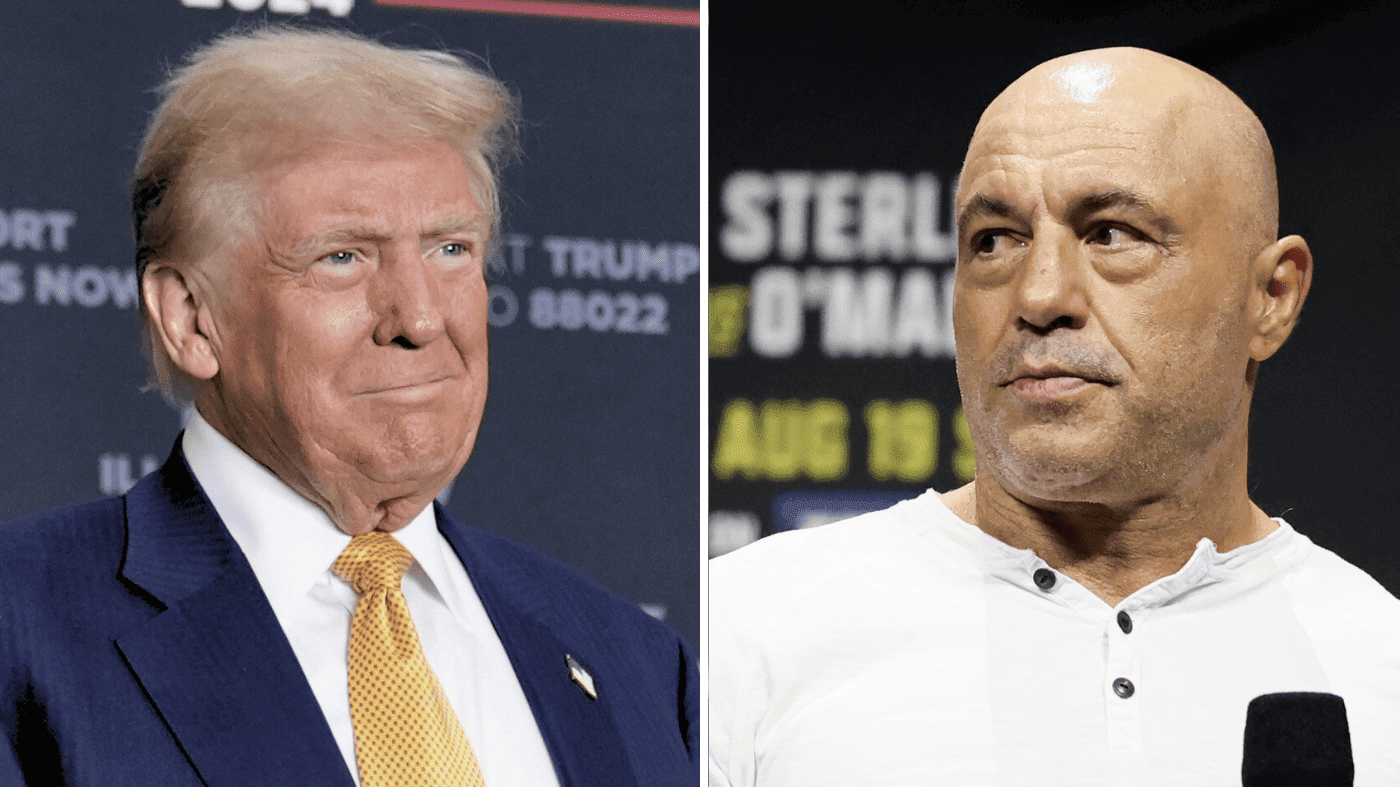
Podcaster Joe Rogan publicly ridiculed former President Donald Trump's defense of a controversial social media post this week, highlighting growing fractures within the former president's political coalition. The incident centers on an AI-generated image Trump posted and later deleted from Truth Social that depicted him in a messianic pose, which drew immediate backlash from religious conservatives and lawmakers.
Controversial Post and Unconvincing Explanation
Trump posted the image late Sunday amid a broader tirade against Pope Leo XIV, who had criticized the administration's handling of escalating tensions with Iran. The graphic showed Trump in a long robe, with light emanating from his hands as he appeared to heal a sick man, surrounded by American iconography, a nurse, and a soldier. Following swift condemnation from figures across the political spectrum, including prominent Christian leaders, Trump removed the post.
On Monday, Trump offered an explanation that many found implausible. "I did post it, and I thought it was me as a doctor, and had to do with the Red Cross, as a Red Cross worker there, which we support," Trump told reporters outside the Oval Office. He denied that removal was due to criticism from within his own movement.
Rogan's Sarcastic Take
On his Tuesday podcast, Rogan seized on the explanation for comedic effect. The conversation turned to money in politics when guest and retired Navy SEAL Andy Stumpf asked how to detach financial influence from the system. "It's hard. AI God. AI God has to come alive and take over the system," Rogan said, before grinning and adding, "AI God: the one that created that Jesus meme that Trump just posted."
When Stumpf sarcastically replied, "Joe, I told you. He explained it. He was a doctor," Rogan burst into laughter. "That's what they call them. That's what AI God calls Jesus. Jesus is a doctor," Rogan retorted, dismissing the former president's justification. This episode is part of a broader pattern where Rogan, who endorsed Trump just before the 2024 election, has become increasingly critical of the administration's policies on issues like Middle East strikes and immigration enforcement.
Internal MAGA Backlash
The criticism was not confined to Rogan. The post provoked sharp rebukes from typically loyal Trump allies. Former Rep. Marjorie Taylor Greene (R-Ga.) issued a forceful denunciation on social media platform X. "On Orthodox Easter, President Trump attacked the Pope because the Pope is rightly against Trump's war in Iran and then he posted this picture of himself as if he is replacing Jesus," Greene wrote. "This comes after last week's post of his evil tirade on Easter and then threatening to kill an entire civilization. I completely denounce this and I'm praying against it!!!"
This internal dissent follows other recent fractures, such as the criticism from Georgia GOP Rep. Scott over similar rhetoric. The backlash underscores the delicate balance Trump must maintain with the religious right, a core constituency. The controversy also comes as the administration faces scrutiny over other cultural and legal fronts, including a Justice Department report accusing the prior administration of politicizing abortion clinic enforcement.
Rogan's Political Disillusionment
Rogan's mockery aligns with his recent expressions of political alienation. In a podcast episode last week, he described feeling "politically homeless," arguing that both major parties are manipulating the public. "It's so stupid," Rogan said. "Neither one of them make any sense to me. We need like, a logical, centrist government that, like, just says there's a lot of things that we should do to make this country a better place."
This sentiment reflects a broader disillusionment among some independent and libertarian-leaning voters who were initially attracted to Trump's outsider persona but have grown wary of his governance style and policy directions. The incident also intersects with ongoing debates about technology's role in politics, as the use of AI-generated imagery for propaganda becomes more prevalent.
The episode is a minor but revealing scandal, showcasing how Trump's impulsive social media use continues to generate unforced errors that alienate allies and provide fodder for critics. It demonstrates the ongoing tension between his campaign's need to rally a unified base and his personal propensity for creating divisive cultural flashpoints. As the 2024 election cycle progresses, managing these internal criticisms, like those highlighted in the GOP's split reaction to political changes in Hungary, will be crucial for the former president's political fortunes.