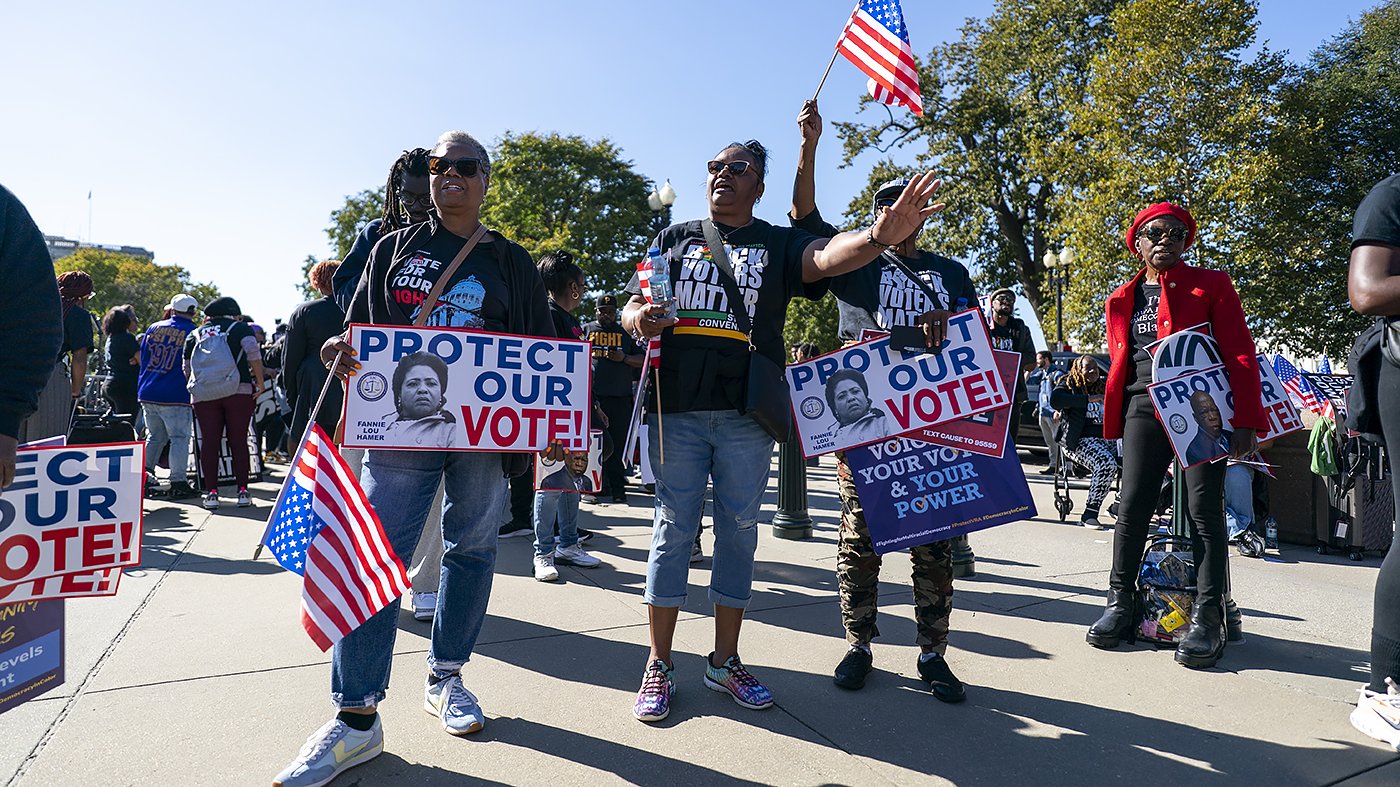
Last-minute redistricting across several Southern states is throwing elections into disarray, as officials, candidates, and voters scramble to adapt to rapidly shifting congressional lines. The Supreme Court’s April decision, which significantly weakened the Voting Rights Act, has enabled Louisiana and Alabama to implement Republican-leaning House maps just months before the midterms. Buoyed by that ruling, Republicans in Florida and Tennessee are also pushing through new maps, though legal challenges continue.
The upheaval has forced candidates to introduce themselves to unfamiliar constituencies, while election workers race to inform the public about altered boundaries. “As a person that’s new to politics, this is my first campaign I’ve ever, ever been in,” said Austin Sidwell, a Republican running in Alabama’s 1st Congressional District. “Lucky me that it happened to be one of the most historic election cycles in American history. I don’t think there’s been very many that have seen the district and the candidate list changed three times throughout the campaign — really in about a three-week period.”

The high court’s ruling struck down Louisiana’s map, which had included two predominantly Black districts, and sharply limited the use of race in redistricting. Both Louisiana and Alabama are now expected to eliminate one Democratic-held House seat each. Meanwhile, political strategists like Karl Rove have downplayed Democrats’ polling advantages, pointing to GOP redistricting gains as a key counterbalance.
Florida Governor Ron DeSantis had already pressed lawmakers to redraw the state’s congressional map before the Supreme Court acted, arguing the old lines failed to account for population growth. The resulting map could net Republicans up to four additional seats in November. Litigation over the new boundaries is expected to reach the state Supreme Court. In Tennessee, Republicans dismantled Representative Steve Cohen’s majority-Black district, passing new maps at former President Trump’s urging. Those lines are also under legal scrutiny.
Representative Shomari Figures, an Alabama Democrat, now finds himself running in the newly drawn 2nd Congressional District, which includes about two-thirds of his current constituents. “At the end of the day, you got to get out and make it happen, and make yourself available, and go to them with the same type of energy and effort and transition,” Figures said. He believes the redistricting could energize voters frustrated by the changes, though he warned that Black voters are bearing the cost. “I don’t view it as me paying the price, I view it as voters who I represent, and Black voters particularly, I think, paying the price because they are having a legitimate opportunity to have representation in Congress.”
In Alabama, the primary was held on May 19, but results in four affected House races were invalidated. A special primary for those districts is set for August 11. Military veteran Joshua McKee, a Republican who shifted from the 1st to the 2nd District after redistricting, noted widespread voter confusion. “I had voters calling me saying, ‘I didn’t know the election was changed,’” he said. Sidwell, whose district was redrawn to a more compact area, acknowledged some benefits: the original 1st District stretched across the state’s southern border, requiring hours of travel. The new map reduces that to four counties in southwest Alabama.
The broader implications of this redistricting cycle extend beyond individual races. As New York Democrats push to shift redistricting power to the legislature, the Southern battles highlight how control over map drawing can determine partisan outcomes and minority representation. With the Supreme Court’s VRA ruling as a backdrop, these last-minute changes are reshaping the electoral landscape — and leaving many voters and candidates struggling to keep up.