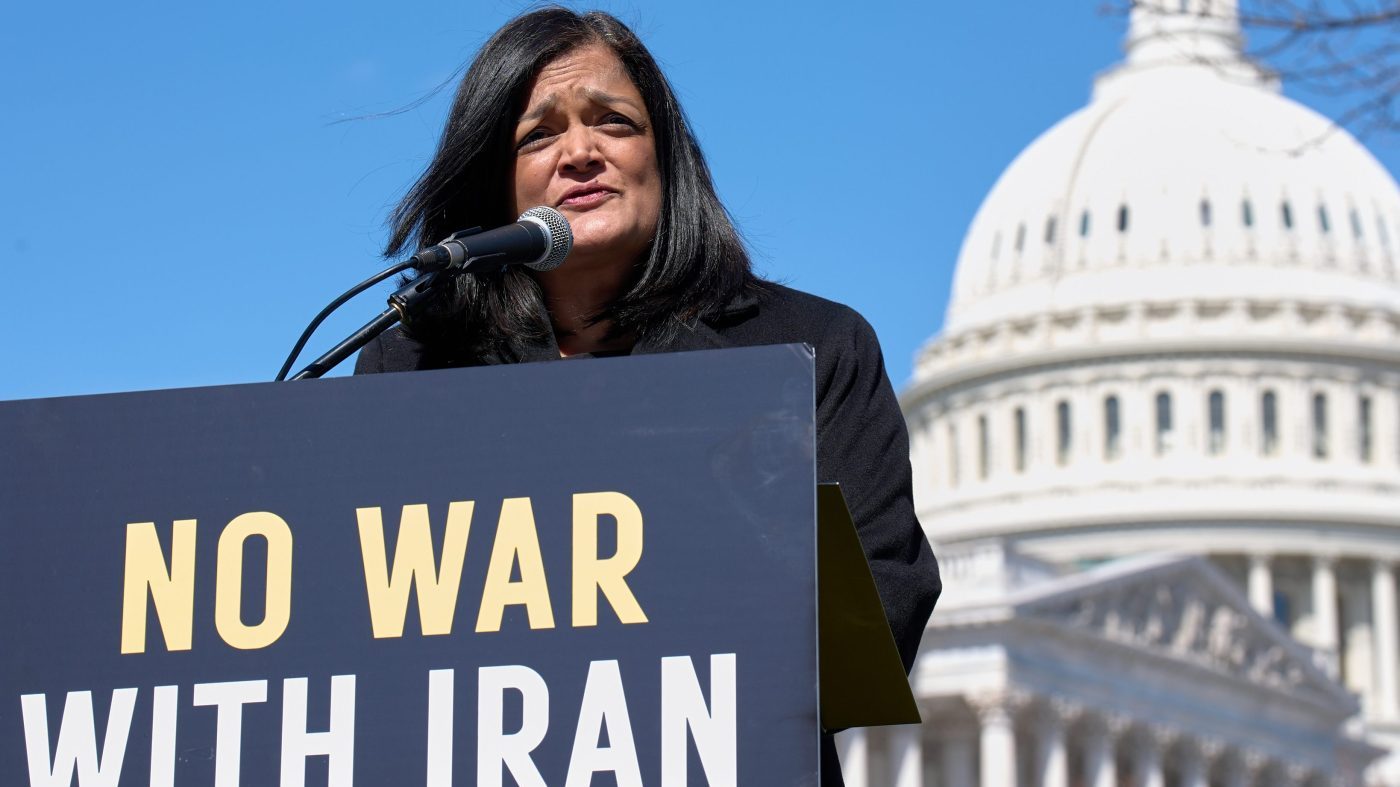
The House of Representatives approved a war powers resolution on Thursday aimed at reining in President Trump's military operations in Iran, marking a significant bipartisan rebuke of the administration's handling of the conflict. The measure, sponsored by Representative Pramila Jayapal of Washington, passed by a narrow margin of 214-208, with four Republicans breaking ranks to support the Democratic-led initiative.
The vote comes as the death toll among U.S. service members continues to climb. Since the United States and Israel launched joint strikes against Iran in February, 18 troops have been killed, intensifying scrutiny of the administration's strategy. Jayapal framed the resolution as a moral imperative, declaring on the House floor ahead of the vote, "This is a vote of conscience. This is a vote that requires us to find the strength to do what is right for the American people, and to send the clearest, even stronger message to this president of the United States that the United States Congress, the House of Representatives, is reasserting our authority over war. This war must end."

The four Republican lawmakers who crossed the aisle—Representatives Tom Barrett of Michigan, Warren Davidson of Ohio, Thomas Massie of Kentucky, and Brian Fitzpatrick of Pennsylvania—joined all Democrats in backing the resolution. Their support reflects growing unease within the GOP over the trajectory of the conflict. In the Senate, a similar war powers resolution garnered bipartisan backing last month, with Republicans Rand Paul of Kentucky, Susan Collins of Maine, Lisa Murkowski of Alaska, and Bill Cassidy of Louisiana voting in favor.
The House vote signals escalating frustration among lawmakers from both parties, who have questioned the administration's objectives and the lack of a clear exit strategy. Senate Minority Leader Chuck Schumer announced on Wednesday that Senate Democrats would force a floor vote on their own war powers resolution on Thursday. "Every senator will have to make a choice," Schumer said. "You cannot claim to support the troops while leaving them trapped in war with no mission and no end. You cannot call it a victory while the battlefield keeps expanding, and you cannot hide the wounded and call it peace."
The renewed legislative push comes as the administration faces criticism over its handling of the conflict, including questions about unspent funds and the broader strategy. Defense Secretary Pete Hegseth and General John Caine recently defended an $80 billion Iran war request before Congress, with Democrats questioning the administration's priorities and the effectiveness of its approach.
On Wednesday, President Trump participated in a dignified transfer of service members killed in Jordan and Iraq, a solemn reminder of the human cost of the war. Meanwhile, Trump escalated his rhetoric against Tehran, warning in a Truth Social post that any attack on commercial ships in the Strait of Hormuz—a vital oil shipping corridor—would trigger a severe response. "From this point forward, any time the Islamic Republic of Iran shoots at a ship in the Strait of Hormuz, whether it be by Missile, Rocket, Drone, or any other device or weapon, the United States will bomb and destroy ONE BRIDGE OR POWER PLANT, including those located next to, or in, the Capital City of Tehran," Trump wrote.
The administration has cited Iranian attacks on shipping as a breach of the ceasefire agreement reached last month, but critics argue that the president's threats risk further escalating the conflict. The war powers resolution, if approved by the Senate, would require Trump to seek congressional authorization for continued military action, reasserting the legislative branch's constitutional role in matters of war.
The political dynamics surrounding the vote also highlight broader tensions within both parties. As Democrats push for a more assertive Congress, the resolution's passage underscores the challenges facing the administration on Capitol Hill. With the Senate vote imminent, the coming days will test whether lawmakers can sustain bipartisan pressure on the White House to change course.