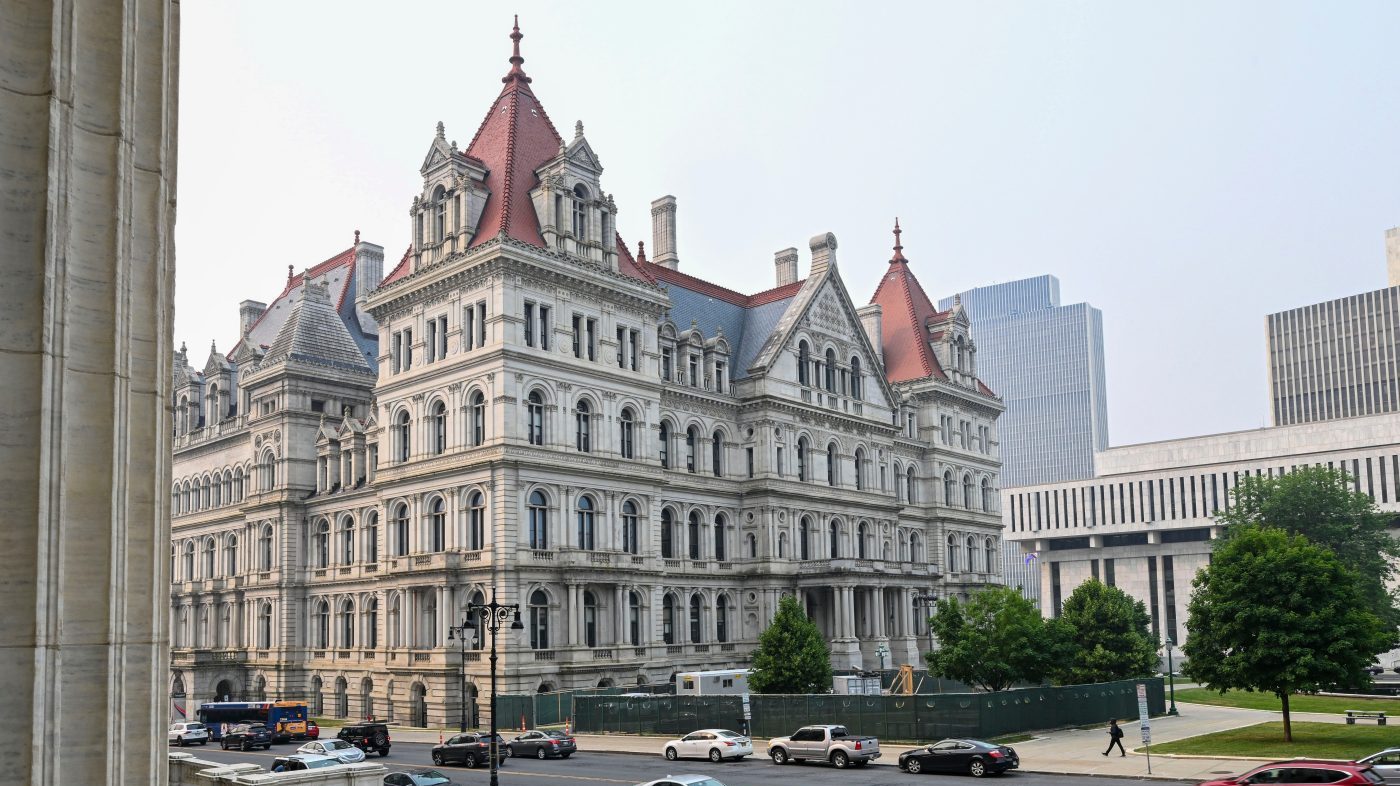
New York Democrats took a major step Wednesday toward reshaping the state's congressional map by advancing a ballot measure that would tilt redistricting authority away from an independent commission and toward the state legislature. The move, approved by lawmakers, sets the stage for a potential electoral boost in the 2028 cycle.
The proposed constitutional amendment keeps the state's Independent Redistricting Commission in place but revises the map-drawing process. Under current rules, the commission must submit a House map for legislative approval; if rejected, the commission must redraw and resubmit. The new language would allow legislators to introduce their own congressional lines after a single rejection, effectively giving them the final say.

Partisan Gerrymandering Ban Dropped
Notably, the amendment removes a provision that effectively banned partisan gerrymandering. While it still requires maintaining communities of interest and prohibits redistricting that dilutes minority voting power, the change opens the door for more aggressive map-drawing. Lawmakers would also gain the ability to redraw lines mid-decade, a power currently restricted.
The measure must pass a consecutive legislative session before appearing on the ballot in 2027, ahead of the 2028 elections. Political analysts estimate it could create as many as four pickup opportunities for Democrats in the House, a significant prize in the battle for control of Congress.
This push marks a reversal of the 2014 voter-approved redistricting reform, which aimed to reduce partisan influence. Now, Democrats argue the current system is broken and needs updating to reflect shifting demographics. Critics, however, see it as a power grab.
The move comes amid a broader national redistricting war. Republicans are already eyeing gains from new maps in Texas, Missouri, Florida, North Carolina, Ohio, Alabama, Louisiana, and Tennessee—potentially netting half a dozen seats. Litigation in Florida and Tennessee remains unresolved, while Democrats see only limited pickup opportunities in California and Utah. For a deeper look at how redistricting is reshaping races, see how California's 38th District contest is evolving under new lines.
New York's gambit could also influence the national debate on gerrymandering. Some experts point to Canada's independent redistricting model as a potential cure for the partisan gridlock in the U.S. But in Albany, Democrats are betting that more legislative control will deliver a fairer—and more favorable—map.
The amendment's fate now rests on a second vote next year. If it clears that hurdle and wins voter approval in 2027, New York could become a key battleground for House control, with Democrats poised to capitalize on a redrawn landscape.