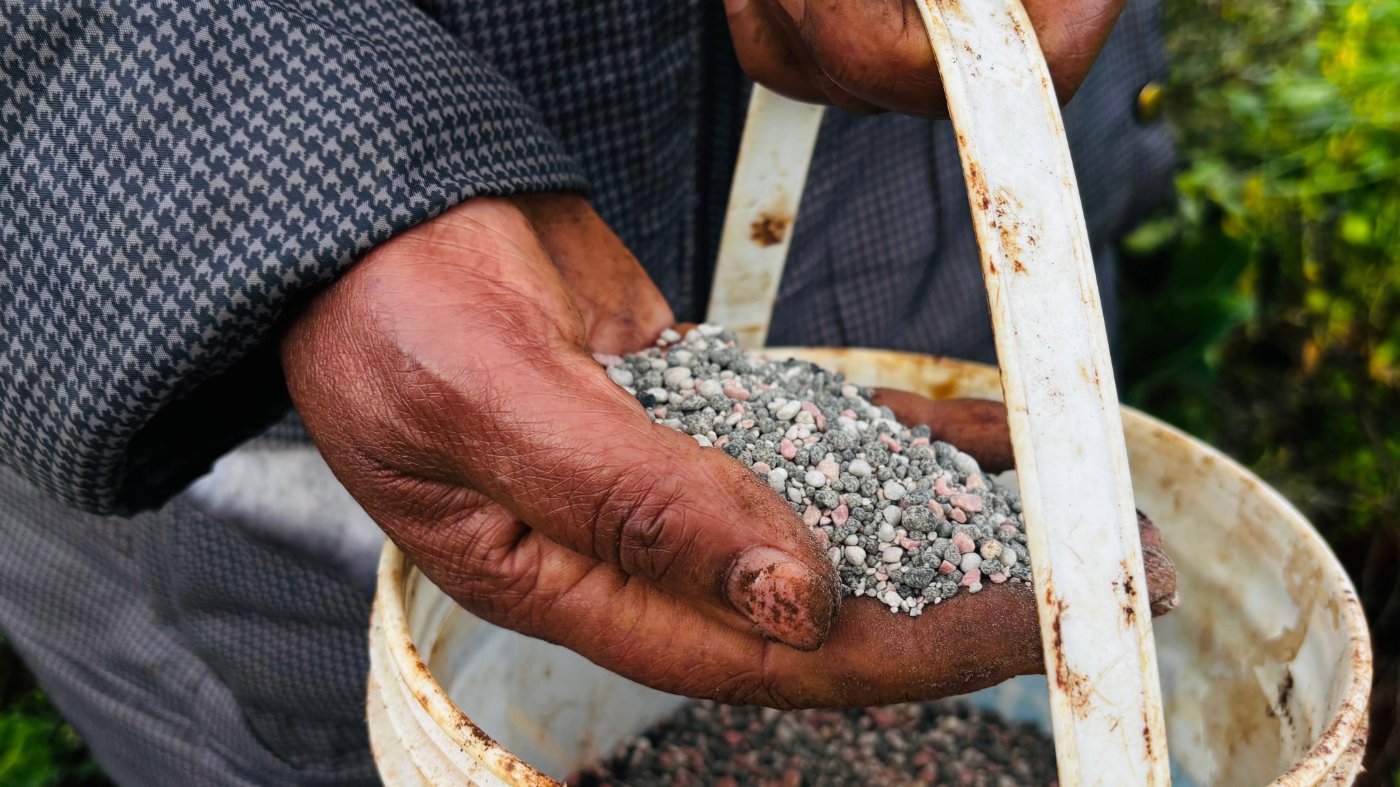
The repeated closure and reopening of the Strait of Hormuz has sent oil and grain prices seesawing, underscoring how food security for billions hinges on events half a world away. This isn't resilience—it's a vulnerability baked into a global food system that prioritizes fossil-fuel-intensive inputs over long-term stability.
When fertilizer and fuel shipments stall, the impact ripples to farmers and consumers within days. The latest blockade highlights a structural weakness: governments spend over $800 billion annually on agricultural subsidies, but most of that money props up vulnerable, carbon-heavy supply chains rather than building the diversified, climate-smart systems needed for the future.
Food Price Inflation and Poverty
Analysts now expect food price inflation to persist into next year, with an additional 20 million people projected to fall into poverty due to the conflict's fallout. The numbers leave no doubt that accelerating the shift to resilient, economically viable food systems is an urgent policy priority.
Yet the current subsidy regime largely bypasses those who need support most. Smallholder farmers receive as little as 35 cents of real value for every dollar spent on subsidies. In Kenya, where fuel prices doubled during the Middle East crisis, women smallholders were hit hardest.
Smallholders at the Center
The world's 600 million smallholders produce roughly one-third of global food supplies—and the sector accounts for about one-third of global greenhouse gas emissions. They are both a critical part of the problem and an essential part of the solution.
Some governments are already moving. The Philippines repurposed fertilizer subsidies through its Rice Competitiveness Enhancement Fund, shifting support to machinery, seeds, and sustainable practices for smallholder rice farmers. Brazil has built a policy framework that channels $15 billion annually in subsidized credit to smallholders and requires 45 percent of school food budgets to come from them. Malawi is expanding domestic fertilizer production with a homemade blend called Mbeya, which achieves near-equivalent yields at much lower cost while cutting import dependence and emissions.
These efforts align with the 2024 Nairobi Declaration, which aims to triple domestic fertilizer production across Nigeria, Ethiopia, Morocco, Angola, Zambia, South Africa, Tanzania, Kenya, Senegal, Ghana, and Côte d'Ivoire within a decade.
Building Global Momentum
Scaling these models requires more than policy tweaks—it demands evidence and narratives that convince farmers and voters. The High-Level Panel for a Just Rural Transition, which I chair, convened global leaders at London Climate Action Week to share challenges and solutions. Those insights will feed into a flagship publication at COP31, designed to guide large-scale subsidy reform.
Redirecting public support can incentivize climate-smart practices, reduce vulnerability to shocks, attract private investment, and scale innovations like green ammonia fertilizers, soil health measures, and improved animal diets. The benefits extend beyond farms: more resilient food systems mean greater price stability and healthier environments for consumers.
The reopening of the Strait of Hormuz may bring temporary relief, but it doesn't fix the underlying fragility. True food security will remain out of reach as long as global agriculture is tethered to distant geopolitical flashpoints. Building resilience demands a deliberate transition—toward sustainable, diversified, and climate-smart systems that can withstand whatever comes next.
Carlos Alvarado Quesada, former president of Costa Rica, chairs the High-Level Panel for a Just Rural Transition.