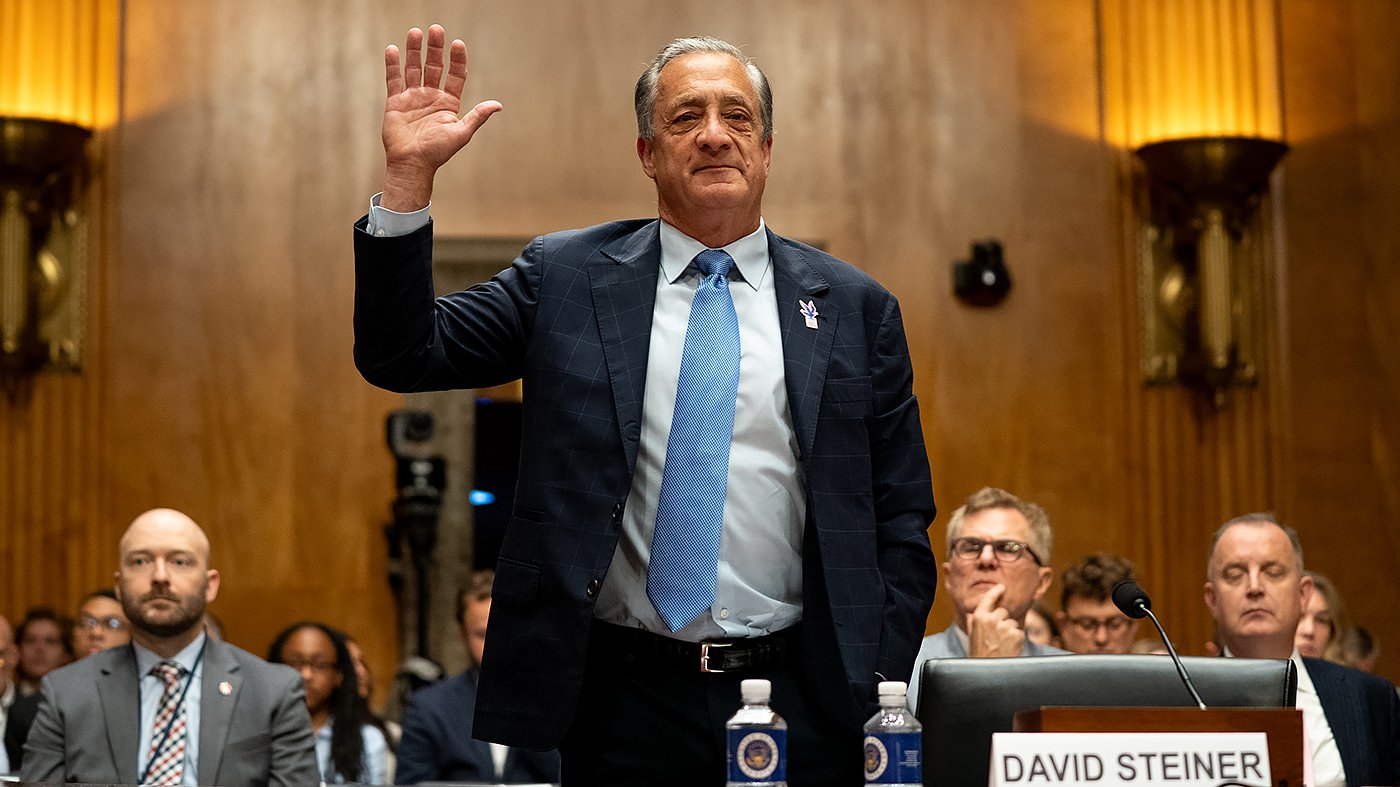
Postmaster General David Steiner ignited a political firestorm this week by confirming that the U.S. Postal Service will stop delivering mail-in ballots to states that decline to share sensitive voter information with the federal government. The announcement, which voting rights advocates and Democrats immediately condemned, has become a flashpoint in the ongoing battle over election administration ahead of November's general election.
Critics argue the move represents an unprecedented federal overreach into state-run elections, which are constitutionally reserved for the states. A federal judge on Thursday temporarily blocked the proposal after a coalition of Democratic-led states filed a lawsuit challenging its legality. The ruling provides a short-term reprieve, but the underlying conflict remains unresolved.
Celina Stewart, CEO of the League of Women Voters, described Steiner's remarks as creating a “credibility issue.” She said, “Voting is a right, and now it’s being presented as a risk profile. When access to the ballot starts being treated as suspicious behavior, democracy itself starts to be audited.” Stewart added, “The Postal Service exists to serve the public, not to serve as a data pipeline for political agendas.”
The controversy traces back to an executive order President Trump signed in March, directing the Postal Service to propose a rule requiring states to submit a list of eligible voters at least 60 days before any federal election. During a Senate Homeland Security and Governmental Affairs Committee hearing last week, lawmakers pressed Steiner on whether the USPS would continue mailing ballots to noncompliant states. His reply was blunt: “Under our proposed regulation, no.”
Steiner defended the measure as a safeguard to ensure “the right ballots are going to the right people.” He argued that states should welcome the opportunity to verify their voter rolls. However, election officials and voting rights experts pushed back sharply. Minnesota Secretary of State Steve Simon, a Democrat, called the proposed rule “extremely problematic on a number of levels,” noting it would conflict with existing state election laws. “We’re 132 days from general elections,” Simon said. “To be talking about standing up this kind of apparatus now is something that elections administrators everywhere are very, very nervous about.”
David Becker, executive director of the nonpartisan Center for Election Innovation & Research, dismissed Steiner’s rationale. “The far better alternative is the status quo, which has worked incredibly well for more than 150 years,” he said. “The postmaster general has no expertise, nor does the Postal Service, in assessing voter eligibility.” Becker warned the system would be “impossible to implement” by November and was “almost designed to create chaos.”
Democratic lawmakers were quick to denounce the rule as illegal and antidemocratic. Senator Alex Padilla of California said, “Neither Trump nor the postmaster general is allowed to restrict access to the ballot box, including by restricting vote by mail. Mail voting is safe, secure, and reliable.” Senator Maggie Hassan of New Hampshire called the rule “blatantly illegal,” warning it could “reduce participation in our democracy.”
Steve Hutkins, a retired New York University professor who runs savethepostoffice.com, said the controversy has already damaged the Postal Service’s reputation. “Even if this doesn’t happen, the newspapers are filled with headlines saying the postmaster general says he won’t deliver mail ballots if states don’t comply with Trump’s order,” he said. “That is so bad. The Postal Service has always been one of the top two trusted agencies in the government.”
The legal battle is far from over. Trump’s March order has faced multiple lawsuits, and while one judge previously allowed it to proceed, Judge Indira Talwani’s Thursday ruling halts the order, siding with a coalition of nearly two dozen states. The decision underscores the deep constitutional divide over who controls election procedures. For now, the Postal Service remains caught in the middle of a high-stakes political struggle with implications for millions of voters.