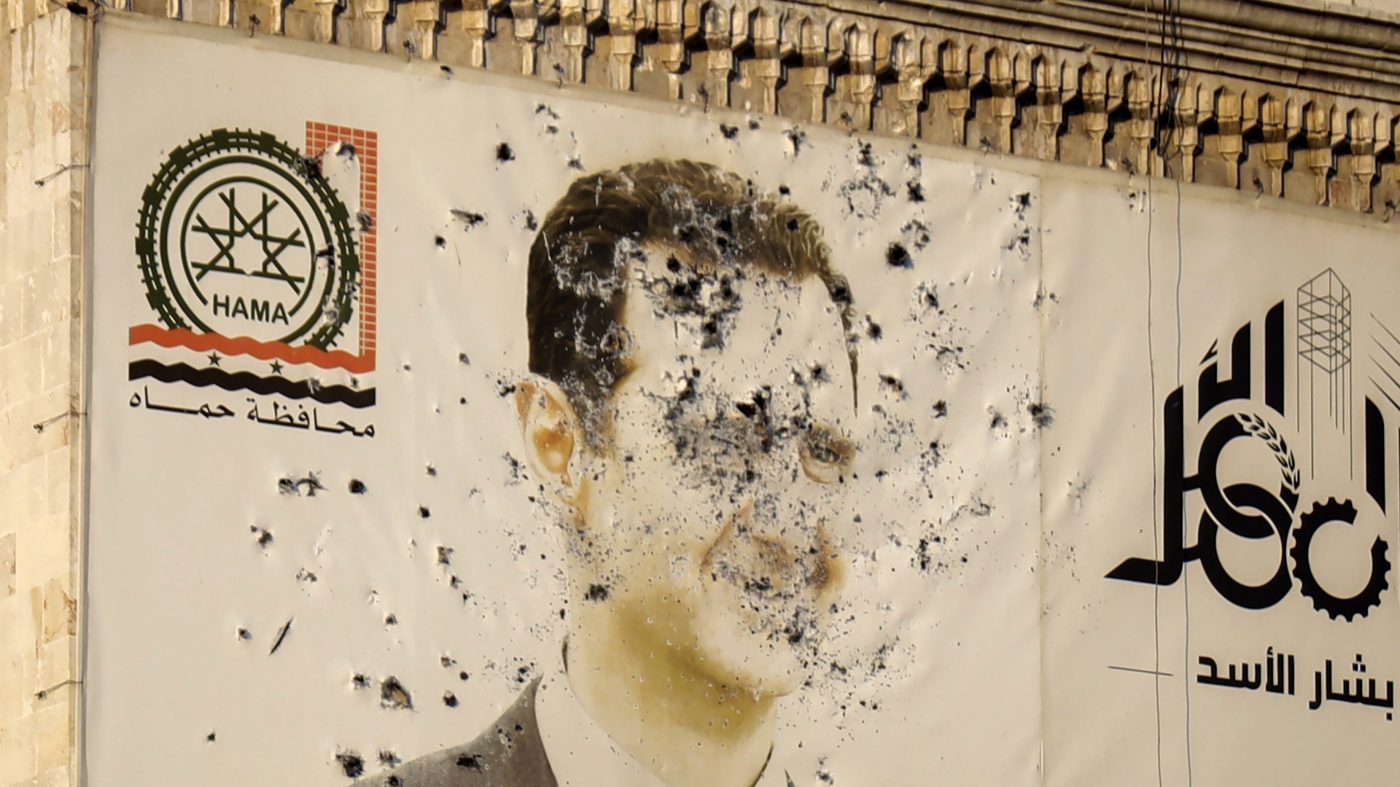
A Syrian court on Tuesday handed down a death sentence in absentia to Bashar al-Assad, the ousted president, after convicting him of murder, torture, and crimes against humanity committed before and during the country's civil war. The ruling, issued by the Fourth Criminal Court in Damascus, marks the first legal action against Assad since his government was toppled in 2024.
Judge Fakhareddine al-Aryan, reading the verdict on state television, said that Assad had "used state agencies to commit war crimes and crimes against humanity," as reported by the Associated Press. The court also sentenced Assad's brother, Maher al-Assad, to death in absentia for commanding the 4th Armored Division, a military unit accused of killing dissidents during the 2011 protests and later suppressing uprisings across the country.
Activists have long accused the 4th Armored Division of involvement in murder, torture, drug trafficking, and the detention of both rebels and civilians. Six other former officials from Assad's regime also received death sentences in absentia.
The only defendant present in court was Atef Najib, Assad's maternal cousin, who had overseen the early crackdown on dissent. Dressed in a prison uniform and standing inside a cage, Najib heard his death sentence read aloud. His attorney, Adnan al-Masalmeh, who represents families of Najib's victims, called the day "the day of justice for all the wounded, martyrs, detainees and Syrians who were forced to leave their country."
However, legal experts caution that the sentences are largely symbolic. Anwar al-Bunni, head of the Syrian Centre for Legal Studies and Research, told Reuters that the rulings amount to "performative justice," noting that "no one will hand over a criminal to a country that issues a death sentence." Assad and his brother have been granted asylum in Russia, making their extradition highly unlikely.
Assad's Rise and Fall
Assad inherited the presidency in 2000 after the death of his father, Hafez al-Assad, and maintained close ties with Russia and Iran while opposing U.S. and Israeli policies. His rule faced a major challenge during the Arab Spring in 2011, when pro-democracy protesters demanded elections and an end to his regime. The government's violent response sparked a civil war that killed hundreds of thousands and displaced millions.
The conflict drew international condemnation, particularly over the use of chemical weapons. In 2012, President Obama called chemical weapons use a "red line" and urged Assad to step down. In 2018, President Trump labeled Assad an "animal" over alleged chemical attacks, accusations Assad has denied.
In 2024, Assad's government was overthrown by Hay'at Tahrir al-Sham (HTS), an Islamist coalition that evolved from former al-Qaeda affiliate Jabhat al-Nusra. HTS leader Ahmed al-Sharaa, a former al-Qaeda member, took over as Syria's president in 2025 and has since become the first Syrian leader to visit the White House.
The death sentences, while unlikely to be enforced, reflect the new authorities' efforts to address past atrocities. Yet, as analysts point out, the practical impact remains limited, and the pursuit of justice for Assad's victims may require international mechanisms rather than domestic courts.