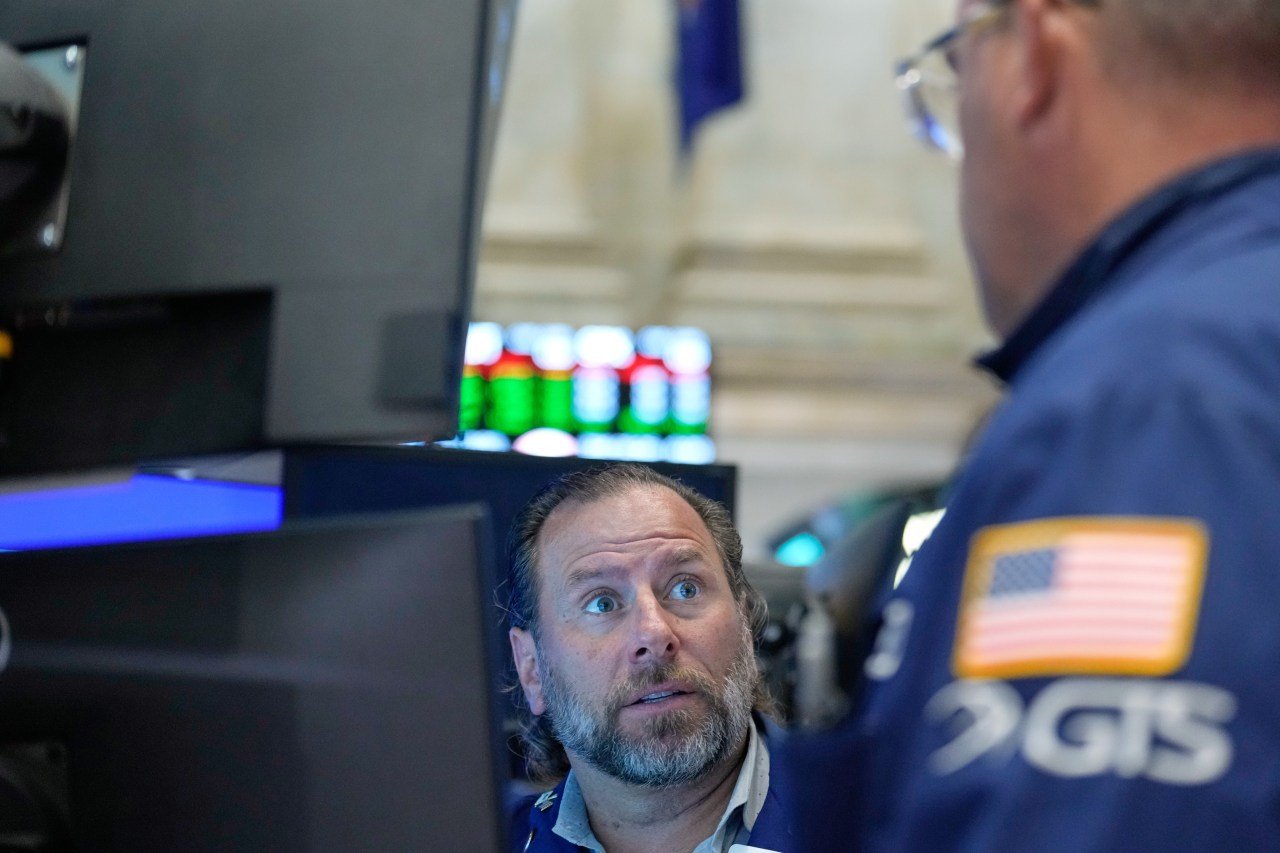
Wall Street managed to snap a three-day losing streak on Friday, closing out its first winning week in three as a pullback in crude prices provided some relief. The S&P 500 rose 0.5%, while the Dow Jones Industrial Average gained 478 points (0.9%) and the Nasdaq composite added 0.5%. Despite the week's choppiness, the benchmark index remains within 0.7% of its record high set last month.
The market's mood improved after Brent crude fell 2.8% to $97.44 a barrel, easing concerns about the inflationary impact of surging energy costs. Oil prices have been swinging wildly on uncertainty over whether a deal can be reached to reopen the Strait of Hormuz, a key shipping lane for global oil supplies. Hopes for a diplomatic breakthrough have periodically driven prices down, only to see them rebound on renewed doubts about the conflict with Iran.

However, trading was far from smooth. A morning report on consumer sentiment sent Treasury yields higher, with the 10-year yield briefly jumping to 5.22%—its highest level since 2007—before retreating to 5.15% as oil prices slid. The University of Michigan survey showed consumers now expect inflation of 4.6% over the next year, up from 4% last month, a worrying sign that could fuel a self-fulfilling cycle of higher prices. The report also indicated that while sentiment dipped to a four-month low, it wasn't as bleak as economists had feared.
The rise in inflation expectations is a red flag for policymakers, as it could prompt consumers to make purchases now to avoid future price increases, inadvertently giving businesses the cover to raise prices further. That dynamic would complicate the Federal Reserve's efforts to contain inflation, which has already been exacerbated by the war with Iran and its impact on energy markets. The 10-year yield has climbed from 3.97% since the conflict began, reflecting growing worries about inflation, heavy government debt, and signs of economic resilience.
High yields are a double-edged sword: they can slow economic activity by raising borrowing costs, but they also pressure stock valuations. The fact that equities have held up relatively well despite this headwind speaks to the strength of corporate earnings. Companies like Costco Wholesale, which reported better-than-expected quarterly profits, and Akamai Technologies, which jumped 3.2% on a massive $11.6 billion deal with Anthropic—the firm behind the Claude AI chatbot—helped lift the market.
Investors are also keeping a close eye on the political fallout from high energy prices, with some lawmakers urging the administration to take steps to curb fuel costs. The situation in the Middle East remains a key wildcard, as any escalation could send oil prices soaring again and derail the market's recovery.
Overseas, European markets were mixed, while Asian indices showed divergent moves: Japan's Nikkei 225 climbed 1.3%, but Hong Kong's Hang Seng dropped 1%. The global picture remains fragile, with investors weighing the risks of persistent inflation, geopolitical instability, and the potential for central banks to keep interest rates higher for longer.
As the week drew to a close, the S&P 500 settled at 7,743.41, the Dow at 51,828.62, and the Nasdaq at 27,068.72. While the reprieve from oil prices was welcome, the underlying tensions that have roiled markets—soaring bond yields, inflation anxieties, and the war with Iran—remain unresolved. Traders will be watching for any new developments in the coming days that could shift the delicate balance.