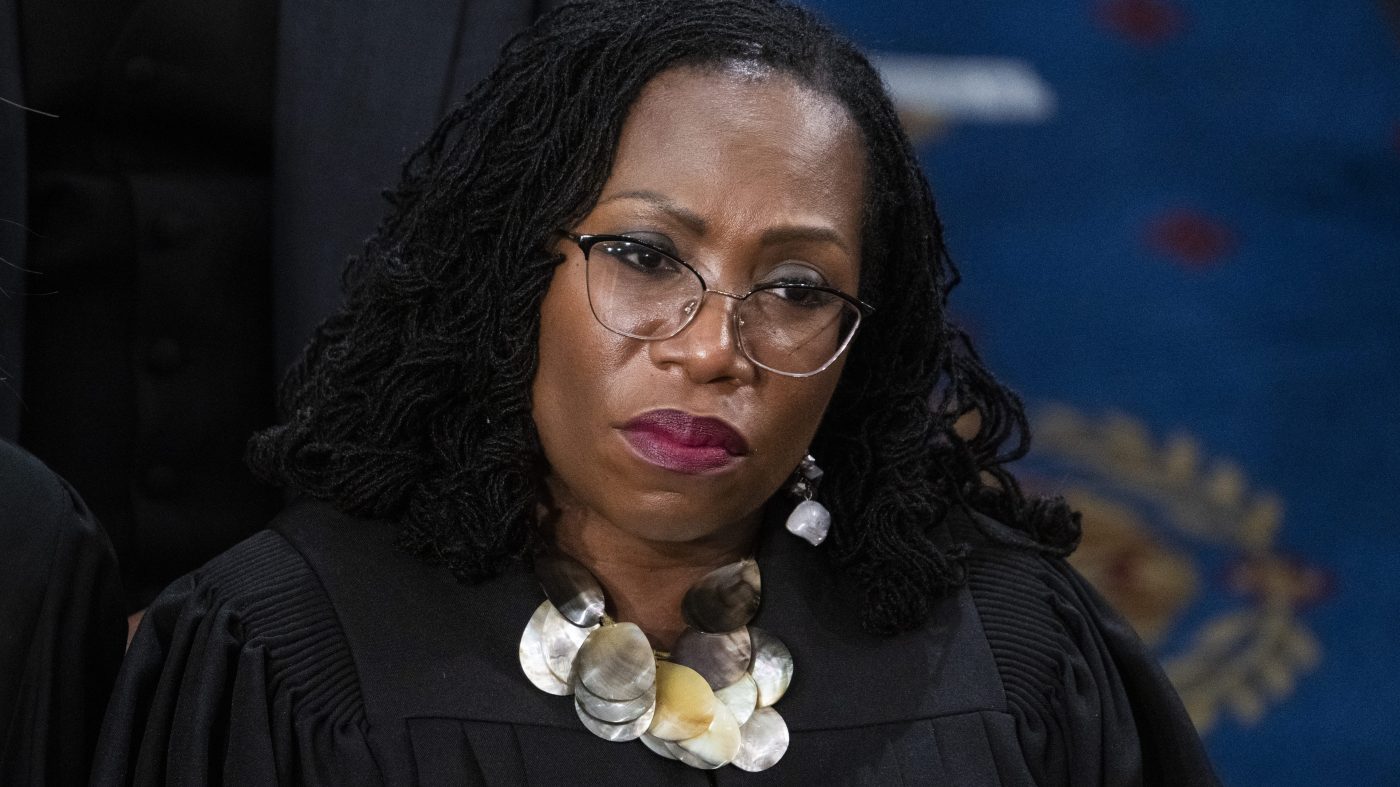
Justice Ketanji Brown Jackson used a public lecture Thursday to warn her colleagues that the Supreme Court's growing reliance on its emergency docket is taking a toll on the institution's legitimacy, urging them to show more restraint in wading into ongoing disputes.
Speaking at the University of the District of Columbia's law school, Jackson questioned why certain parties should receive expedited treatment from the high court while countless others wait patiently in the regular queue. “Why is it that one party should get a fast pass to the Supreme Court of the United States, when so many other parties are queued up, waiting patiently for the court's attention?” she asked.

The junior liberal justice has repeatedly voiced concerns about her colleagues' willingness to intervene in pending litigation, often at the request of the Trump administration to clear legal obstacles to its agenda. She warned that such interventions risk becoming “corrosive” to the judiciary's standard procedures.
Jackson recalled her time as a Supreme Court clerk roughly 25 years ago, when justices, she said, made a point of staying out of politically charged cases for as long as possible. That approach, she argued, has given way to a more aggressive posture. “It has been noticeably less restrained, especially with respect to pending cases that involve controversial matters,” she said.
Though she did not name President Trump directly, Jackson invoked a 2025 dissent by fellow liberal Justice Sonia Sotomayor, who accused the administration of keeping the emergency docket on “speed dial.” Hours before Jackson's speech, the same case that prompted Sotomayor's dissent returned to the Supreme Court. The administration is again seeking an emergency order to lift a judge's permanent block on its third-country deportation policy.
Jackson, who handles emergency applications from Massachusetts—where the case was filed—has not yet acted on the request, instead ordering a response by Monday. The filing marks the Trump administration's 40th emergency application since Trump returned to office, a figure that administration officials say reflects overreach by lower courts, while critics see it as evidence of lawless executive action.
Jackson has frequently sided against the administration in these emergency appeals and has sometimes written sharp dissents alone. She emphasized Thursday that the emergency docket should not become a shortcut around normal appellate review. “If we're not careful, the emergency docket can and will become an end run around the standard review process, a special avenue that certain privileged litigants can use selectively,” she said.
Her comments come as the court faces mounting scrutiny over its handling of politically sensitive cases, including disputes over deportation policy and election-related legal battles. Jackson's warning underscores a growing divide among justices over the proper role of the emergency docket in the nation's highest court.