In recent weeks, a notable shift has occurred in how investors assess President Trump's two most influential economic officials: Treasury Secretary Scott Bessent and Federal Reserve Chair Kevin Warsh. The change stems from stark differences in their policy approaches and their interactions with the president.
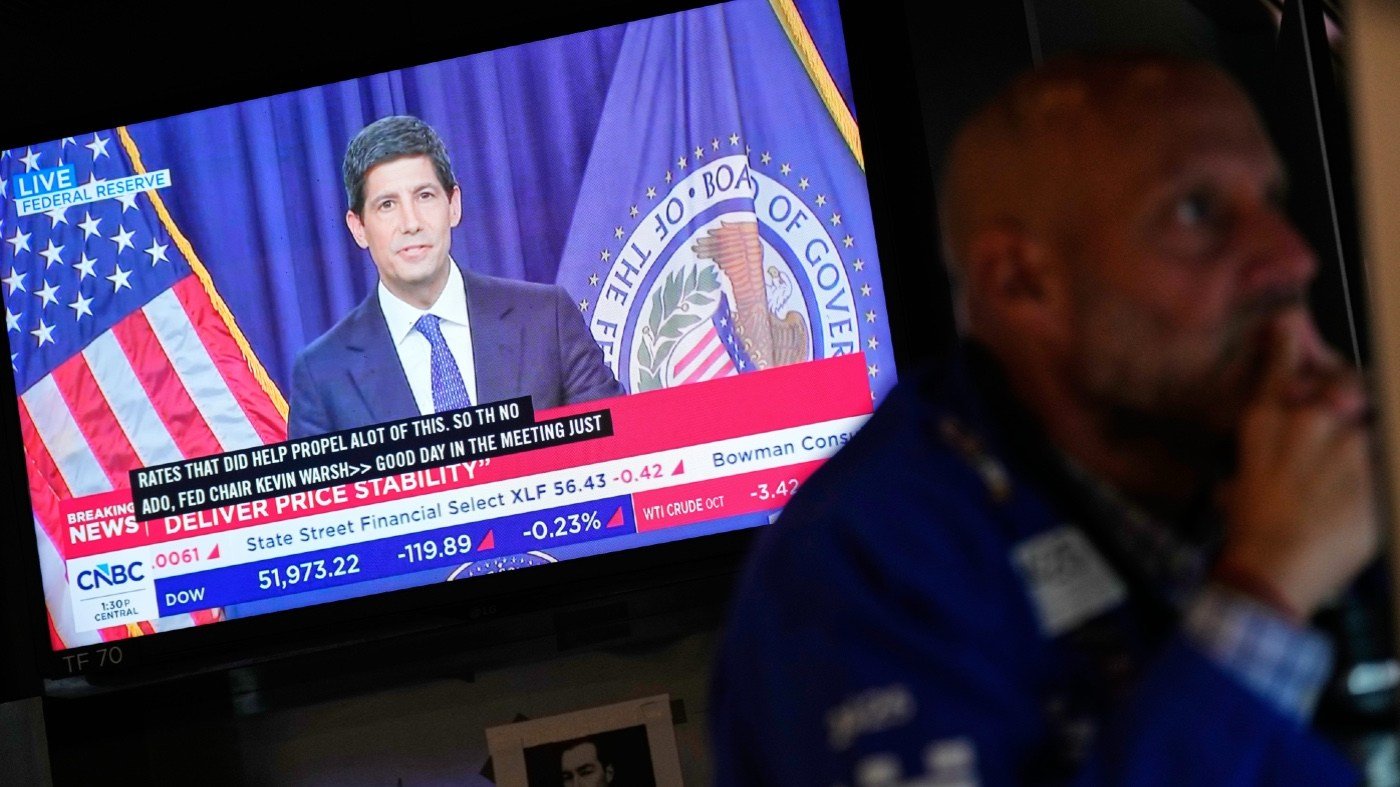
Warsh has solidified his reputation as a determined inflation hawk after a rocky start. His address at the Jackson Hole symposium laid out a clear framework for achieving the Fed's dual mandate of maximum employment and price stability. The message was reinforced when the Federal Open Market Committee raised the federal funds rate by a quarter point in September. Warsh emphasized that controlling inflation was the Fed's foremost priority, and bond markets responded by pricing in a higher path for future rate increases.

Bessent, by contrast, has drawn criticism for his attempts to influence Treasury yields. Initially, he intervened to support the yen, aiming to prevent Japanese authorities from selling U.S. debt. Then, in mid-August, he announced an expansion of long-dated Treasury buybacks. Since then, yields have climbed to two-decade highs, and the market suffered its worst one-day selloff since Trump's “Liberation Day” tariff announcement. Investor Stanley Druckenmiller, who once mentored Bessent, publicly rebuked the decision, arguing that the government cannot buy its way out of structural deficits and that fighting market fundamentals would undermine Treasury credibility. Bessent countered that his role is to ensure the market focuses on fundamentals, not to let the market dictate policy.
While some commentators accuse Bessent of encroaching on Fed independence, Warsh and Bessent actually share a pro-market, growth-oriented philosophy. Both have criticized the Fed's massive bond purchases following the 2008 financial crisis. Their divergence lies in strategy: Warsh favors market-driven price discovery for bond yields, while Bessent seeks to mitigate the rising cost of servicing U.S. debt.
Their decision-making processes also differ. As Mickey Levy of the Hoover Institution notes, Warsh's Jackson Hole speech signaled a new approach to the dual mandate. Warsh argues that the Fed should align aggregate demand with supply, but he questions the reliability of wage growth as an inflation predictor—a cornerstone of current Fed models. He has also commissioned five independent task forces to modernize monetary policy operations.
Bessent, however, has yet to articulate a coherent framework for managing the federal deficit. Upon taking office, he set ambitious targets: a budget deficit of 3% of GDP or less, real GDP growth of 3% or more, and a 3 million barrel increase in daily domestic oil production. None have been met; the deficit remains near 6% of GDP. Bessent has suggested that faster economic growth could outpace debt accumulation, but he has not outlined concrete measures to shrink the deficit.
One bright spot for Bessent has been trade negotiations. When Trump's tariffs threatened to ignite a full-blown trade war with China last year, Bessent brokered a truce swiftly. He also played a key role in resolving other disputes, though his recent handling of the U.S.-Canada impasse has drawn criticism.
Finally, the two officials' relationships with Trump diverge sharply. Warsh has managed to maintain Fed independence while avoiding presidential backlash. He secured a unanimous vote for the rate hike without incurring Trump's wrath, partly by consulting Trump in advance about the likely outcome. Bessent, meanwhile, has largely acquiesced to Trump on tariffs and budget issues, avoiding confrontation. In a Financial Times piece, Edward Luce described Bessent's recent behavior as “turned noticeably adolescent,” suggesting he is more focused on pleasing Trump than on sound policy.
My initial hope was that Bessent would leverage his trade successes to gain Trump's confidence and offer candid advice behind closed doors. Now, I worry that if he continues as a cheerleader rather than a trusted advisor, his standing as Treasury secretary may erode further.