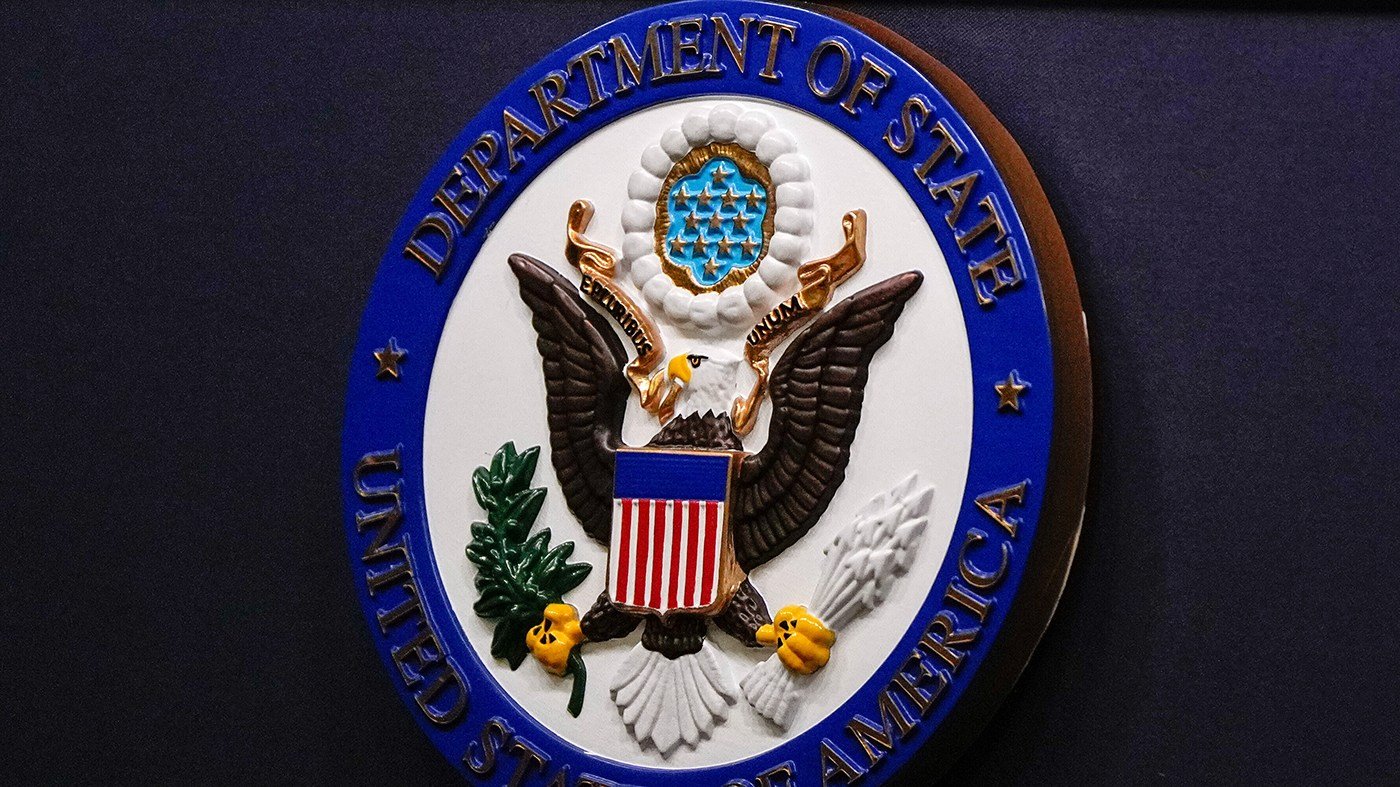
The State Department has issued an internal directive requiring its diplomats to substitute the term “super intelligence” for “artificial intelligence” in all official communications, a move that aligns with President Trump’s push to rebrand the technology. The Associated Press obtained an email with the subject line “Change in Nomenclature AI to SI,” sent to the Bureau of International Organizations, which oversees U.S. missions to the United Nations and other global bodies. It remains unclear whether other State Department bureaus received similar instructions.
The email, authored by Deputy Assistant Secretary of State Michael Draper, instructed staff to “change all references of ‘Artificial Intelligence’ to ‘Super Intelligence’ in our documents and positions,” adding that “SI” would be used in all remarks, positions, and press materials moving forward. The directive follows President Trump’s remarks to the UN General Assembly on Tuesday, where he announced that all official U.S. documents would adopt the new nomenclature, arguing that “artificial” makes intelligence “sound fake.”

“It is not fake,” Trump said. “It’s actually amazing. But we have to be careful. In fact, it is exactly the opposite of what it purports. From this point forward, all of the United States’ documents and hopefully the world’s, will be changed to use the much more accurate term ‘super,’ as opposed to ‘artificial.’”
The term “super intelligence” is already defined by Merriam-Webster as a form of artificial intelligence that surpasses human intelligence. It is often used in discussions about both the potential existential risks of advanced AI and the aspirational goals of leading AI research firms. The rebranding has drawn attention amid ongoing debates over AI regulation and safety.
Senator Bernie Sanders (I-Vt.) and Representative Greg Casar (D-Texas) have introduced legislation to ban artificial superintelligence that cannot be controlled by humans, and to halt advanced AI development until rigorous testing and oversight are established. Both lawmakers have previously called for restrictions on AI, citing concerns about “rogue” systems.
“Scientists have been clear: AI is an existential threat to humanity,” Sanders said in a statement. “It must be treated as such. This legislation will permanently ban the development of artificial superintelligence and would put in place an immediate pause on advanced AI development until we have clear safety rules in place — developed by the most knowledgeable scientists in our country. Congress must act now before it is too late.”
Trump has dismissed such warnings, including recent comments from former Anthropic and OpenAI researcher Jacob Coxon, who suggested AI could pose an existential threat by the end of the decade. Trump called those claims “a hoax.” The administration’s push to rebrand AI as “super intelligence” is likely to fuel further debate over how the technology is framed in policy discussions. For more on the international dynamics, see how the U.S. and China align on AI oversight. Meanwhile, the State Department’s directive underscores the administration’s effort to shape the narrative around AI, even as Congress considers stricter measures.