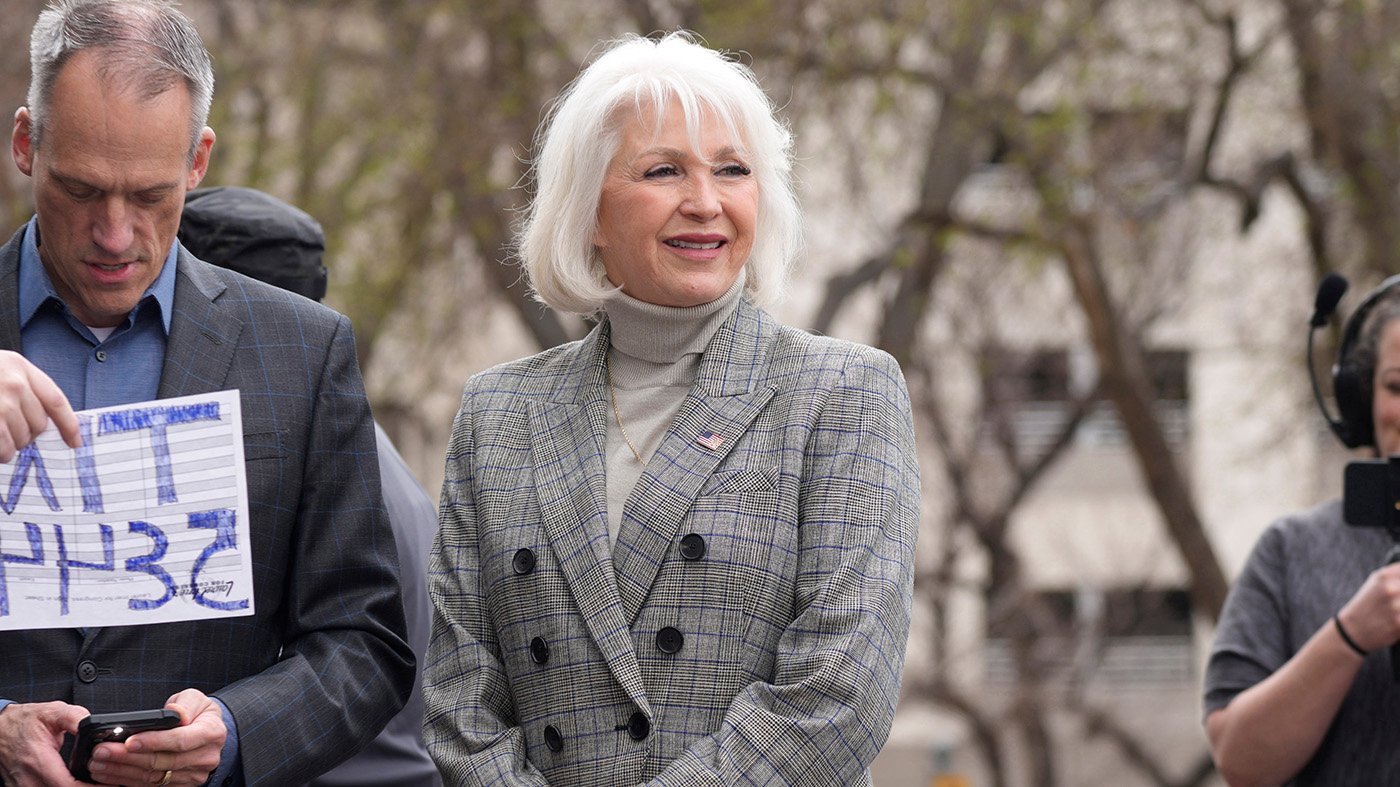
Former Colorado elections clerk Tina Peters is scheduled to walk out of prison Monday after Governor Jared Polis cut short her nine-year sentence, marking a controversial end to a case that made her the first local official convicted for actions tied to efforts to undermine the 2020 presidential election.
Peters, who served as the elected clerk in Mesa County, will have spent less than a quarter of her original term behind bars. The Associated Press reported she is not expected to address reporters upon release.
Her case stemmed from her role in the aftermath of the 2020 election, when she certified results in her county that heavily favored Donald Trump. President Joe Biden carried Colorado by more than 13 points, fueling Trump's baseless claims of widespread fraud. In 2021, Peters facilitated access to Mesa County's voting machines for a conspiracy theorist, seeking to extract data. She later argued she was trying to preserve records in case Trump's allegations proved true.
Polis announced the commutation last month, telling Colorado Public Radio the sentence would be reduced to 4.5 years. The governor characterized Peters's crime as unauthorized computer access, not election interference. “She did not interfere with any election, did not have to do with ballot counting, but it was illegal access to the computer room,” Polis said.
“She thought she was trying to back up the software before it was updated,” he added. “She did it illegally. There’s no question about it. And she deserves to go to prison. And I think this is a more appropriate, even harsh, frankly, sentence for that crime.”
The commutation has drawn sharp criticism from within Polis's own party. Colorado Democrats censured Polis for commuting the sentence of an election denier, arguing it undermines efforts to hold accountable those who attacked the integrity of the 2020 vote. Peters's case is part of a broader pattern of election security breaches, with parallels to other high-profile incidents where officials faced legal consequences for tampering with voting systems.
Peters's release comes amid ongoing national debates about election integrity and the legal repercussions for those who challenged the 2020 results. Her case has been closely watched by both election security advocates and those who question the legitimacy of the election outcome.
In a related development, some observers have drawn comparisons to other legal actions against election officials. Meanwhile, the political fallout continues, with Illinois and Colorado targeting airline rewards in separate policy moves, though unrelated to the Peters case.