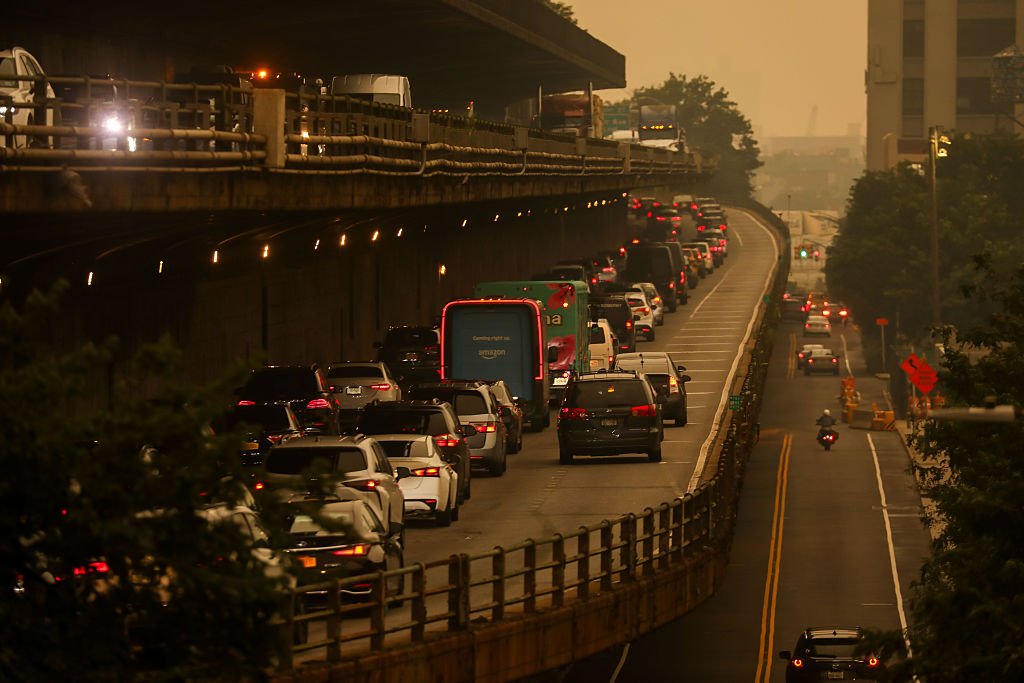
Millions of Americans from the Midwest to the Northeast are waking up to hazy skies and the acrid smell of wildfire smoke this week, as air quality indices in some cities hit levels deemed the worst globally. Health officials are urging residents to stay indoors and wear masks when venturing outside, as conditions pose serious risks to vulnerable populations.
The smoke, originating from blazes in Canada and the western U.S., has drifted across the continent, blanketing major metropolitan areas. In response, state and local governments have issued health advisories, and some schools have canceled outdoor activities. The situation has reignited political debates over forest management and climate policy, with lawmakers pointing fingers at federal inaction.
How to Protect Indoor Air
Experts stress that the simplest way to keep smoke out of your car or home is to ensure your air conditioning system is set to recirculate, not pull in fresh air. In vehicles, this means pressing the often-overlooked recirculation button, which reuses interior air rather than drawing in smoky outside air. This feature can also improve fuel efficiency and cooling performance.
For homes, most central air systems recycle indoor air by default, but some have a “fresh air” or “intake” mode. Dr. Brian Christman, a pulmonologist at Vanderbilt University, advises homeowners to disable that setting during smoke events. He also recommends checking that filters are in good condition and rated MERV 13 or higher for optimal particle capture.
“If you have an air purifier, run it continuously in the room where you spend most of your time,” said Jennifer Stowell, a research scientist at Boston University’s Center for Climate and Health. Sealing gaps under doors with towels or blankets can further reduce smoke infiltration.
Political and Health Implications
The widespread smoke has drawn attention to the growing frequency of wildfire events linked to climate change. Critics argue that the Biden administration’s wildfire prevention efforts have fallen short, while supporters point to recent bipartisan bills aimed at increasing forest thinning and prescribed burns. Meanwhile, states like Minnesota have declared emergencies and activated the National Guard to combat blazes, as highlighted in recent coverage of Governor Walz’s emergency declaration.
Air quality monitors across the region have recorded hazardous levels of particulate matter, prompting the EPA to issue warnings. Some cities have seen air quality indices exceed 300, a level considered “emergency” conditions. The crisis has also sparked discussions about infrastructure resilience, with some experts calling for improved building ventilation standards.
Outlook
Meteorologists predict that smoky conditions will persist through Friday, but storms and rainfall expected over the weekend could bring relief. By Sunday, most states in the affected region may see significantly improved air quality, according to Nexstar meteorologist Darrius Stringer. However, as wildfires continue to rage across the West, the threat of recurring smoke events remains a pressing concern for policymakers and residents alike.