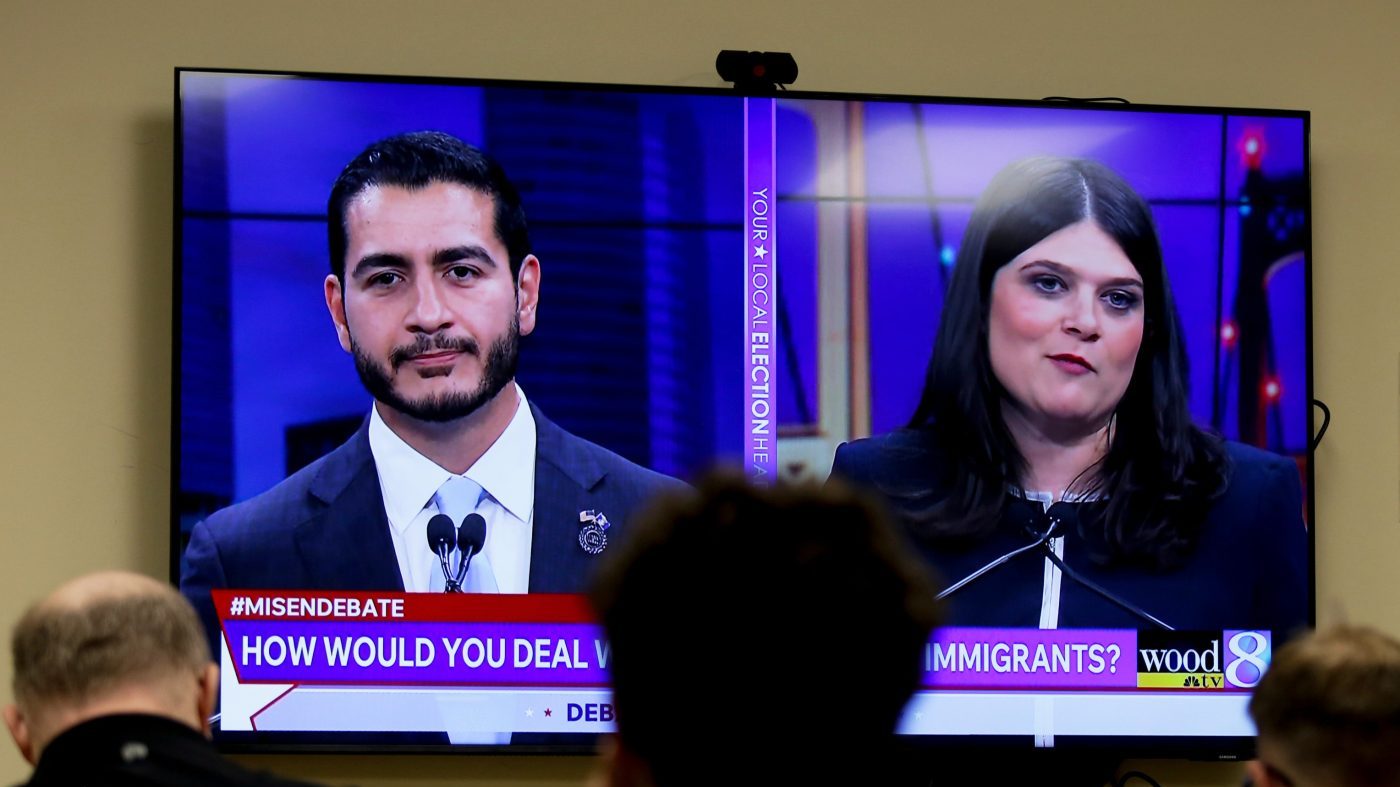
A fresh survey from the Detroit News and WDIV-TV puts Representative Haley Stevens ahead of progressive challenger Abdul El-Sayed by roughly seven percentage points in the Democratic primary for Michigan’s open Senate seat. The poll, conducted by the Glengariff Group from July 8 to 11, shows 48.2% of likely Democratic primary voters backing Stevens, while 41.4% support El-Sayed. Another 9.5% remain undecided.
Stevens, a moderate Democrat, recently secured the endorsement of retiring Senator Gary Peters, who called her “the fighter we need” in a post on X Monday morning, adding that “she has the record to back it up.” El-Sayed, meanwhile, has rallied support from prominent progressives including Senator Bernie Sanders and Representative Alexandria Ocasio-Cortez. The primary is set for August 4.
The contest is widely seen as a bellwether for the Democratic Party’s ongoing internal struggle over its direction, especially after losses in the 2024 general election. Some Democrats worry that a leftward lurch could hurt the party in key swing states like Michigan, while others argue that energizing the base is essential to winning in 2028.
This primary follows a string of victories by progressive insurgents in other states, including New York, Colorado, and Washington, D.C. Those wins have intensified the debate over whether the party should embrace a more centrist or left-leaning platform. The Michigan race could offer clues about which faction has more staying power in a critical battleground.
The poll also measured candidate favorability: 51.5% of respondents view El-Sayed favorably, compared to 49.5% for Stevens. Unfavorable ratings stand at 15.4% for El-Sayed and 21% for Stevens, suggesting that while both are broadly liked, Stevens has more voters with negative impressions.
Michigan’s Senate race is drawing national attention as the first major test of Democratic identity heading into the 2028 presidential cycle. The outcome could influence whether the party leans further left or recalibrates toward the center. For more on how narrow Democratic majorities could empower the left wing, see our analysis of narrow Democratic majorities and progressive influence.
Peters’ endorsement of Stevens underscores the establishment's push to hold the line against progressive challengers. The senator’s backing could prove decisive in a race where turnout and voter enthusiasm are key. Meanwhile, El-Sayed’s campaign is banking on grassroots energy and high-profile surrogates to close the gap.
The survey of 500 likely Democratic primary voters has a margin of error of plus or minus 4.4 percentage points. As the primary approaches, both campaigns are expected to intensify their outreach, particularly to undecided voters who could swing the outcome.