House Republican leaders are scrambling to push the farm bill through the chamber this week, but a deeply divisive provision that would limit lawsuits against pesticide manufacturers has ignited a rebellion within the GOP conference. The measure, which would block states and courts from penalizing companies for failing to include health warnings beyond those approved by the Environmental Protection Agency, has drawn fierce opposition from lawmakers tied to the “Make America Healthy Again” (MAHA) movement.
Speaker Mike Johnson (R-La.) faces a narrow majority and internal dissent that could derail the legislation. Representative Anna Paulina Luna (R-Fla.) warned on social media that she and her allies would “slaughter the farm bill” unless the pesticide provision—along with two related measures limiting local regulations and pesticide permits—is removed. “I have a little boy, and the amount of articles I have seen on pesticides and herbicides popping up in children’s products is very bad,” Luna wrote, adding that she refuses to be “bullied into supporting a bill that is providing protections and immunity to corporations that are responsible for giving children and adults cancer.”

GOP Lawmakers Break Ranks
The provision has fractured traditional party lines. Representative Brian Fitzpatrick (R-Pa.) confirmed he would oppose the farm bill if the pesticide language remains, while Representative Tim Burchett (R-Tenn.) said he “probably would” vote no. Burchett argued, “People are dying from cancer, and I know this stuff causes cancer. Protecting big corporations is not what I came to Congress for. I’d rather protect small farmers.” Representative Chip Roy (R-Texas), policy chair of the House Freedom Caucus, voiced “grave concerns” during a Rules Committee hearing, insisting states should have the authority to impose stricter labeling requirements without seeking EPA approval.
House Agriculture Committee Chair Glenn Thompson (R-Pa.) defended the provision, arguing states can still submit specific labeling requests to the EPA and can ban chemicals entirely if they choose. But Roy countered that states should not have to “come to the EPA to beg for the ability to go further to protect their people.”
Unlikely Alliances Form
The fight has forged unusual cross-party alliances. Representative Chellie Pingree (D-Maine) and Representative Thomas Massie (R-Ky.) jointly introduced an amendment to strike the provision, while Luna’s separate amendment was ruled in order for a floor vote. Pingree said, “If a company’s product makes people sick, that company should be held accountable. Congress should be protecting families, farmers, and children, not doing favors for Bayer and other chemical giants.” This bipartisan push echoes the unlikely alliance between Pingree and MAHA leaders that has reshaped the debate.
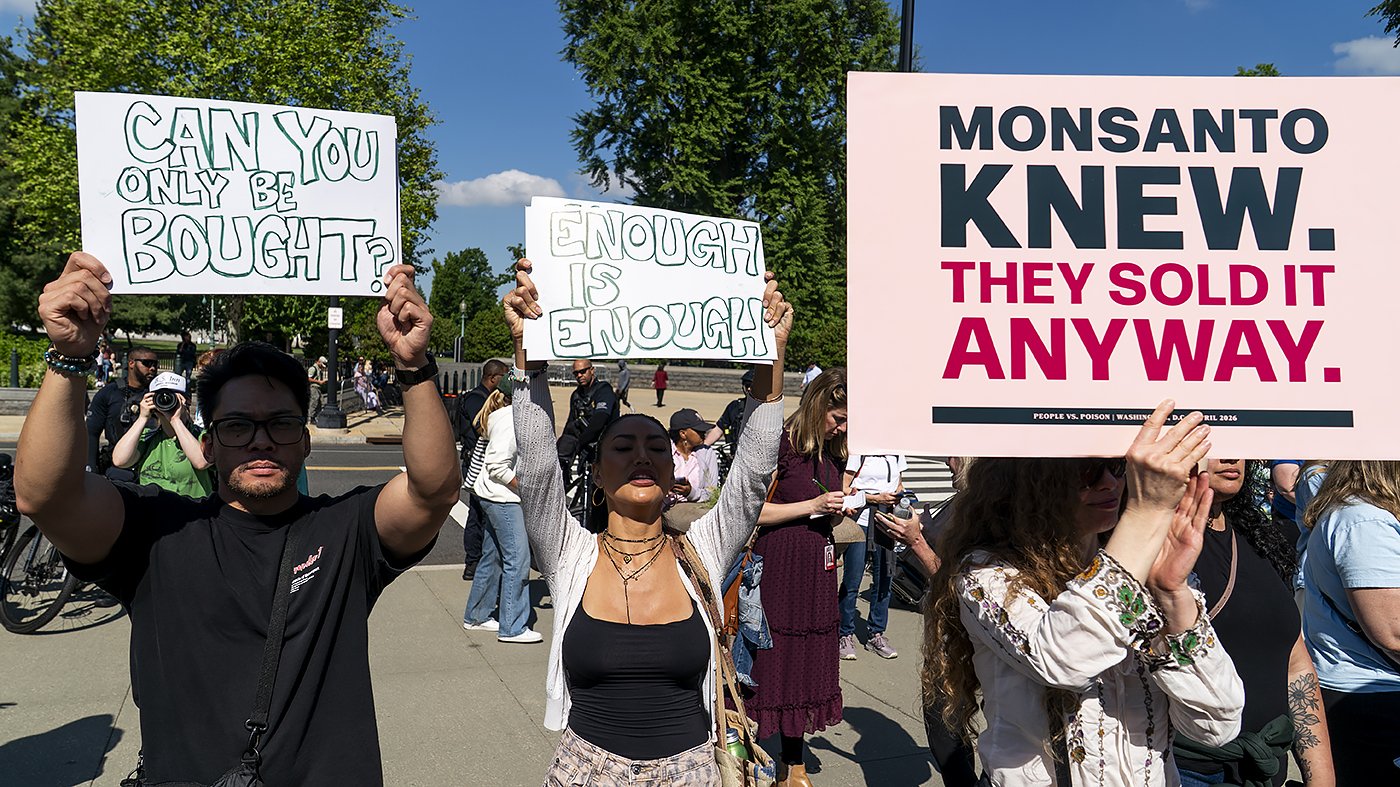
The provision is part of a broader legal battle over pesticide liability. The Supreme Court is currently weighing limits on such lawsuits in a case involving Monsanto’s Roundup, which could have far-reaching implications for the industry. That case has drawn intense scrutiny as it tests whether federal labeling laws preempt state claims.
Political Calculus and Democratic Opposition
President Donald Trump’s executive order earlier this year boosting glyphosate—a key ingredient in Roundup—further inflamed tensions with his MAHA supporters. Now, Johnson must navigate a razor-thin margin. He needs near-unanimous GOP support for a procedural rule vote to advance the bill, but Democratic leaders are also lining up against it. House Democratic Caucus Chair Pete Aguilar (D-Calif.) said, “We object to the policy. An overwhelming amount of Democrats will object.” He noted that while Democrats want to help farmers hurt by Trump’s tariffs, the bill’s cuts and policy riders are unacceptable.
With the Freedom Caucus already blocking other deals and demanding unrelated concessions, Johnson’s path to passage remains uncertain. The farm bill’s fate now hinges on whether GOP leaders can quell the rebellion or are forced to strip the pesticide language to avoid a floor defeat.