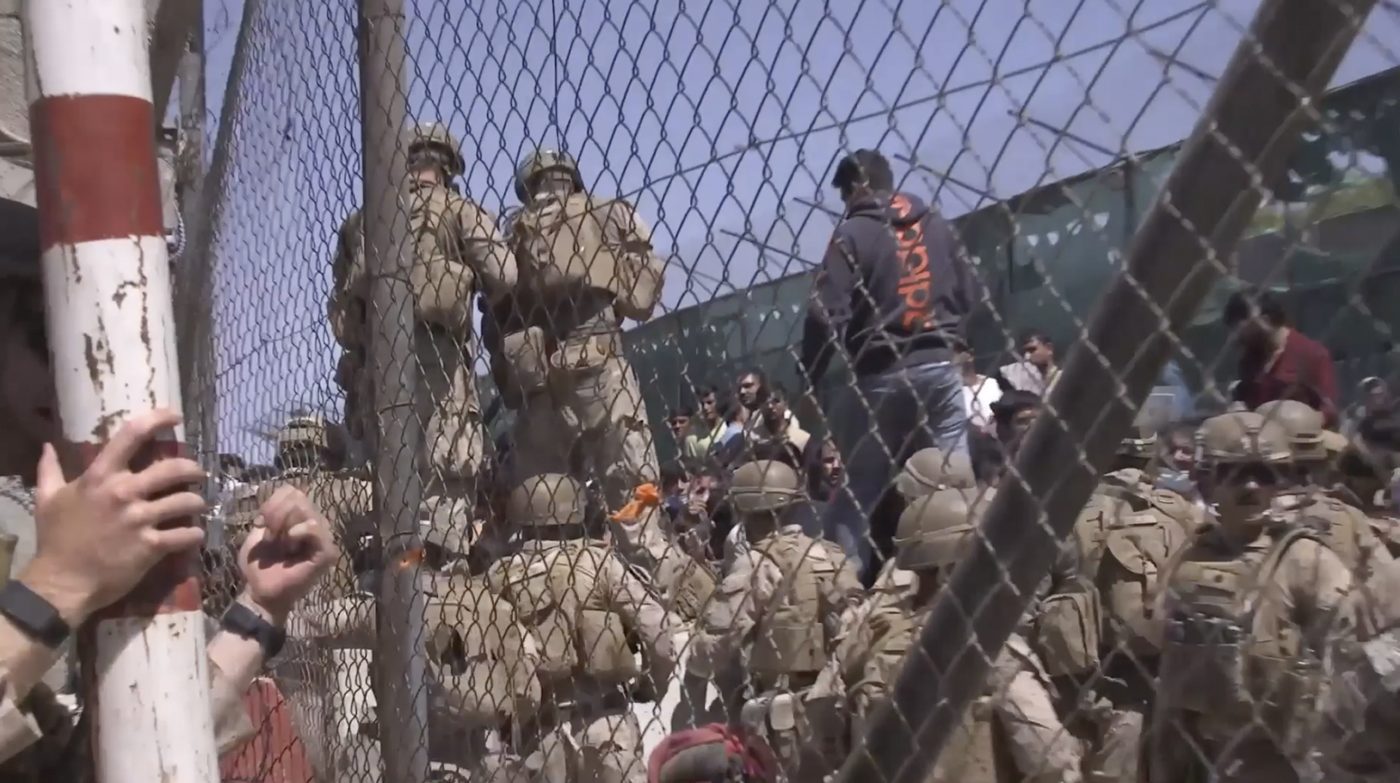
The Pentagon announced Wednesday that the U.S. Marine Corps has formally upgraded the valor awards for Marines who defended Abbey Gate at Kabul's Hamid Karzai International Airport during the chaotic 2021 withdrawal from Afghanistan. The decision corrects what defense officials now acknowledge were inappropriately downgraded recognitions for service members who operated under direct enemy fire during one of the deadliest single incidents for American forces in the war's final chapter.
Correcting the Record
Pentagon spokesman Sean Parnell stated the upgrades were recommended by the Afghanistan Withdrawal Special Review Panel at Defense Secretary Pete Hegseth's direction. "After reviewing the original awards and determining that several had been inappropriately downgraded, these awards have now been upgraded to levels that more accurately reflect the extreme risk these Marines knowingly accepted and the lives they saved under direct enemy fire," Parnell said in an official statement. He emphasized the original awards "did not reflect" the severe danger of the location or the heroic actions taken.
The upgrades apply to an unspecified number of Marines from Company G, 2nd Battalion, 1st Marine Regiment. The Pentagon did not immediately disclose the specific new award levels, nor did it provide the exact number of personnel affected. The announcement focuses solely on correcting the valor awards for living personnel; the 13 service members killed in the attack—11 Marines, one Army soldier, and one Navy sailor—had previously received Purple Hearts and Combat Action Ribbons. The House has also voted to posthumously award them the Congressional Gold Medal.
Context of the Attack and Broader Review
The suicide bombing at Abbey Gate on August 26, 2021, killed 183 people, including 13 U.S. service members and 170 Afghans, during the frantic evacuation following the Taliban's capture of Kabul. The attack punctuated a disastrous final phase of America's longest war, a period marked by political recriminations that continue today. Most independent assessments have concluded blame is shared between the administrations of President Donald Trump, who signed a 2020 withdrawal deal with the Taliban, and President Joe Biden, who executed the pullout under deteriorating conditions.
Secretary Hegseth ordered a comprehensive review of the evacuation last year. Parnell, who chairs the special review panel, noted the group has completed interviews with senior military and civilian leaders and reviewed over 9 million documents. The panel is now preparing its final findings and recommendations, which are due to Hegseth in the coming months. This broader examination of the withdrawal's failures, including the enduring human cost of protracted conflicts, aims to ensure military courage is never again undervalued by bureaucracy.
Political and Institutional Reckoning
"To the Marines of Company G and to every service member who stood at Abbey Gate: your actions were seen, your sacrifice was measured correctly, and your valor is now properly recognized," the Pentagon's statement concluded. Parnell added that the panel would "continue its broader work to ensure the lessons from 2021 are learned and that we never again place our warfighters in positions where their courage is not fully honored."
The award upgrades represent a significant institutional correction, acknowledging that the initial processing of honors failed to capture the gravity of the situation. This move occurs within a highly charged political environment where the legacy of the Afghanistan war remains a potent issue. The decision also intersects with ongoing debates about military accountability and recognition, similar to discussions surrounding posthumous honors for historic figures.
The fallout from the Abbey Gate attack continues to shape U.S. foreign policy and military decision-making. It serves as a grim case study in the consequences of rushed withdrawals and the complex moral calculus of ending long-term military engagements. As the review panel finalizes its report, the award upgrades stand as an immediate, though belated, attempt to address one facet of a deeply traumatic event for the U.S. military, aiming to provide a measure of closure for the units involved while the wider political debate over accountability continues unabated.