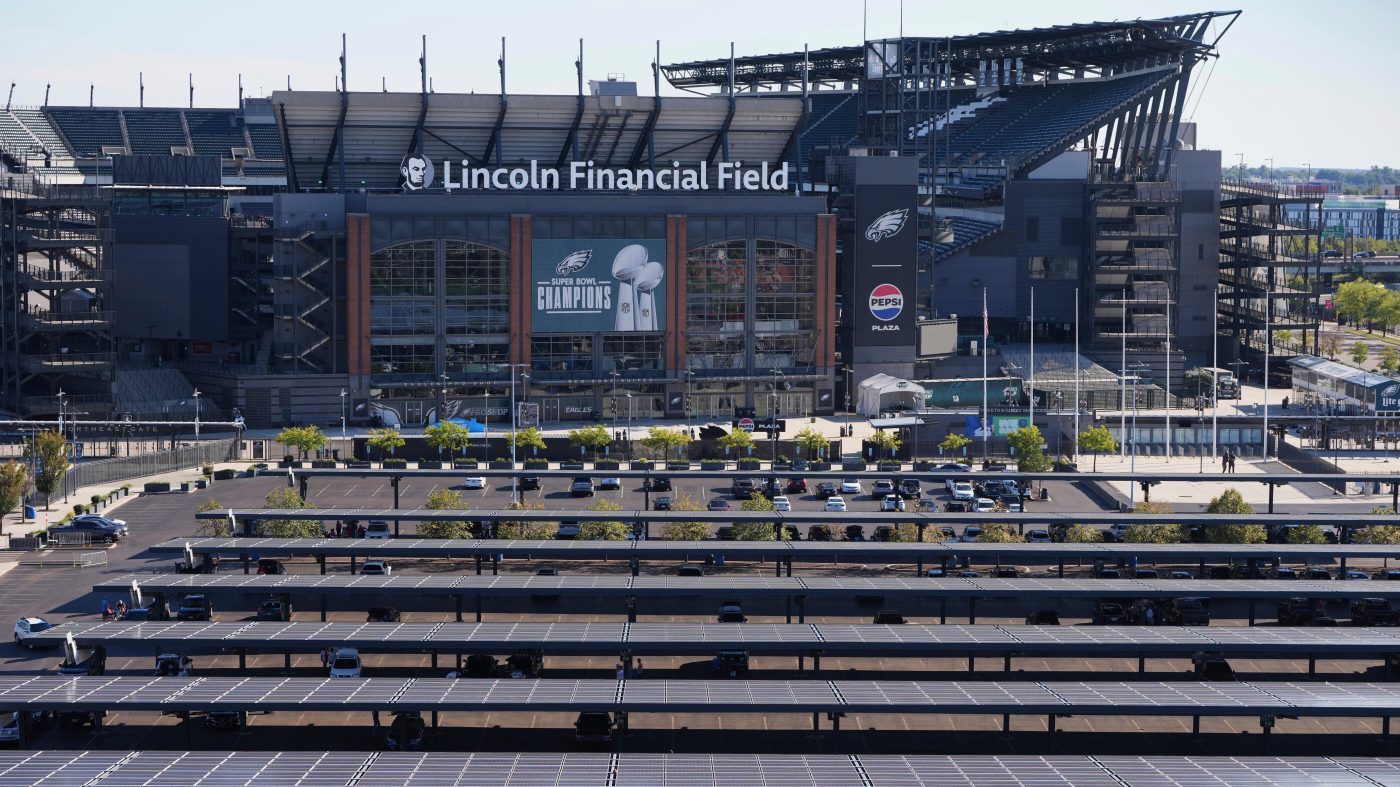
As the FIFA World Cup kicks off, a majority of its venues have secured prestigious green building credentials, with 13 of the 16 stadiums now holding LEED certification from the U.S. Green Building Council. The council announced that ten of those certifications were granted since 2024, following rigorous sustainability audits, and expects at least two more to be approved in the coming weeks.
The certified stadiums have collectively installed more than 11,500 solar panels to generate clean electricity, and officials estimate they will save over 100 million gallons of potable water each year while eliminating more than 5 million single-use plastics annually. Four venues are now reusing, recycling, or composting nearly all waste, diverting it from landfills.

Rhiannon Jacobsen, a managing director at the U.S. Green Building Council, highlighted the broader benefits: “They’re going to be able to achieve cost savings, they are also going to be improving their indoor air quality. That would then support the fan experience and improve team performance.”
FIFA has committed to cutting its greenhouse gas emissions by 50% by 2030 and reaching net-zero by 2040. The tournament’s reliance on existing venues avoids the carbon footprint of new construction. Yet environmental scientists caution that this World Cup will be the most polluting ever, largely due to air travel for fans and teams crisscrossing North America and the expansion from 32 to 48 teams. A report from Scientists for Global Responsibility and the New Weather Institute estimates the event will generate over 9 million metric tons of carbon pollution, equivalent to nearly 6.5 million average British cars driven for a year.
How LEED Certification Works
Introduced in 1998 with 19 pilot projects, LEED has become the global benchmark for sustainable building design, construction, and operation. Projects earn points across categories such as energy, water efficiency, and indoor environmental quality, leading to certified, silver, gold, or platinum ratings. LEED-certified buildings typically use about 25% less energy, cut carbon emissions by roughly 34%, and consume 10% less water than conventional structures, according to the council.
The U.S. Green Building Council recently launched a map spotlighting certified stadiums, including soccer and baseball venues, with plans to expand it further. There are now 51 LEED-certified professional sports venues in North America, and about 150 certified sports venues overall, counting collegiate arenas.
Impact on Stadium Operations
Garrett Wittmaier, director of stadium services for the Kansas City Chiefs, said FIFA encouraged host venues to pursue LEED certification and acknowledged the tight timeline. He noted that GEHA Field at Arrowhead Stadium was already making sustainability strides, including daily waste sorting that diverts over 90% of trash from landfills, adding biodigesters for food waste, installing LED sports lighting, and limiting water flow. Their reusable cup program has prevented about 100,000 plastic cups from becoming trash.
“We are continuously looking for ways to reduce the negative impact of large events on local communities and the environment,” Wittmaier wrote in an email.
The oldest venue, Mexico City’s 60-year-old Estadio Azteca, achieved the highest LEED tier in October. Jacobsen said it proves older facilities can meet modern sustainability standards. The 87,500-seat stadium reduced indoor water use by 36% through efficient fixtures and cut energy use by nearly 45% with upgraded HVAC and lighting. Officials also implemented a waste reduction program and a policy to purchase sustainable products, including toilet paper.
Félix Aguirre, the stadium’s deputy general manager, called the achievement “an extraordinary accomplishment” given the venue’s age and original conditions, including spaces that had never had adequate ventilation. He said it positions the stadium as a benchmark for responsible sports infrastructure.
Three other stadiums—Levi’s Stadium in Santa Clara, Lincoln Financial Field in Philadelphia, and Mercedes-Benz Stadium in Atlanta—had already earned LEED certification before host cities were announced in 2022. The remaining certified venues include BMO Field in Toronto, Estadio BBVA in Guadalupe, Mexico, AT&T Stadium in Arlington, Texas, and Gillette Stadium in Foxborough, Massachusetts.
While the green building push marks a significant step, the tournament’s overall environmental impact remains a point of contention. The political landscape around climate mandates has shifted, as seen in the SEC climate rule's demise, reflecting broader debates over regulation. Meanwhile, security concerns ahead of the event have prompted travel curbs related to Ebola, adding another layer of complexity to the international gathering.