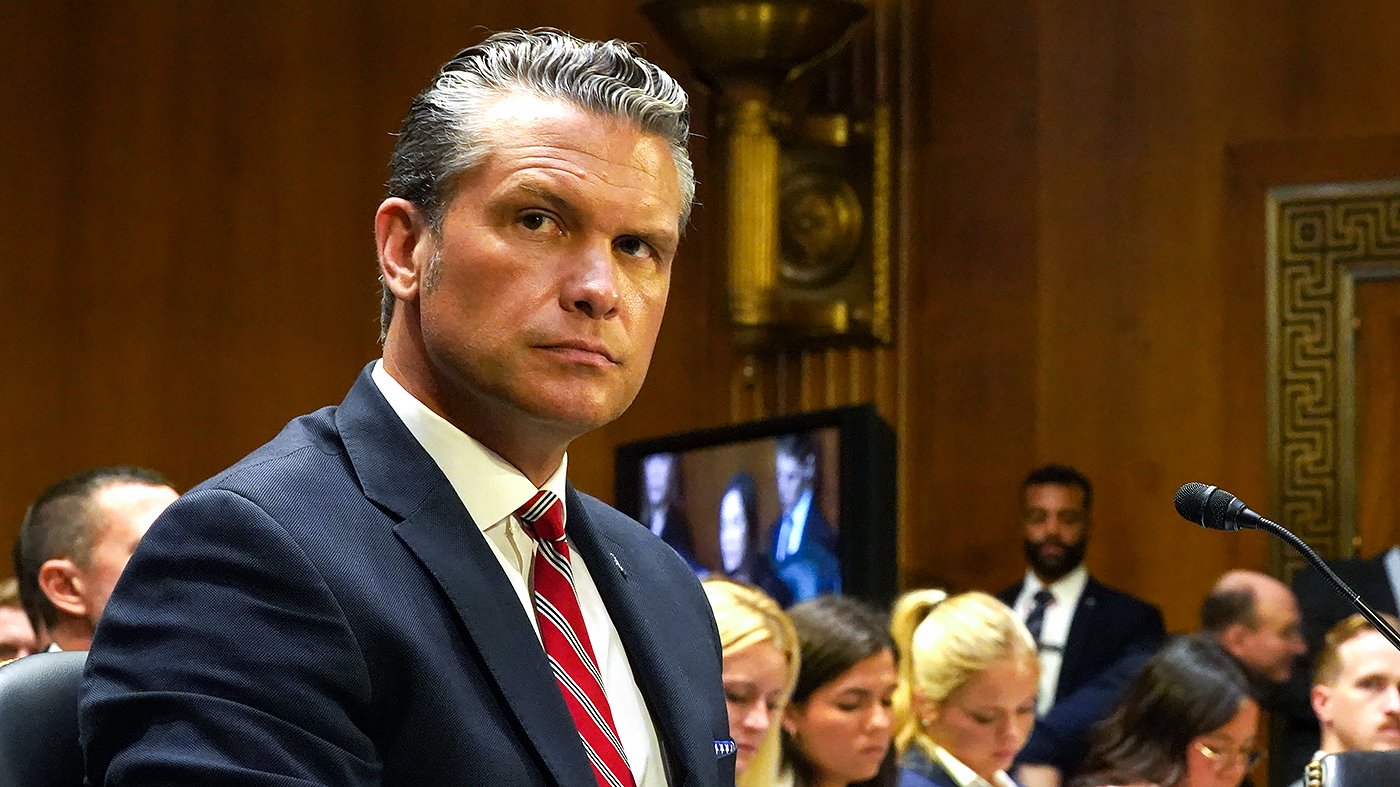
The Pentagon's top civilian and uniformed leaders made a unified push Tuesday for nearly $80 billion in emergency funding to replenish weapons depleted during the Iran conflict and support other Trump administration initiatives. Defense Secretary Pete Hegseth and Joint Chiefs of Staff Chairman Gen. Dan Caine testified before the Senate Appropriations Committee, where they faced sharp skepticism from Democrats who questioned why American taxpayers should underwrite a war they oppose—especially with the Pentagon sitting on billions in unspent funds.
Hegseth repeatedly blamed the Biden administration for what he called chronic underinvestment in the military and a focus on arming Ukraine, while acknowledging that the rising cost of the Iran war—now estimated at $37.5 billion through September—has created immediate funding gaps. Democrats countered by pointing to roughly $75 billion in unspent money from the GOP's One Big Beautiful Bill Act passed last year, arguing the Pentagon should tap those funds before asking for more.
Training Cuts Loom Without Supplemental Funding
Hegseth warned that the first area to suffer if Congress does not approve the supplemental would be military training. “There is training—training right now and training in the future—that would have to be curtailed if we do not get our budget needs met and met urgently,” he told Committee Chair Susan Collins (R-Maine). His warning echoed a May statement from Naval Operations Chief Adm. Daryl Caudle, who said that without supplemental funding, he would need to cut training, routine operations, and personnel by July.
Both Hegseth and Caine stressed that the $21 billion set aside for munitions in the package is essential to maintaining stockpiles. Sen. Deb Fischer (R-Neb.) pressed Caine on what would happen if that portion fails. “If we don’t, as a team, figure out how to properly fund the department, we’re not going to get the munitions, and there’s going to be a lack of shared risk between the federal government and the private sector,” Caine said. When Fischer asked for a “Plan B,” Caine replied that the military “will always figure things out” and “create multiple simultaneous dilemmas for adversaries.”
Sen. Shelley Moore Capito (R-W.Va.) asked where the military would feel the pinch most acutely without the funding. “It’ll be in military personnel-related matters,” Caine said, also citing operations and maintenance costs and future combat capabilities in areas like AI, drones, and space.
Democrats Press on Unspent Reconciliation Funds
Democratic senators repeatedly zeroed in on the $75 billion in unspent funds from the reconciliation bill. Sen. Jeanne Shaheen (D-N.H.) asked Hegseth why, with that money still available, the administration was asking for new taxpayer dollars instead of seeking transfer authority. Hegseth replied that the funds are already earmarked for Trump priorities such as the “Golden Dome” missile defense system and hypersonic weapons production. “Reallocating that away from those priorities is robbing Peter to pay Paul,” he said.
Sen. Chris Coons (D-Del.) pressed further, noting that Hegseth said 95 percent of the $75 billion would be obligated by September. Coons questioned why the Pentagon wasn’t using available funds for immediate needs like ship and aircraft maintenance, and why it hadn’t clawed back money from the Department of Homeland Security for immigration enforcement assistance. Hegseth responded that the Pentagon “requested reimbursement and are getting a substantial reimbursement from DHS.” Coons replied, “That’s good news, and that’s news to me.”
Iran War Costs Escalate
During an exchange with Sen. Dick Durbin (D-Ill.), Hegseth provided an updated cost estimate for the Iran war: $37.5 billion. That figure is up from the $30 billion that White House Office of Management and Budget Director Russell Vought cited last month. Hegseth said the sum covers operations through July for “certain aspects” and includes military pay, operations and maintenance, and other anticipated costs through the end of the fiscal year. The rising price tag reflects a recent escalation in hostilities, including 10 consecutive days of U.S. strikes on Iran and retaliatory attacks on four U.S. allies in the region.
The hearing grew tense in its final minutes when Sens. Jon Ossoff (D-Ga.) and Gary Peters (D-Mich.) pressed Hegseth on his claims of victory in Iran and his leadership record. The exchange underscored the deep partisan divide over the war and its funding, a divide that mirrors broader debates about the state of American democracy and unchecked executive power. As the administration pushes for the supplemental, the Pentagon faces a July deadline for cuts if Congress does not act.