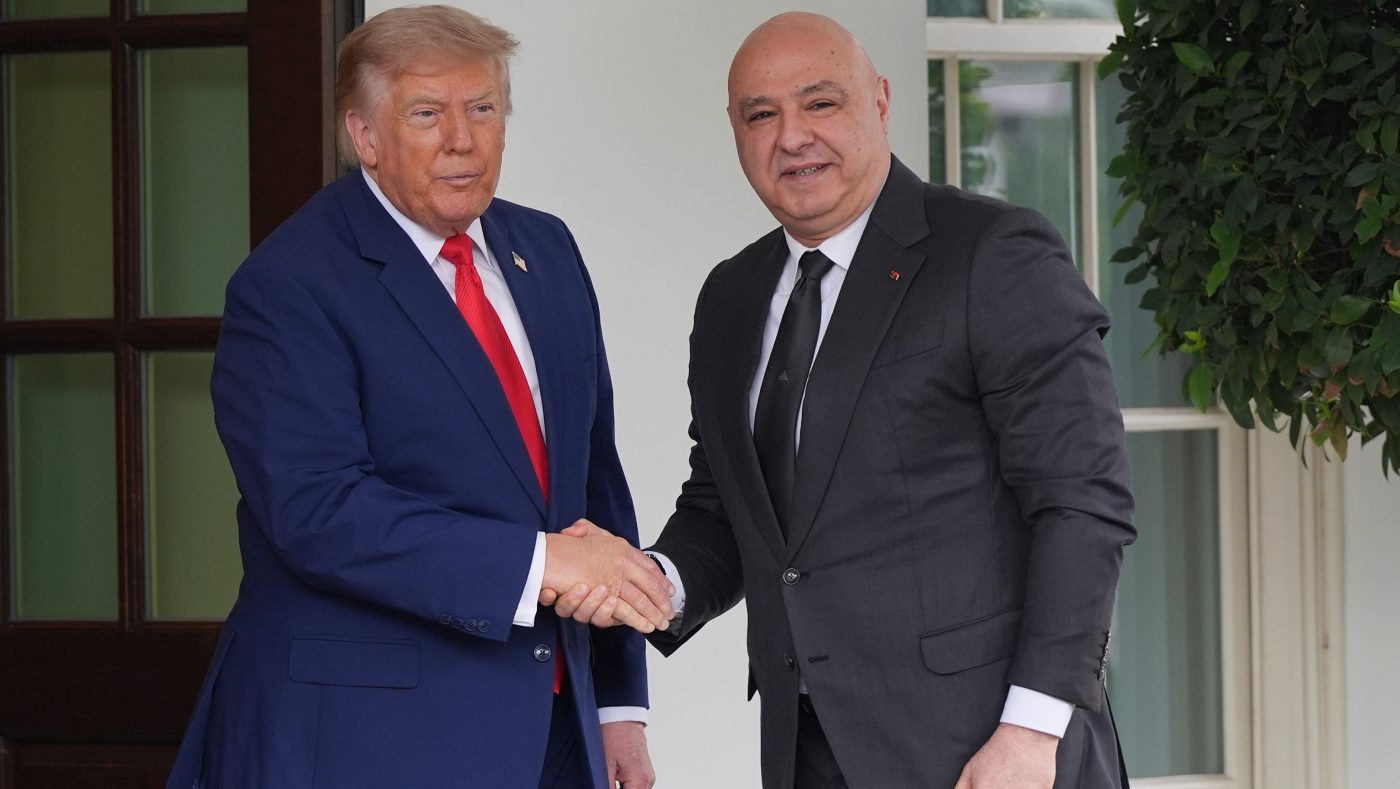
President Donald Trump has cleared the way for U.S. airlines to resume direct flights to Lebanon, ending a restriction that stood for more than four decades. The policy shift, announced Tuesday after a White House meeting with Lebanese President Joseph Aoun, overturns a ban originally triggered by Hezbollah's 1985 hijacking of TWA Flight 847.
In a post on Truth Social, Trump said his administration would allow all U.S. carriers to operate direct routes to Lebanon, calling it a step to make travel easier for Americans. He added that he hoped other nations would follow suit. The president praised Aoun's efforts to transform Lebanon, which he described as a country that had been “very badly treated” and deserving of respect.
Aoun characterized Trump's remarks as a “vision” for peace, even as violence continues to plague Lebanon. Hezbollah, the Iran-backed militant group, remains a dominant force in the country, but its position is under growing pressure from Israeli military operations. The IDF has moved into a buffer zone and launched strikes on southern Beirut aimed at pushing the group back.
Last month, Lebanon and Israel signed a U.S.-backed framework agreement to jointly target Hezbollah. On Tuesday, the Lebanese army deployed troops to Zawtar al-Gharbieh, where Israeli forces are also present. Secretary of State Marco Rubio stressed that curbing Hezbollah is essential, but acknowledged that Lebanon will “never be fully at peace” as long as the group retains influence.
“How do you replace Hezbollah? You defeat and replace them with a government that is strong enough to be the sole force of arms in the country,” Rubio said, according to the Associated Press.
But the campaign against Hezbollah has complicated Trump's broader efforts to wind down the war in Iran. All parties had agreed to a ceasefire in both Iran and Lebanon, which Tehran said should have included a halt to strikes on Hezbollah. Israel continued its assaults, prompting Iran to accuse the U.S. of violating the truce—a charge that helped reignite a wider conflict in the Middle East.
The renewed hostilities have led to direct exchanges between Iran and the United States, with strikes on land and in the Strait of Hormuz. Tehran has also retaliated against U.S. assets in Kuwait and Jordan, escalating tensions that now ripple across the region.
The lifting of the flight ban comes amid a broader recalibration of U.S. policy toward Lebanon. The original restriction, imposed after Hezbollah militants hijacked TWA Flight 847 and killed a U.S. Navy diver, had remained in place for 40 years as a security measure. Trump's decision signals a willingness to reset relations, but the underlying instability—both from Hezbollah's entrenchment and the broader Iran conflict—raises questions about how quickly normal travel can resume.