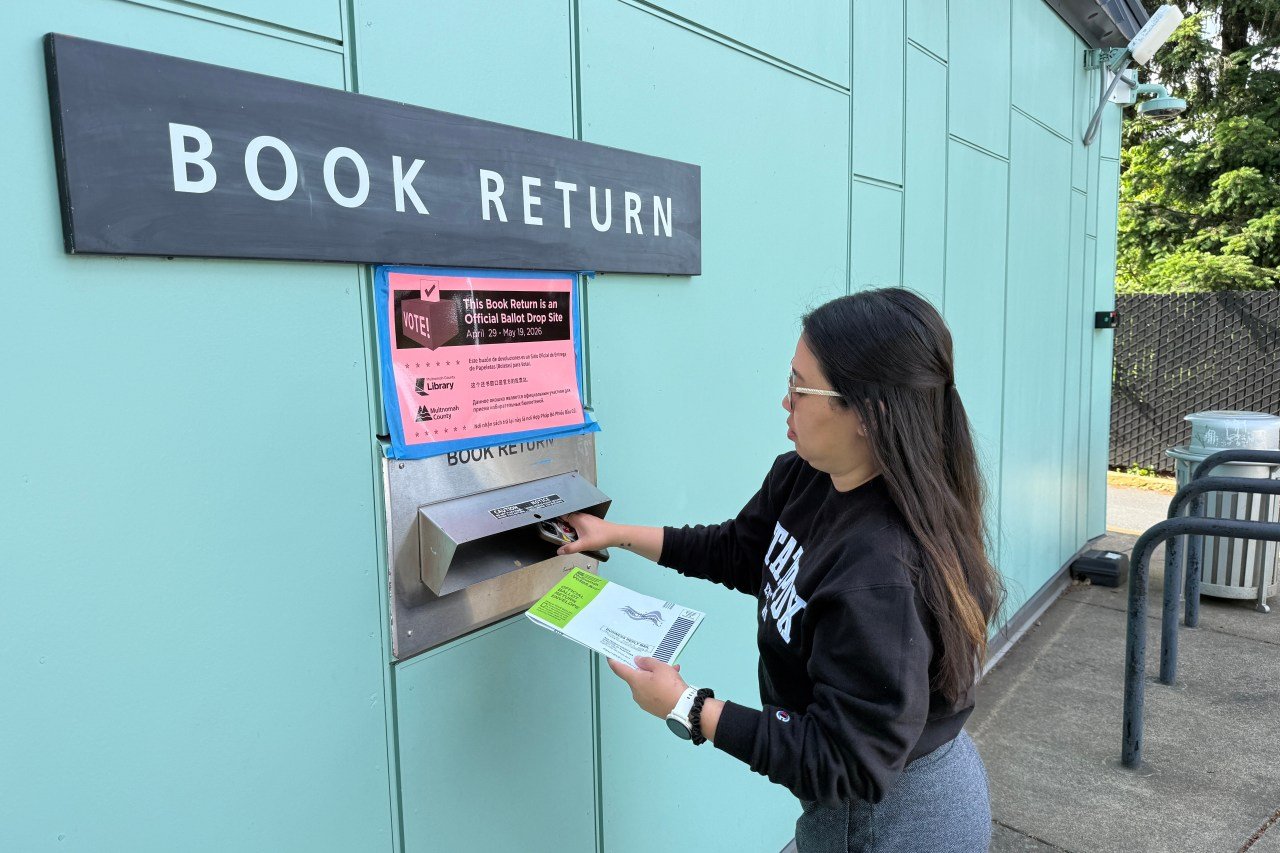
Oregon voters on Tuesday decisively overturned a gas tax increase enacted by Democratic lawmakers, handing Republicans a significant victory in a referendum campaign that capitalized on soaring fuel prices amid the war with Iran.
The measure, known as Measure 120, repealed a 6-cent-per-gallon state gas tax hike and a series of fee increases that Democrats had approved last year to fund road improvements and address a shortfall in the state’s transportation budget. Republicans swiftly launched a referendum effort, gathering more than triple the required signatures to put the issue on the ballot.
Republican state Sen. Bruce Starr, who spearheaded the referendum campaign, said the outcome was predictable. “I’m not surprised at all that Oregonians have rejected a completely unpopular tax increase,” Starr told The Associated Press on Tuesday night. “Oregon voters will not be ignored. Oregon taxpayers will not be ignored.”
Timing Fueled Republican Momentum
The referendum landed on the ballot as gas prices spiked nationwide, driven by the ongoing conflict with Iran. Republicans seized on the issue to counter Democrats’ broader messaging on affordability, arguing that the tax and fee increases would further strain household budgets. Democrats had framed their affordability agenda as a key plank for the midterm elections, but the gas tax vote undercut that narrative.
Democratic Gov. Tina Kotek and U.S. Sen. Jeff Merkley easily won their primaries Tuesday, while state Sen. Christine Drazan secured the GOP gubernatorial nomination to set up a rematch with Kotek in the fall. The Oregon governor race: Kotek vs. Drazan rematch confirmed highlights a state that hasn’t elected a Republican governor in over four decades.
Democrats Acknowledge Headwinds
Democratic leaders conceded that the timing of the vote worked against them. The tax increase also ran counter to the national party’s strategy of emphasizing cost-of-living concerns to win back Congress. Republicans, meanwhile, portrayed the measure as a direct contributor to the high cost of living, while Democrats pointed to President Donald Trump’s decision to go to war with Iran as the root cause of the price spike.
The legislation was designed to shore up Oregon’s transportation budget as the state projects a decline in gas tax revenue due to the shift toward fuel-efficient, electric, and hybrid vehicles. The gas tax remains the largest funding source for road repairs and highway upgrades.
Portland Voters Split on Measure
Even in Portland, a progressive stronghold, voters were divided on the tax increase. Gail Watnick, a 56-year-old bicyclist, said she voted yes because “the roads need to be repaired.” But David Trujillo, 25, who backed Kotek in the primary, voted against the measure, citing the burden on residents amid high gas prices and the war. “If the gas prices were to rise, I think that would be a huge barrier for more of our community members,” he said.
The referendum outcome adds to a broader trend of Trumpflation sticks: tariffs and war keep prices high through 2025, as voters increasingly push back against tax increases during periods of economic strain.
GOP Primary Crowded, Key House Races Set
The Republican gubernatorial primary featured 14 candidates, including former NBA player Chris Dudley and David Medina, a conservative influencer charged in the Jan. 6, 2021, attack on the U.S. Capitol and later pardoned by Trump. Drazan, who lost to Kotek in 2022, now faces an uphill battle in a state that last elected a Republican governor in 1982.
In Oregon’s 5th Congressional District, considered the state’s most competitive, Democratic U.S. Rep. Janelle Bynum won her primary and will face Republican Patti Adair. The district, which flips between parties, was reclaimed by Democrats in 2024 after a brief Republican hold. Other House seats are largely safe for incumbents.
In the U.S. Senate primary, seven Republicans vied to challenge Merkley, with state Sen. David Brock Smith, Jo Rae Perkins, and Brent Barker locked in a tight race that remained too early to call.