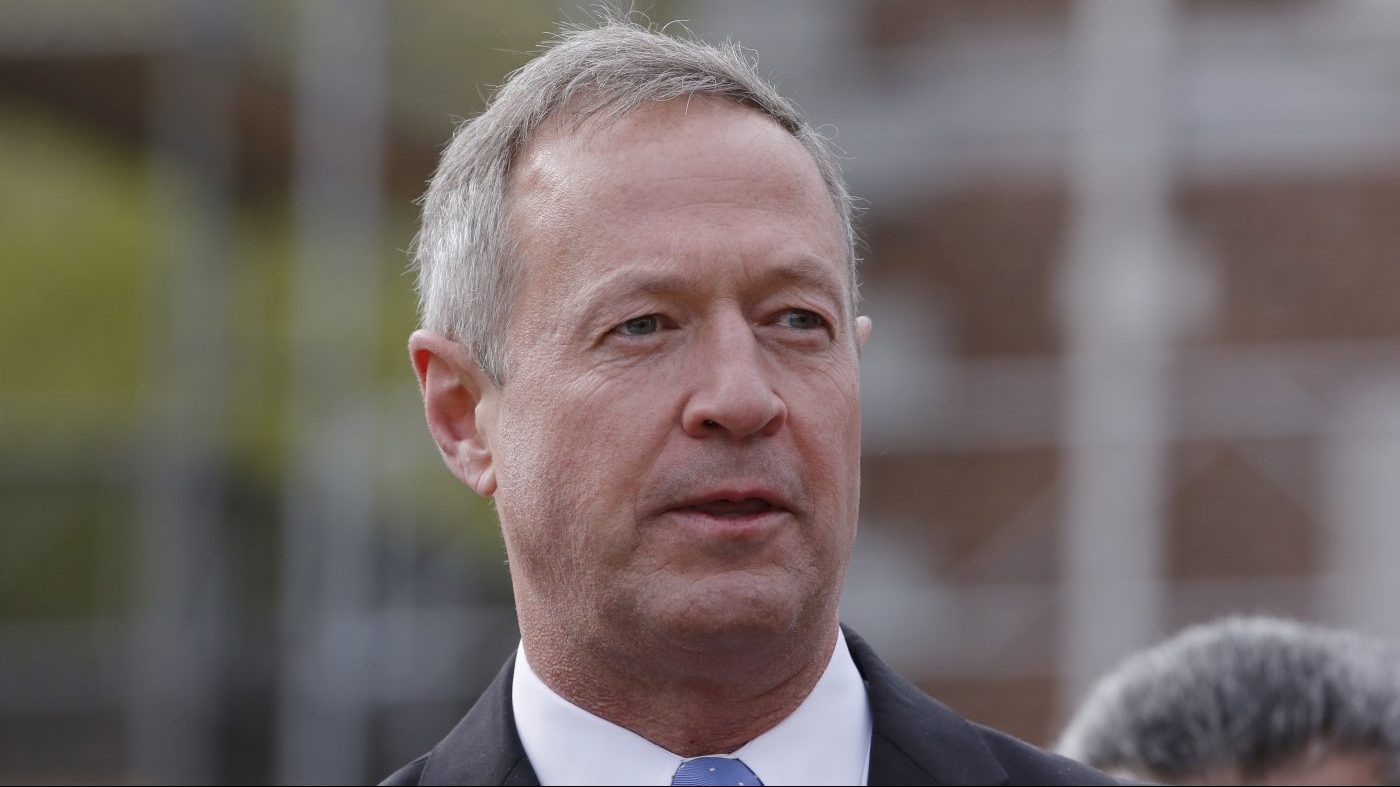
Former Social Security Administration Commissioner Martin O'Malley is making a direct case for raising the payroll tax cap on wealthy Americans, arguing it's the most fair and effective way to prevent a looming 22% cut in benefits by 2032. In an interview aired Monday on NewsNation's "The Hill," O'Malley said lawmakers should focus on increasing the cap on earnings subject to Social Security taxes rather than slashing benefits for retirees.
"It's only 6 percent of us that experience any benefit from the cap and an even smaller percentage, three or four who benefit from scrapping the cap on income above $250,000," O'Malley told host Blake Burman. "Most Americans think it is unfair that wealthy people don't pay the same tax rate as a custodian in a school or a teacher."
The former Biden administration official pointed to the current payroll tax cap, which exempts annual earnings above $184,500 from Social Security taxes. That cap means high-income earners stop contributing to the program once they surpass that threshold, a design O'Malley says accelerates the trust fund's depletion.
His comments come as a new Social Security trustees' report projects the program's trust fund will be exhausted by the fourth quarter of 2032, one quarter earlier than previously forecast. At that point, incoming payroll revenue would cover only 78% of scheduled retirement benefits, triggering automatic cuts unless Congress acts.
The insolvency warning has reignited debate on Capitol Hill. Speaker Mike Johnson (R-La.) recently called on Republicans to address the rising costs of Social Security, Medicare, and Medicaid, describing them as programs that "have to be adjusted and fixed." In a radio interview, Johnson argued that mandatory spending now accounts for over 74% of federal outlays and that "desperate times call for desperate measures." The internal GOP divisions over entitlement reform have become more visible, as highlighted in our latest analysis of the party's fracture on Social Security.
O'Malley, however, forcefully rejected Johnson's characterization that Social Security contributes to the federal deficit. "I was just listening to Speaker Johnson falsely say that Social Security contributes to the deficit," the former Democratic Maryland governor said. "In point of fact, Social Security doesn't contribute to the deficit. It is a pay-as-you-go program, which means, for the most part, the dollars paid in any given year are the dollars that go out."
O'Malley argued that the trust fund is being drained faster than expected because income above the payroll tax cap is not subject to Social Security taxes. "That surplus, intentionally built up since 1982, is being depleted sooner than they thought back then because of income inequality," he said. "Because no person making more than $182,000 pays another penny in Social Security."
Lawmakers have floated a range of proposals to shore up the program's finances, including raising the payroll tax cap, increasing the retirement age, and creating personal investment accounts. But O'Malley's push to lift the cap aligns with a broader Democratic strategy that frames the issue as a matter of fairness. The political stakes are high, as any changes to Social Security could have significant implications for the 2024 elections and beyond.