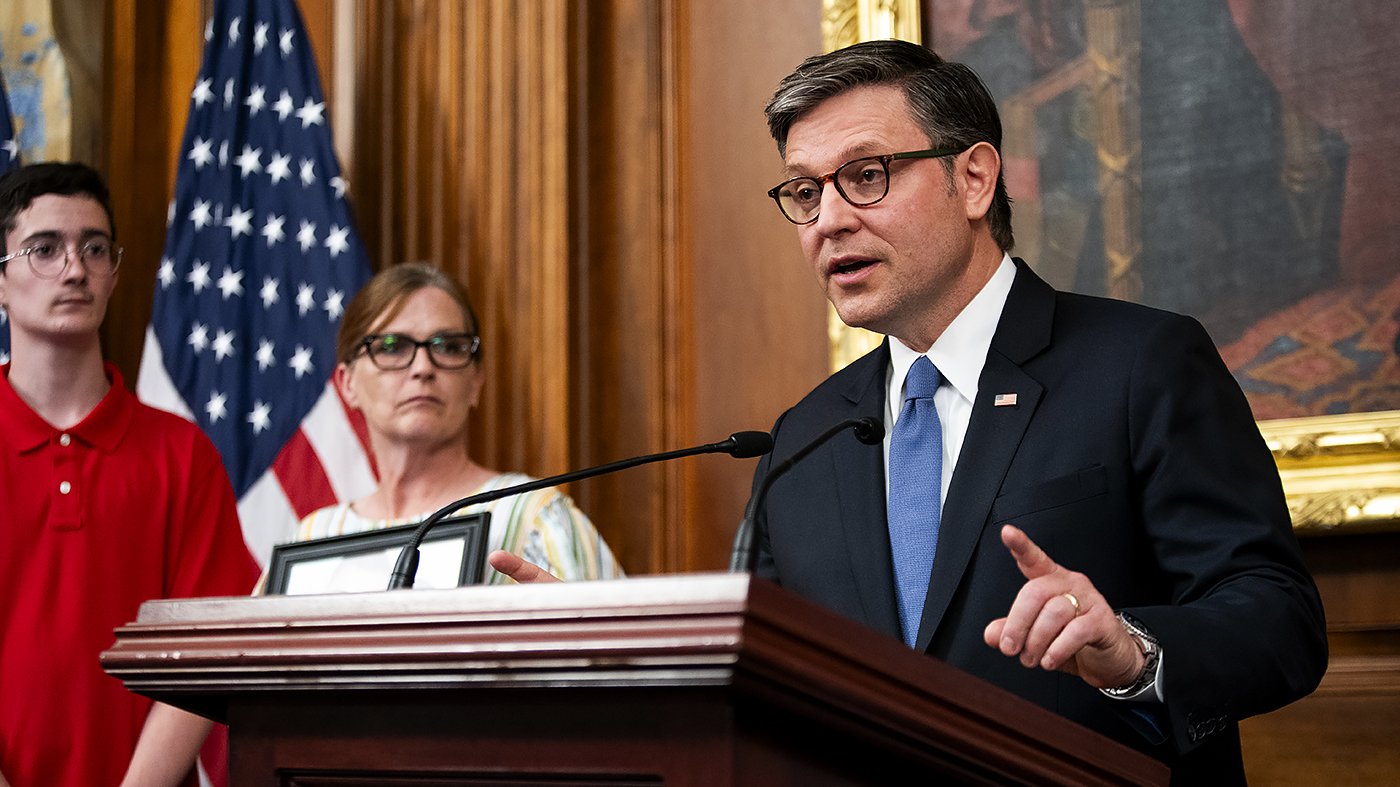
Speaker Mike Johnson (R-La.) has ignited a fierce debate within the GOP by urging Republicans to tackle Social Security reform if they retain control of Congress in 2027, but his call is drawing sharp pushback from Senate Republicans who see it as a political liability ahead of November's midterm elections.
A recent trustees' report has heightened urgency on Capitol Hill, projecting that Social Security's trust fund will be depleted by 2032, triggering a 22% cut in monthly benefits. This warning has spurred lawmakers from both parties to float proposals, including raising the cap on payroll taxes, means-testing beneficiaries, increasing the retirement age, and creating personal investment accounts.
Fiscal conservatives are rallying behind Johnson's stance. Sen. Rand Paul (R-Ky.) announced plans to send a letter to leadership advocating for a bicameral, bipartisan commission to address Social Security and Medicare solvency. Sen. Ron Johnson (R-Wis.) echoed this, vowing to hold the Speaker to his promise. “We were promised … if we retain the majority, we’re definitely going to tackle this,” he said, proposing to boost benefits by cutting federal spending to free up fiscal space without adding to the deficit.
However, many Senate Republicans are wary, recalling the political fallout from former President George W. Bush's 2005 attempt to partially privatize Social Security. That effort, which lacked Democratic support, contributed to GOP losses in the 2006 midterms. Sen. Josh Hawley (R-Mo.) warned that “reform” often masks benefit cuts, saying, “I’m not in favor of that.” Another anonymous GOP senator cautioned that colleagues won't “walk the plank” alone, stressing that any solution must be bipartisan.
Johnson, in a radio interview, framed the issue as a fiscal necessity, noting that mandatory spending on Social Security, Medicare, and Medicaid accounts for 74% of federal outlays. “Desperate times call for desperate measures,” he said, pointing to the nation's $40 trillion debt. But some Senate Republicans, like Sen. John Kennedy (R-La.), dismissed the Speaker's remarks as merely his opinion, while Sen. Lisa Murkowski (R-Alaska) acknowledged the difficulty, calling Social Security the “third rail of politics” that requires a bipartisan approach from the start.
President Trump, during his 2024 campaign, pledged not to cut Social Security or Medicare, vowing to find savings elsewhere. Yet, growing anxiety on Capitol Hill suggests inaction could lead to a funding crisis. The debate underscores a broader GOP divide between fiscal hawks and moderates wary of electoral consequences, echoing past battles over entitlement reform. As one GOP senator put it, “All the Republicans are not going to walk the plank on Social Security reform all by themselves.”