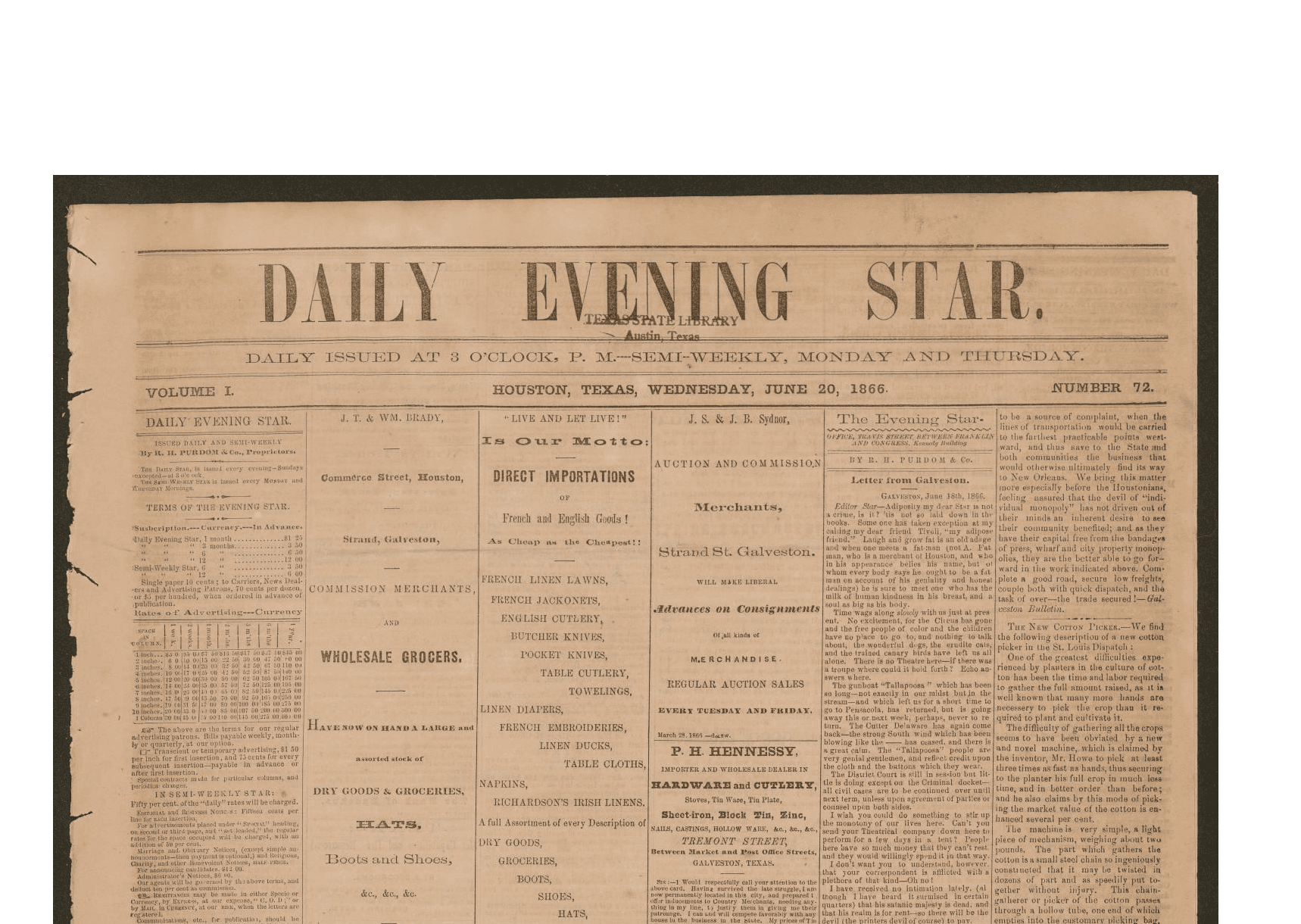
AUSTIN — The first anniversary celebration of Juneteenth was held in Houston in 1866, not Galveston as commonly believed, according to newly published research that upends a key part of the holiday's origin story.
Caleb McDaniel, a Rice University historian and professor of humanities, uncovered the finding while reviewing Works Progress Administration notes from the 1930s. His research appears in the Journal of Texas History.
Juneteenth marks June 19, 1865, when U.S. Major General Gordon Granger arrived in Galveston to enforce the Emancipation Proclamation, freeing enslaved people in Texas. But McDaniel's work shows the first organized celebration of that date happened a year later in Houston, not the coastal city.
“Researchers with the Works Progress Administration during the New Deal were tasked with writing new histories of cities like Houston and states like Texas,” McDaniel told KXAN. “Their notes contain a transcription of this article from the Houston Daily Evening Star from 1866 talking about the Freedman Celebration.”
The WPA researchers never published their discovery, and the newspaper was never microfilmed or digitized. The only surviving physical copies are held in the Texas State Archive, making McDaniel's find a rare historical breakthrough.
This revision comes as debates over the federal holiday's cost and meaning intensify. As Juneteenth 2026 federal closures loom, the new historical context adds weight to discussions about how the holiday is commemorated. Some critics have questioned the expense of closing federal offices, while others push for broader recognition of the day's significance.
The shift in location from Galveston to Houston also raises questions about how other aspects of Juneteenth's history may have been misremembered or overlooked. McDaniel's research underscores the importance of archival work in correcting the historical record.
For political observers, the discovery highlights the ongoing reckoning with America's racial legacy. As the nation approaches the 250th anniversary of independence, there is a call for honest reckoning over America's dual legacy of freedom and slavery. Juneteenth, now a federal holiday, stands as a symbol of that unfinished work.
McDaniel's finding does not change the fact that Granger's order was issued in Galveston, but it reframes where and how free Black Texans first chose to publicly celebrate their liberation. The Houston celebration in 1866 was a political act—a reclaiming of public space and memory in a city still grappling with the aftermath of slavery.
As debates over the holiday's observance continue, including federal offices shuttering for Juneteenth 2026, the historical correction offers a more nuanced understanding of how freedom was commemorated from the very start.