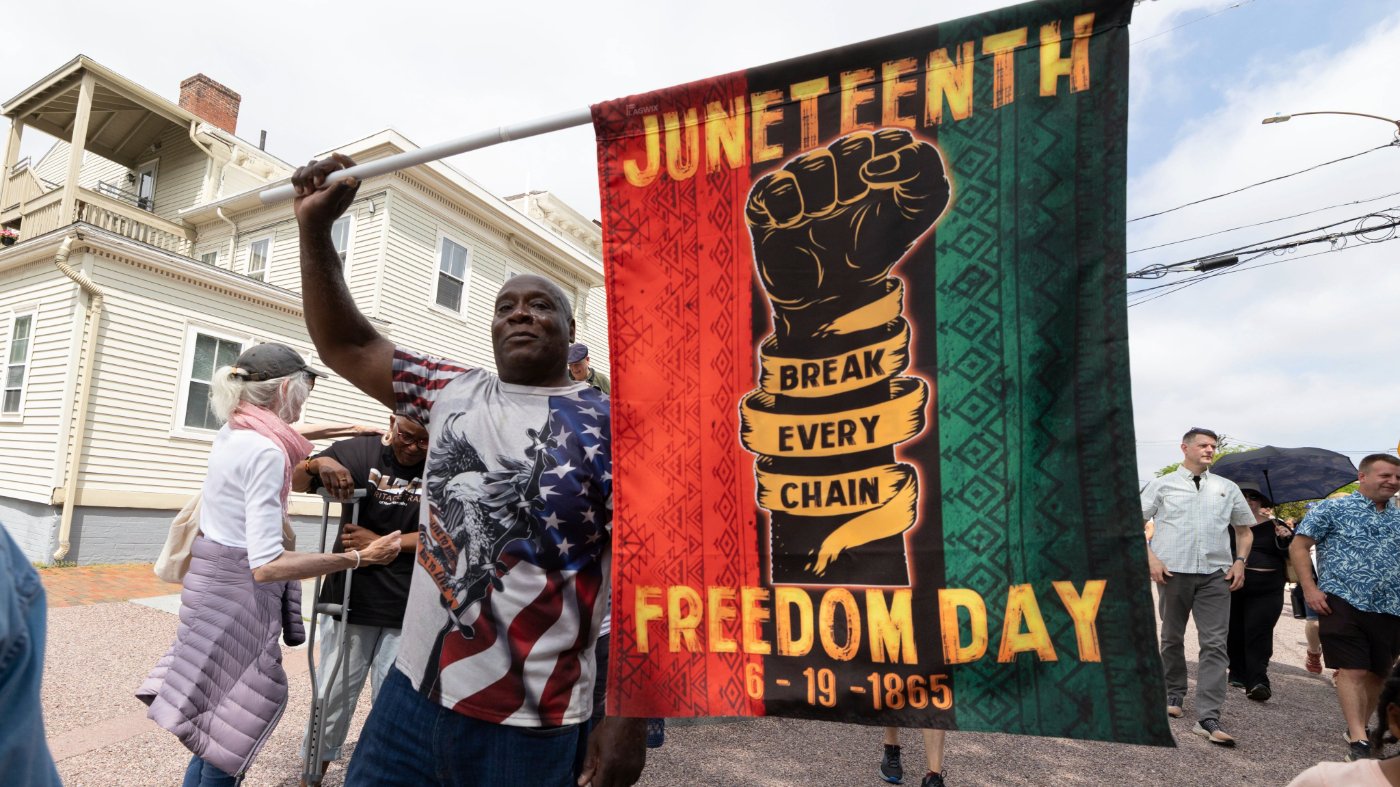
As the nation prepares to mark the 161st anniversary of emancipation on Juneteenth and the 250th anniversary of its founding on July 4, political strategist Donna Brazile argues that Americans must confront the full, unvarnished truth of the country's history—both its celebrated victories and its deep, persistent injustices.
Brazile, a former chair of the Democratic National Committee, acknowledges the power of the Declaration of Independence's promise that "all men are created equal," a promise that now extends to her as a Black woman. But she rejects any sanitized, fairy-tale version of the American story. "None of us should," she writes. "We need to know the truth about our country."
That truth includes the brutal enslavement of her African American ancestors, the century of legally sanctioned segregation that followed emancipation, and the ongoing—though diminished—systemic racial discrimination that persists today. She also notes that women of all races were denied the vote until 1920, and that sexism, like racism, has not been eradicated. Native Americans, Hispanics, Asian Americans, Jews, Muslims, and Catholics have also faced discrimination, she adds, and that history cannot be treated as a footnote.
Brazile insists that these ugly chapters are as integral to the American narrative as the founding of democracy, the rise of a prosperous economy, the defeat of Nazi tyranny in World War II, and the life-saving innovations in science and medicine. Celebrating the nation's 250th anniversary with pride and pageantry is appropriate, she says, but it must be accompanied by an honest acknowledgment of the worst parts of the past. "We can't learn from America's failings if we ignore or whitewash them," she writes.
Black history, she emphasizes, is American history. Enslaved Black people and their descendants built the nation's farms, towns, and cities, contributed inventions and innovations, and transformed its arts and culture. Black Americans fought in every war to defend freedoms they themselves were often denied. Brazile recalls her own father, a Korean War veteran, who returned to Louisiana only to face segregated water fountains, restrooms, and movie theaters, and was denied jobs because of his race. He was forced to send his children to segregated schools.
Brazile invokes the Rev. Martin Luther King Jr.'s 1968 words: "We shall overcome because the arc of the moral universe is long, but it bends toward justice." But she stresses that the arc does not bend on its own. The heroes of the civil rights, women's rights, and LGBTQ+ movements paid a terrible price—beatings, jail, and even murder—to push it forward. Today, Brazile argues, Americans can contribute by voting, volunteering with groups tackling persistent social ills, and reaching across divides.
However, she warns that the Supreme Court has severely undermined Black voting power through a series of decisions that have gutted the Voting Rights Act of 1965. The most recent ruling, handed down in April, allows Republican-controlled state and local governments to redraw majority-Black districts in ways that weaken Black political influence. Brazile calls for a robust response: "Black Americans and our allies should respond by voting in record numbers in the November midterm elections to stop the rollback of our rights."
Juneteenth and the 250th anniversary, she concludes, must be more than celebrations. They must be days of reckoning—a time to reflect on what remains to be done to build a more just and equitable nation. "American history, after all, is a never-ending journey," she writes, quoting the Constitution's call to "form a more perfect Union."
Brazile's essay echoes broader concerns about the state of American democracy. A recent AP-NORC poll found that two-thirds of Americans believe voting rights are under threat as the 250th anniversary approaches. Meanwhile, debates over the cost of federal holidays have intensified, with federal closures looming for Juneteenth 2026 amid partisan wrangling over their economic impact.
Brazile ends on a hopeful note: "All men and women who believe in the goodness of our great nation should wish them well."