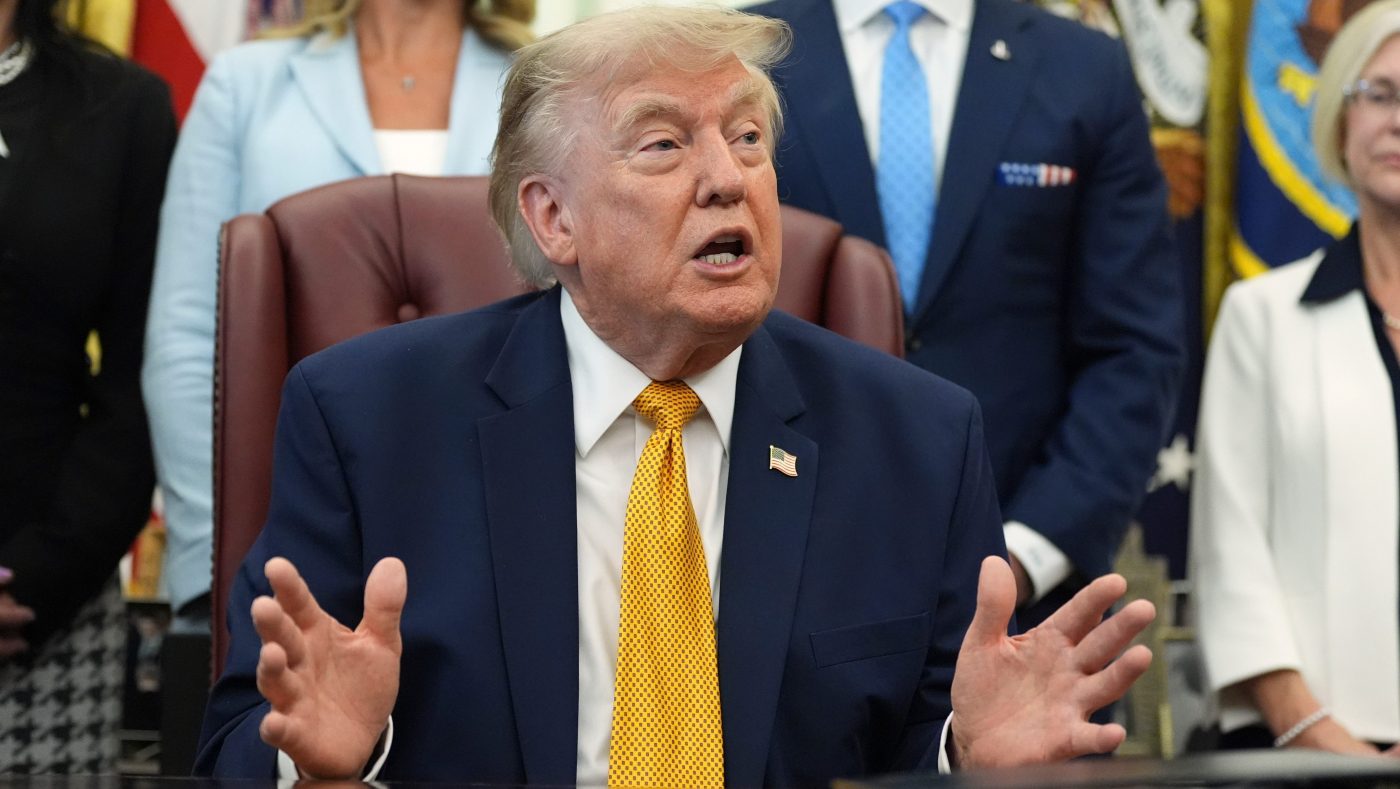
President Trump on Monday issued a stark ultimatum to Tehran, stating that Iran has a final opportunity to strike a peace deal with the United States, or it will face severe military consequences. Speaking from the Oval Office, Trump framed the current diplomatic window as Iran's "last chance" to avoid what he described as "decapitation," a term he has used to signal a potential campaign against Iranian leadership.
The president expressed optimism that negotiations with Iran would be straightforward and swift, claiming the discussions are "not very complex" and would "go quickly" this time. He asserted that the Strait of Hormuz, a critical artery for global oil shipments, could be fully reopened "literally by tomorrow," describing that as "phase one" of a broader agreement. A subsequent phase would address Iran's nuclear program, which Trump acknowledged could "take a little while."
Trump's comments come after he repeatedly pulled back from military strikes in favor of diplomacy, a pattern he has followed since April. He revealed on Sunday that the U.S. had prepared an attack that would have been "the biggest attack since World War II," but that Saudi Arabia, the United Arab Emirates, and Qatar intervened, urging a diplomatic path. "Many, many countries called ... and they all wanted to give this a last chance. This is a last chance," Trump told reporters. "This is a last chance for them to sign a good document."
When pressed on what was different this time, Trump responded, "I want to give them every last chance before decapitation. Very tough to do what we have planned, still planned. We'll see what happens." He added, "I'm very proud of the fact that I will give people, I'll give people a chance."
However, Iranian officials pushed back on the notion that they are negotiating with Washington. Earlier Monday, Tehran indicated it was only in discussions with Oman to establish a temporary safe passage for vessels through the Strait of Hormuz, not engaging in broader talks. Trump reacted sharply, calling Iranian leadership "unbelievably duplicitous!" in a Truth Social post, noting that they had requested a meeting, and then denied any discussions were taking place.
Adding to the confusion, CBS News reported that no new talks with Iran are scheduled, only ongoing mediated exchanges. The U.S. and Iran had agreed to a ceasefire in June via a memorandum of understanding, but that fragile arrangement collapsed the following month after renewed strikes between the two sides.
Trump's oscillation between threatening to devastate Iran and pursuing negotiations has raised questions about the credibility of U.S. efforts to end the conflict. As the grim realities of his Iran strategy become more apparent, analysts doubt whether a meaningful deal can be reached soon. The administration's approach has also drawn comparisons to other contentious issues, such as welfare data sharing with ICE, reflecting broader tensions in Trump's policy moves.
The president's latest remarks underscore the high stakes of the diplomatic gamble, with the possibility of military action looming if Tehran does not comply. Yet, the mixed signals from both sides suggest that a breakthrough remains elusive, and the window for a peaceful resolution may be narrowing.